The Century Club of Tahanan, Inc. (CCTI), a private club of senior citizens living in Tahanan Village, Barangay BF Homes, Parañaque City, will be sponsoring on February 22, 2020 (Saturday) starting at 6AM (end at 10AM) the next Health Check-up (Executive Laboratory Check-up) activity at the poolside of the Tahanan Village clubhouse (where the village clinic is also located).
Open to all residents of the village, there will be a wide variety of services and examinations that people can avail of for their respective health-related needs or inquiries.
“We encourage the Tahanan Village residents to take advantage of the generously discounted health services as well as the convenience of the venue which is at the poolside of the clubhouse at the park,” Century Club of Tahanan, Inc. president Florencia Umali stated to me.
File photo of CCTI president Florencia Umali (seated, foreground) helping patients during the September 28, 2019 health check-up activity in Tahanan Village.
Indeed, to make the most out of their money, villagers can pay only P350 for a health-check package that includes good and bad cholesterol check, Triglycerides, Creatinine, SGOT, ECG, blood sugar count, total cholesterol count, BUN, Urice Acid, SGPT, CBC and urinalysis. These said services would have cost almost P1,300 at regular rates. That’s a tremendous amount of more than P900 in savings.
All of those who intend to avail of the health services related to blood testing are advised to bring their own urine sample and should have fasted between 10 hours to 12 hours.
Other health services people can choose from are PSA, Hba1c, T3, T4, TSH and Na, K and Ci (electrolytes). There will also be a free computerized eye refraction service as well.
The results of the medical tests will be released on March 1 at the Tahanan Village clinic. Free consultation is also offered.
Thank you for reading. If you find this article engaging, please click the like button below and also please consider sharing this article to others. Also my fantasy book The World of Havenoris still available in paperback and e-book format. If you are looking for a copywriter to create content for your special project or business, check out my services and my portfolio. Feel free to contact me as well. Also please feel free to visit my Facebook page Author Carlo Carrasco and follow me at HavenorFantasy@twitter.com
For more South Metro Manila community news and developments, come back here soon. Also say NO to fake news, NO to irresponsible journalism, NO to misinformation,NO to plagiarists and NO to sinister propaganda when it comes to news and developments.
In this age of photo-realistic 3D graphics in video gaming, I sure miss the days when 2D gaming and highly detailed pixel art were the standard. I’m referring to the so-called 16-bit era of the Super NES/SNES (Super Nintendo Entertainment System) back in the 1990s.
In 1991, Super Star Wars was released on the Super NES and it became a big hit with the gamers, the critics and fans. That game was heralded as one of the best video game adaptations of movies.
Naturally, a follow-up to that game was released in 1993 – Super Star Wars: The Empire Strikes Back.
That being said, here is my retro gaming review of Super Star Wars: The Empire Strikes Back.
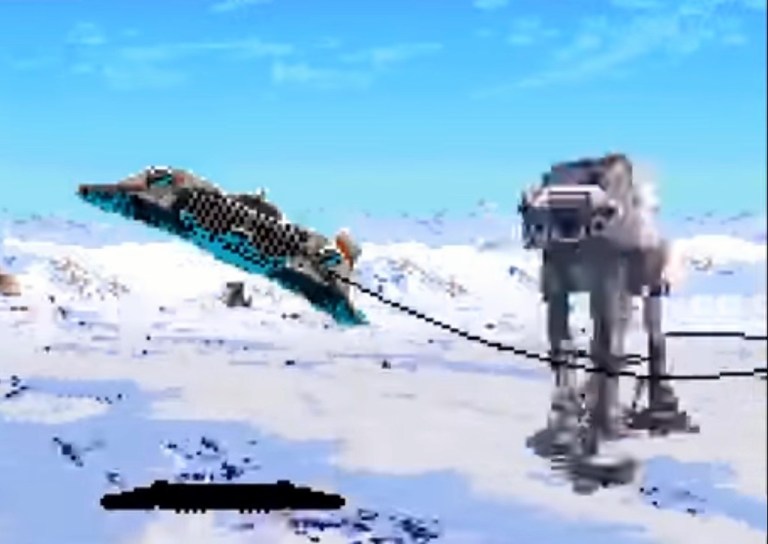
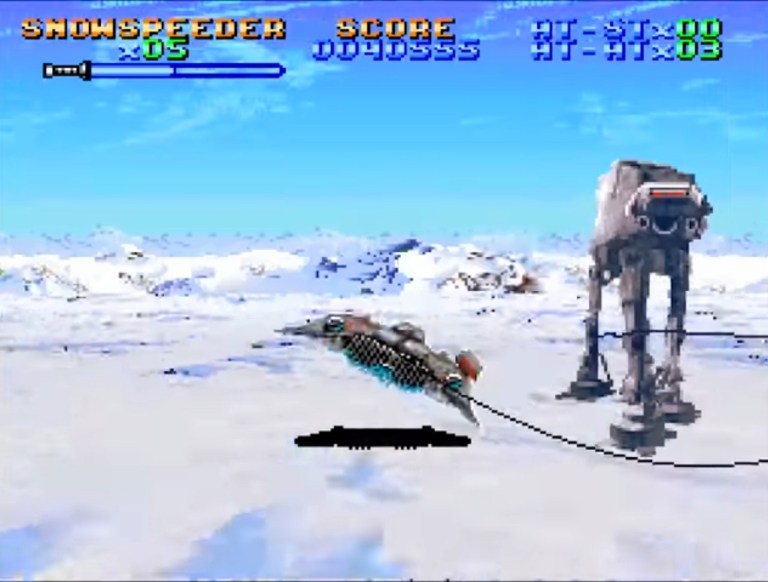
The experience of using a Rebel speeder to bring down an AT-AT walker with the cable remains awesome.
Developed by Sculptured Software and LucasArts and published in America by JVC, this game is based on The Empire Strikes Back which today has been considered to be the greatest Star Wars movie ever. Of course, in order to make a cohesive video game adaptation out of the classic movie, a lot of liberties were taken when it comes to following the story. This was inevitable as the game developers needed a lot of creative freedom to make a cohesive video game.
Early story (and some notable differences from the movie)
Super Star Wars: The Empire Strikes Back begins with Luke Skywalker riding a Tauntaun. Unlike the movie, Luke (controlled by players) visits some places of the wasteland of Hoth, notably caverns and hills fighting several forms of wild life (including wampa beasts), and even some probe droids.
Luke jumping on to a wampa beast.
Unlike the movie, Luke does not get rescued by Han Solo in the wilderness. Instead he defeats a giant-sized probe droid and a giant-sized wampa beast (as in-game bosses) and make his way back to Echo Base to rejoin the rebels. Upon returning at the base, he finds it filled with Imperial troopers and their machines (where are Luke’s fellow rebels?) and fights his way through to fly a rebel speeder (note: without the movie co-pilot Dak) and proceed in the Battle of Hoth.
This never happened in the movie.Luke jumping into a snow speeder without a co-pilot.
Back at Echo Base, Han Solo (player-controlled) has to make his way through a wave of Imperial enemies and machines to meet Princess Leia, secure her and ride away on the Millennium Falcon. The Falcon (player-controlled) enters the asteroid field being attacked gradually by over twenty TIE Fighters. Once all of them have been eliminated, the Falcon jumps into light speed (which contradicts the movie).
Gameplay
Super Star Wars: The Empire Strikes Back is composed mostly of 2D, side-scrolling action sequences in which players control their characters moving from left to right in order to make the game progress. The sequences are filled with lots of action-packed moments mainly due to the MANY enemies challenging the players plus sequences of shooting, jumping and using special weapons (note: the thermal detonator was awesome to use). When it comes to filling up the health meter of your character, defeating enemies result random releases of hearts (symbolizing health) which you need to pick up. Key side-scrolling segments of the game will have players facing off with in-game bosses or enemies that are large, intimidating and have their own health meters for players to reduce to zero.
As typical with most 2D side-scrolling games of the era, this game is really tough and will take gamers some patience and perseverance to complete.
What really stood out in this game are the makeshift 3D segments (made possible by Mode 7) which were pretty extensive and really interactive. The Battle of Hoth in Mode 7 was pretty engaging as players get to fly a rebel speeder over a snowy field complete with lots of Imperial enemies (including the AT-ST walkers and the AT-AT walkers) and each of them is composed of multiple 2D sprites making them look 3D as the speeder moves around. Apart from simply shooting, the interactive sequence of tagging an AT-AT walker with a cable, flying around it and wrapping it with the cable, and then watching it fall to the ground really is an awesome gaming experience which really showed how hard the game developers pushed 2D visuals and pixel art.
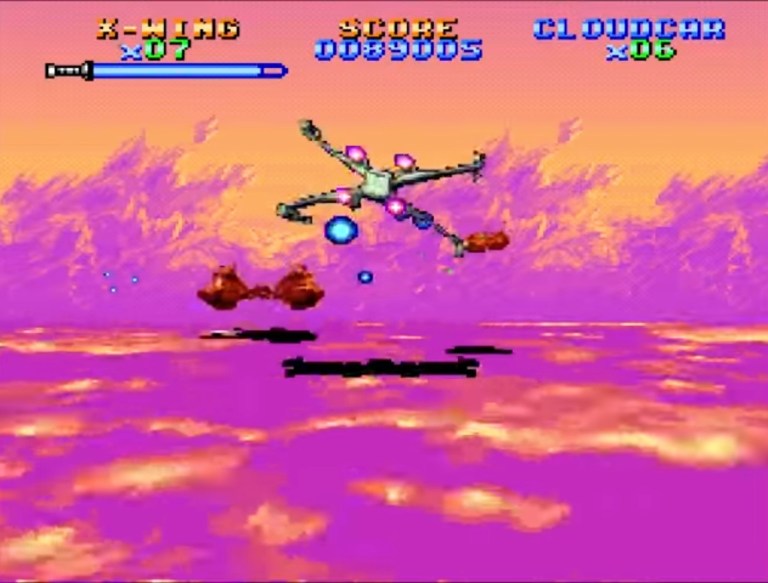
A Mode 7 sequence late in the game had players using an X-Wing fighter.The Battle of Hoth was a great and lengthy use of Mode 7.
Apart from the Battle of Hoth, there was also another Mode 7 sequence involving the X-Wing Fighter approaching Cloud City. That particular sequence was noticeably shorter and did not have a standout action sequence as it was limited to the X-Wing Fighter simply shooting Bespin fighters. Another non-2D segment was the Millenium Falcon’s flight through the asteroid field which was done with the cockpit view (first-person view exactly) in which you move a cursor for targeting and moving the ship to. This segment was pretty tough because players were not only required to eliminate more than 20 TIE Fighters but also avoid incoming asteroids and maintaining the Falcon’s energy shields (which serves as a health meter)
Going back to the 2D side-scrolling segments, the use of the lightsaber by Luke remains a lot of fun to do. Not only could he slash bad guys, he could use the lightsaber defensively protecting himself from incoming energy blasts (which get deflected by the lightsaber). On the offense, Luke can jump into the air and spin with the lightsaber turned on making him an aerial slasher over the bad guys.
In keeping with the theme of the movie showing Luke Skywalker learning to be a Jedi, the Dagobah segment in the game has Luke gaining varied Force powers and he also has a separate Force energy meter. The Force powers can be used in subsequent segments of the game and they are quite useful when Luke encounters Darth Vader as the final boss in Cloud City.
The fights with Darth Vader were nicely designed. With creative freedom, the game developers expanded on Darth Vader’s use of the Force to move several pieces of debris and machines towards Luke who has to defend himself from all sides. Fighting Darth Vader with the lightsaber was tricky and for the most part, I had Luke slashing on villain with just enough space between them and many times I had Luke use the lightsaber on him while jumping and spinning in the air. Defeating Vader was a requirement to complete the game.
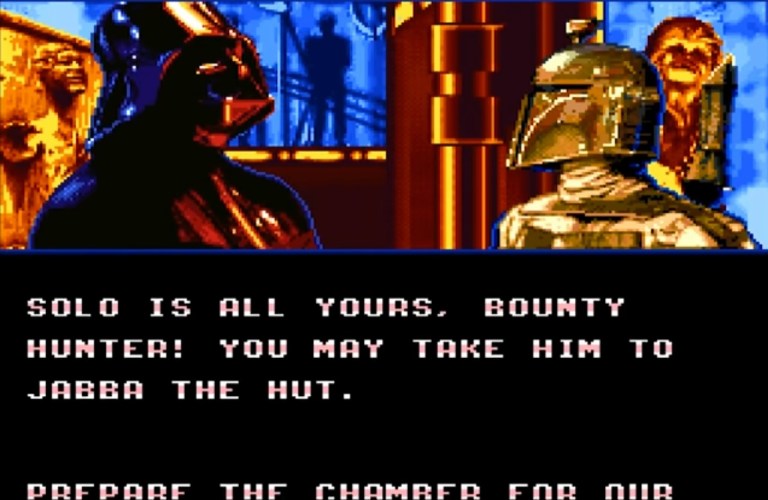
Very nice artwork made for the storytelling cut scenes.
Finally, like in Super Star Wars, players can also play as Han Solo (special attack: grenade throw) and Chewbacca (special attack: offensive spin) but only in specific segments of the game supposedly to keep in line with its story.
Conclusion
Even by today’s standards, Super Star Wars: The Empire Strikes Back is still a high-quality video game that is a lot of fun to play with even though it is tough (a password system is used for in-game progress so that gamers can come back to continue) all throughout. Gameplay aside, the presentation of visuals and audio is also very solid. The sprites for the in-game characters, enemies, machines and animal were detailed to look at while the background art were immersive (like in the movies, Cloud City, Hoth and Dagobah had their distinctive visuals). The Super NES audio chip was greatly used on recreating 16-bit sound from the movies, especially John Williams’ movie scores and lightsaber sound effects.
Take note that this game was released in 1993 which is significant in the sense that people had moved on since the release of the movie Return of the Jedi (1983) and the Star Wars prequel trilogy did not begin until 1999 with Star Wars Episode I: The Phantom Menace. This game was released at a time when 2D gaming was still in strong demand and most gamers did not expect that 3D polygonal graphics would reshape video gaming eventually. In retrospect, the polygon-focused gaming consoles Sega Saturn and the original Sony PlayStation launched in late 1994 or more than a year after Super Star Wars: The Empire Strikes Back.
The inevitable battle between Luke Skywalker and Darth Vader.
I myself had lots of fond memories playing this game back in the mid-1990s. I simply endured the many challenges of it and ultimately had a lot of enjoyment completing it. I even replayed the game from the start even though I knew how the game presented the ending and key story elements of the movie. I also got to replay The Empire Strikes Back on home video around the time I played this game.
Believe it or not, Super Star Wars: The Empire Strikes Back was the first of the Super Star Wars trilogy on the Super NES that I actually played. After completing it, I borrowed the Super Star Wars cartridge from a friend and later bought a copy of Super Star Wars: Return of the Jedi. I completed those two other games and I can clearly say that Super Star Wars: The Empire Strikes Back remains the best in game design, the best in terms of fun factor and the most memorable of them all.
If you love Star Wars and you want the best 16-bit era video game (note: you’ll need a working Super NES console or Nintendo’s Virtual Console for any Super Star Wars game) experience of it, Super Star Wars: The Empire Strikes Back is highly recommended.
Thank you for reading. If you find this article engaging, please click the like button below and also please consider sharing this article to others. Also my fantasy book The World of Havenoris still available in paperback and e-book format. If you are looking for a copywriter to create content for your special project or business, check out my services and my portfolio. Feel free to contact me as well. Also please feel free to visit my Facebook page Author Carlo Carrasco and follow me at HavenorFantasy@twitter.com
Think about it. There were 213 crime incidents involving Chinese nationals in South Metro Manila and Parañaque (the city of BF Homes subdivision, Manila Memorial Park and those lavish casinos and hotels by the bay) got almost two-thirds of that.
The trend of such crime continues to happen in the said city as confirmed by the January 20, 2020 news report by the Philippine Daily Inquirer. The report was about a police raid on a sex den inside a budget hotel that resulted the apprehension of a Chinese national who allegedly managed the place and the rescue of several Chinese women who allegedly were forced into prostitution.
Below are notable excerpts from the report.
Excerpt 1: The alleged manager of the sex den, Cai Ye Gui, also from China, was arrested. He now faces charges for violation of the Expanded Anti-Trafficking in Persons Act of 2012.
Excerpt 2: A tip from one of the victims’ clients led to the rescue of 11 Chinese women allegedly forced into prostitution inside one of the branches of a budget hotel chain in Parañaque City on Sunday.
Excerpt 3: The victims claimed they were promised jobs in the country, but ended up being forced into prostitution.
Excerpt 4: Similar to other sex dens raided by authorities, the business catered exclusively to Chinese nationals, especially to men working in Philippine offshore gaming operator (Pogo) companies and their service providers. Bookings could be made through the WeChat app or in person.
So the prostitution joint was handled by a male Chinese national to cater to foreigners from China and their workers were ladies also from China who were promised jobs in the Philippines only to end up working as prostitutes against their will.
As for the app called WeChat, that is the most popular messaging app in China (according to CNBC) owned by Tencent (full corporate name Tencent Holdings Limited) which is a Chinese multinational conglomerate.
Based on the details of the Inquirer report, it seems that WeChat is used for communication and business for the raided sex den. This brings me to an excerpt from CNBC’s article…
Excerpt 1: One of the primary uses of WeChat is messaging. Just like WhatsApp, you have a list of conversations that you’re engaged in.
You can add people in a variety of ways.
When people exchange contact details in China, you often see one person scanning the other person’s phone. Each WeChat user has a unique barcode known as a QR code. One person can scan the other user’s QR code to add them to WeChat. You can also use a phone number or ID to add a person and search for people nearby.
WeChat is one of the main ways people communicate in China. Even when doing business, people prefer WeChat to email. It’s even more prevalent because services like Facebook are blocked here.
And here is a look at the commercial side of WeChat.
Excerpt 2: If you’re buying something online in China, there will be an option to purchase with WeChat Pay. You will need to put in a passcode or use a biometric authentication tool to authorize the transaction.
Instant money transfers to your WeChat contacts can also be made via the messaging function, which makes it easy to split bills or just move money around China. It is possible to be nearly cashless in China and actually go out for the day without a wallet.
If WeChat was actually used for payments (in addition to booking) for services at the sex den by Chinese users who are physically present here in the Philippine, how were they able to make it work locally? WeChat’s financial transaction feature was supposed to work only in China.
To say the least, the app made bookings convenient for Chinese nationals before visiting the illegal joint in Parañaque City. The name of the budget hotel (which had the sex den inside) was not revealed in the Inquirer report but it was described to be located near the corner of Quirino Avenue and NAIA Road.
As for the legal aspect of the latest Parañaque sex den raid involving Chinese nationals, the law enforcers and lawyers will have to figure out how to effectively apply the Expanded Anti-Trafficking in Persons Act of 2012 on the suspects and other violators.
If found guilty, the suspects will be penalized for twenty years imprisonment and a fine of P1 million to 2P million for the act of trafficking, 15 years imprisonment and a fine of P500,000 to P1 million for attempted trafficking, and life imprisonment and a fine of P2 million to P5 million for qualified trafficking.
This latest crime makes Parañaque look bad and it is a fact that there are lots of Chinese nationals living and working in the said city.
Also let me add here the December 23, 2019 the city sisterhood agreement between Parañaque and the Chinese city of Anshan. On face value, the agreement looks like a pretty and promising way of the two cities becoming closer together. According to a Manila Standard report, the memorandum of understanding (MOU) between Parañaque and Anshan should “create opportunities for mutual growth, since both cities share similar environmental protection and tourism endeavors.”
There were other objectives that include “providing for better cooperation in conducting reciprocally planned and sanctioned programs geared towards the improvement of government administration, tourism, cultural preservation, environmental protection, education, technology, arts, and the holding of various endeavors mutually beneficial to both parties.”
What needs examining here is how many tourists from Anshan (a city of more than 3 million people) will come to Parañaque for tourism, how many of those same tourists will be setting up businesses locally, how many of them will take residence in the city, and are they all willing to follow the local and nationals laws at all.
What guarantee is there that Anshan tourists will not commit any crimes in Parañaque or anywhere else in the Philippines?
If there is anything that will prevent a city or a nation from prospering and becoming more competitive with others, it is crime. Other factors that will do the same include corruption, sinister propaganda, misuse of taxpayers’ money, sub-par public service and lack of financial discipline.
For those of you reading this who have genuine love for the country, start praying to the Lord that the crime wave will not harm Filipino families living inside the villages. Start reading the Holy Bible and apply its lessons on your life by heart.
Disclaimer: This is my original work with details sourced by means of interviewing Ditas Antenor. Anyone who wants to use this article, in part or in whole, needs to secure first my permission and agree to cite me as the source and author. Let it be known that any unauthorized use of this article will constrain the author to pursue the remedies under R.A. No. 8293, the Revised Penal Code, and/or all applicable legal actions under the laws of the Philippines.
Spotlight on BF HomeSarap, The Village Home-Cooked Food Directory
Do you love home-cooked food? Do you love BF Homes, the very large residential-commercial community that occupies portions of Muntinlupa, Parañaque and Las Piñas? Do you love grouping together on Facebook forming a very lively online community?
If you love all three, then you cannot go wrong with the BF HomeSarap Facebook group!
BF HomeSarap is not just any food-oriented, regional group on the social network. It is one of the fastest growing FB groups that highlights home cooking, good tastes, small enterprise and the BF Homes community members (plus friends).
BF HomeSarap’s growth in terms of membership is truly amazing. The FB group only started on April 2019 and from zero members it attracted to more than eight thousand (8,000+) members as of this writing! By comparison, there are other BF Homes-related (plus Barangay BF Homes-related) FB groups that lasted for years and still their respective memberships were exceeded by BF HomeSarap.
The FB group has described itself to be the resource for delicious home-cooked food (and drinks) right inside the village. As big businesses are prohibited, BF HomeSarap allows foodie sellers to post their specialties by showing pictures of the products, the name of the food or drink, prices and how they are being sold. What is notable about the group is that the people who make food at home are granted valuable opportunities to reach out to other members who might be interested to buy from them. In a business sense, the small food enterprises are able to make themselves known and gain chances to grow not only with selling products but also attracting new customers and establishing new business relationships.
And then something significant happened on December 7 and 8, 2019 – selected BF HomeSarap members came out in full force as sellers in the first-ever BF HomeSarap Community Food Fair and Bazaar which was held at the open-air basketball court and at the nearby covered stretch inside BF NorthWest, Parañaque City. That community event, which was organized by village governor-at-large Lorea Miren in cooperation with the BF NorthWest Homeowners Association and supported by PARA APP, was a big success as it attracted between 250 to 300 visitors (including Parañaque City Councilors Jackie Bustamante-Mendoza and Wahoo Sotto) and almost all the vendors sold out! Apart from that, a strong spirit of community interaction, business and socializing took place.
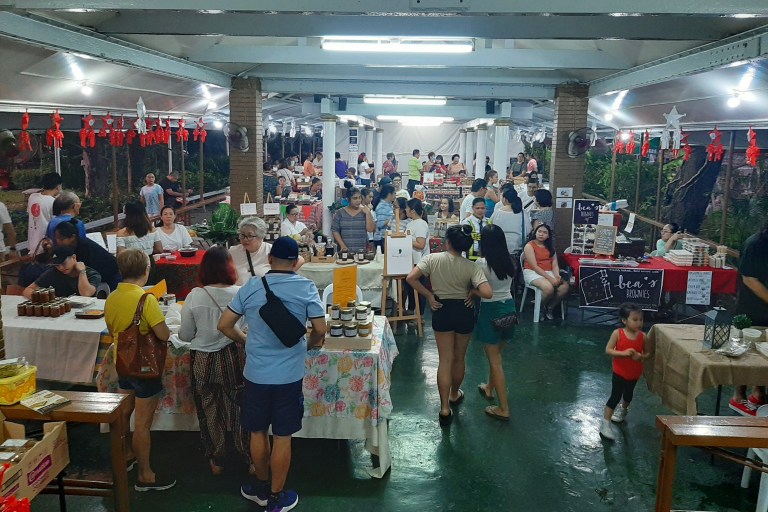
A look at just one section where the first-ever BF HomeSarap Community Food Fair was held inside BF NorthWest. This one was taken at a covered facility near the open-air basketball court (where the other vendors were present and selling too).
With all of these mentioned, you must be wondering: Who started BF HomeSarap in the first place? Why was it established? How did it happen? Where will BF HomeSarap head to now that its presence online and within the real environment inside BF Homes has been felt?
For all of you, my readers and food enthusiasts, I am happy to present to you my interview with BF HomeSarap founder and food stylist Ditas Antenor.
To begin with, Ditas Antenor worked in the corporate world as an advertising executive and worked with her employer’s big-time clients. After more than a decade managing multinational accounts in various multinational ad agencies, she moved on to the production side and there she became a food stylist. She even spent time in the United States to learn about food styling (for print and broadcast).
“I decided back then to take up food styling because I made plans regarding my career ahead of time,” Antenor recalled. “I really planned ahead. I could quit my nine-to-five job and engage in freelancing. So what would be a good, lucrative freelance job that I know I could be good at? That was food styling which is rare (in the Philippines.)”
Back then, food stylists in the Philippines were rare. Antenor became the fifth among the already established food stylists at the time. She eventually got hired by some clients and established herself nicely. Raised as an Alabang Girl, she and her children currently live in the Las Pinas City part of BF Homes subdivision.
BF HomeSarap’s origin and tremendous growth within Facebook
So how did BF HomeSarap start as a group within Facebook? It all started with a trigger on the part of its founder Ditas Antenor.
“There was a trigger. It was related to me and my kids moving into BF Homes subdivision coming from Alabang. Our house here in BF has been around for a very long time,” Antenor said. “My kids grew up with my cooking. Although they enjoy commercial foods like pizza or burgers that can be ordered, they can only eat those sometimes and ultimately they still love home-cooked food.”
Being the highly focused planner she has always been, Antenor had prepared menus for their family up to a few months ahead. She does the home cooking and, from time to time, her children cook adding variety. The love for home cooking, good food and relationships all connected with the beginning of BF HomeSarap.
“Then one day, I said to myself ‘maybe I should form a group’. I’m not an original member of the BF Homes community but still this is our home, even if I still maintain and occasionally stay in our Alabang house” Antenor recalled. “After doing an initial search for food-related FB groups that were related to BF Homes, I formed an FB group for BF by BF focused on home-cooked food.”
Along the way, the founder recalled her efforts on forming a name for the FB group that is unique and would strongly resonate with food enthusiasts and BF Homes residents and stakeholders. The result, clearly, was BF HomeSarap which was a clever combination of the name of the subdivision as well as the Tagalog word “Sarap” (English: Delicious).
“The name BF HomeSarap was formed out of my intention to include the local community’s name while reflecting people’s enjoyment of good home-cooked food. It had to be catchy and relevant at the same time. After searching for possible combinations of words, I came up with ‘sarap’ to partner with BF Homes,” she stated.
BF HomeSarap was created on April 2019 by Antenor reflecting her interest of good, home-cooked food her children would enjoy while establishing ties with the many members of the BF Homes community who share her interest.
The result? The membership of BF HomeSarap on Facebook went from zero to over eight thousand as of this writing. The members were a big mix of food enthusiasts as well as home-based cooks who are quietly selling food or drinks through their respective small-sized businesses. Already several small-time food sellers posted food or beverages for sale complete with contact numbers, prices, ways on how to avail of ordered items and the like. BF HomeSarap excludes the bigger, commercial food sellers giving more space and priority to the small ones. Along the way, there were a lot of buyers who had been searching for tasty home-cooked food. The result is BF HomeSarap establishing itself as a very lively online community whose members are united by home-cooked food and delicacies.
Of course, not just anyone could join the BF HomeSarap FB group. With the help of a few friends (who lived in BF Homes for a long time) and her daughter, Antenor and her co-administrators carefully review the many pending applications of FB users who wanted to join in as well as the many private messages sent.
“The membership of BF HomeSarap just kept on growing fast. Along the way, we made sure it would not become just another buy-and-sell type of Facebook group. I really wanted it to be an online community about good, home-cooked food and BF Homes which will be engaged with good quality content from time to time. I really want community engagement,” she said.
To engage the BF HomeSarap group members, Antenor researched online about the latest food trends, what kind of food people like lately, cooking tips, recipes and the like. The result was her releasing unique content in the form of articles, short videos, special greetings and customized images that get posted in the group occasionally. This approach of hers helped keep BF HomeSarap interesting and engaging, and prevented it from becoming stale or getting too flooded with sales-related posts.
For the future, Antenor stated that she is still striving to come up with ideas to make life better for the sellers and buyers of the group. She is exploring how to establish a dedicated delivery system that will carry BF HomeSarap’s name and cater to the clients’ needs. She and her team are also looking for other enclaves around BF Homes that could possibly host the next edition of the BF HomeSarap Community Food Fair this year.
With almost 9,000 members counted (and growing) and continued daily engagement, BF HomeSarap is undoubtedly the premier FB group focused on home-cooked food with the people of BF Homes in mind. Even FB users from the rest of South Metro Manila noticed the group.
“BF Homes is very unique,” Antenor said in relation to the group’s phenomenal growth and influence.
“When I cook, I continue to engage the community. There is, indeed, a wealth of home-cooked food in this community. You just need to look for it. You just need to know who cooked it. Also, level up your food in terms of nutrition and quality. If you want good food for your family, aim for home-cooked. It can be cheaper and yet it can be prepared with the same love and care for the family.”
Thank you for reading. If you find this article engaging, please click the like button below and also please consider sharing this article to others. Also my fantasy book The World of Havenoris still available in paperback and e-book format. If you are looking for a copywriter to create content for your special project or business, check out my services and my portfolio. Feel free to contact me as well. Also please feel free to visit my Facebook page Author Carlo Carrasco and follow me at HavenorFantasy@twitter.com
For more South Metro Manila community news and developments, come back here soon. Also say NO to fake news, NO to irresponsible journalism, NO to misinformation, NO to plagiarists and NO to sinister propaganda when it comes to news and developments.
Note: Article cover photo contains images from the book “SULÓ: Where Taste Was Style”, written by author/founder Erlinda Panlilio, published in 2015 by Anvil Publishing.
The City Government of Muntinlupa proved it has the heart to assist others who badly need help in times of disaster as the local authorities approved big-time relief for the many victims of the recent Taal Volcano eruption.
Firstly, the City Council of Muntinlupa approved on January 14 the Mayor Jaime Fresnedi’s proposal of a P3,000,000 donation for the municipalities of Talisay, Laurel & Agoncillo, Batangas as aide for the victims of Taal Volcano eruption for their recovery and rehabilitation.
Fresnedi called for the public to continue to stand in prayer for the safety of affected families in Batangas and encouraged city residents to participate in donation drives.
Secondly, the City Government sent 3,417 grocery packs and 381 six-liter bottles of water to evacuation centers in coordination with Batangas Incident Command Post in Fernando Air Base, Lipa City on January 15. Muntinlupa Social Services Department head Analyn Mercado confirmed that the said relief packs went to the cities and municipalities of Calaca, Alfonso, Nasugbu, Batangas, Bauan, San Pascual, Balayan, and Sto. Tomas
Relief packs given to evacuees include canned goods, water, rice, sleeping mats, utensils, clothes, and other non-food items. Mercado added that an additional 300 sacks of rice and another 2,828 six-liter bottles of water will be distributed to the evacuees in the following days.
The City Government of Muntinlupa is still accepting any kind of donations at Muntinlupa Resiliency Building (Hall of Justice Compound) in Brgy. Tunasan or Annex Building, Muntinlupa City Hall.
To donate, the public may coordinate with SSD at (02) 8861 6223 and may look for Ms. Analyn Mercado.
It is depressing to watch news or see social media postings about many people whose lives got disrupted by the recent eruption of Taal Volcano which spew not only a massive amount of ash into the air (affecting Metro Manila) but also caused physical damage on all communities close to it.
Many people had to leave their homes and wait for assistance from the many emergency response personnel (who are undoubtedly working hard) deployed by the local authorities.
Meanwhile, several donation-driven initiatives or charitable operations to provide public assistance (in cash or in kind) to the victims were launched very recently. For its part, the City Government of Muntinlupa approved legislation of a P3,000,000 donation to Taal Volcano Eruption victims. The City Government also launched a public donation drive as well.
If you are here in the South Metro Manila area of the Philippines and you wish to donate, consider the following:
BARANGAY BF HOMES
Where: Barangay BF Homes Public Safety Department, Barangay BF Homes hall, Elsie Gatches street, Paranaque City
Contact number: 8809-8843
What to donate: Drinking water (encouraged by Barangay Captain Paolo Marquez), clothes, towels, blankets, food, toiletries, N95 masks, candles and matches.
Where: Classroom 1, Victory Alabang, 4th level, Festival Mall, Filinvest City, Muntinlupa City
Contact number: 8771-1212
What to donate: Canned goods, bottled water, medicine, face masks, blankets, new towels, toiletries (toothbrush, toothpaste and soap) and used clothes.
Where: Commerce Avenue corner Filinvest Avenue, Filinvest City, Alabang, Muntinlupa City
Contact number: 8893-1450
What to donate: Canned goods (preferably those easy to open), flashlights, ready-to-eat food, bottled water, face masks, hygiene kits and towels, blankets and mats, basic medicine, clean clothes, paper plates, cups, plastic utensils
What to donate: Laundry items, toiletries, medicine, children’s clothes and toys, bottled water, dog and cat food, food containers, pillows, mats, blankets, slippers
Here in the Philippines, Taal Volcano erupted on January 12 pushing a massive amount of volcanic ash high up into the air. A short time later, the ash spread around and reached parts of Metro Manila.
The next morning, I went out for my usual hike here in Muntinlupa City going to Filinvest City. Along the way while inside our village, the volcanic ash were around me – on the side of the roads, the sidewalks, on top the leaves of some trees and over the surfaces of vehicles parked nearby. There was also collected ash that got wet as it rained the previous night.
Then I visited the local village park and saw the following…
At the park.Volcanic ash still somewhat wet on this slide.Look at all that wet ash.
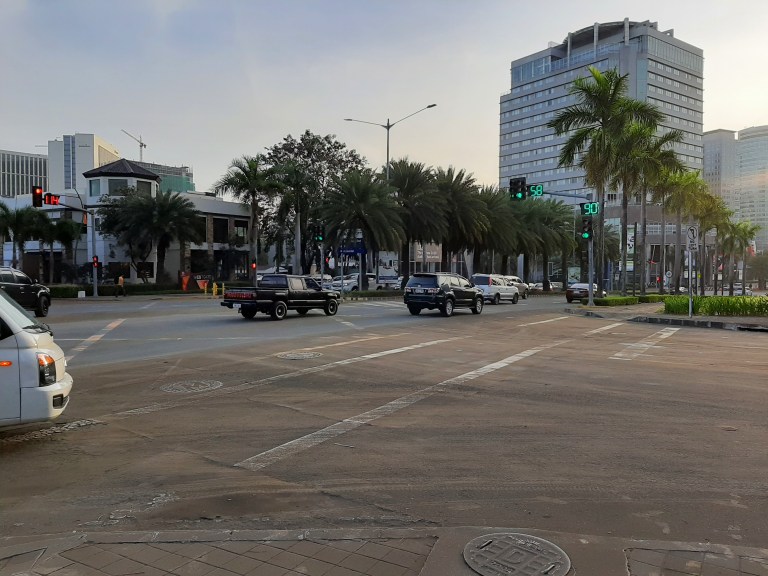
I hiked on to Filinvest City. As light from the sun was bright enough, the ash on the road and the sidewalk became clearer. There were also prints of shoes, slippers and tire tracks spotted. I took the opportunity to photograph them.
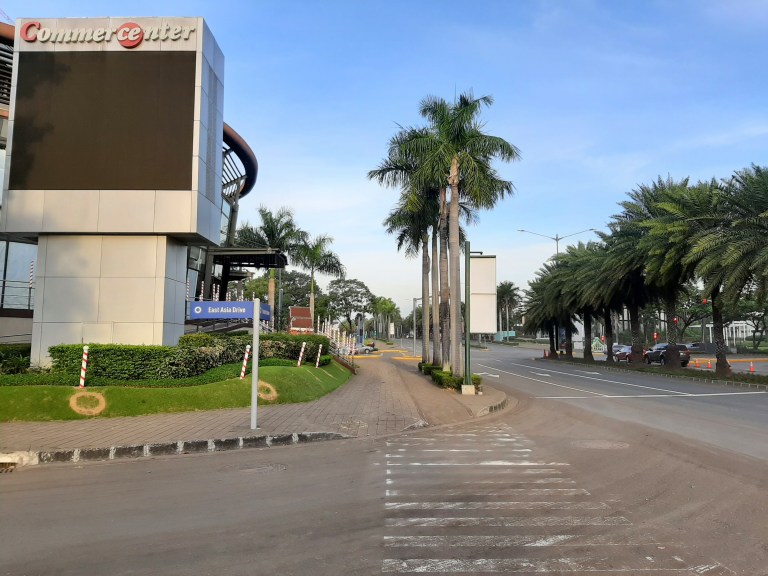
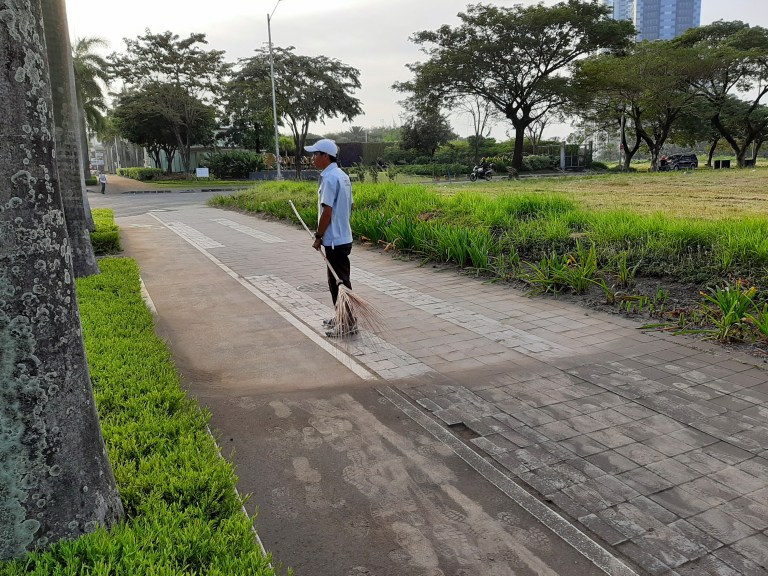
Lots of ash on the surface of the road in Filinvest City, Alabang.The view outside Commercenter.This guy was the first Filinvest City cleaner (he wore a Filinvest City uniform) I saw along Commerce Avenue.
I went further to Festival Mall. Unsurprisingly their roads and parking lots had lots of ash around. As I walked on, I wondered how many people with equipment they will deploy to clean up their parking spaces.
At one of the parking lots of Festival Mall.
So I saw a lot about the volcanic ash in Alabang that morning. Certain things I saw during my morning hike reminded me a bit of what I saw back in 1991 regarding the volcanic ash Mount Pinatubo released. Metro Manila was not spared back then.
Still nothing prepared me for the volcanic ash that I saw as I drove from Alabang to our office in Laguna via the South Luzon Expressway (SLEX). As many vehicles moved both ways along the highway, there as a lot of Taal Volcano’s ash the view became less visible on certain stretches.
Then I took a short stopover at one of the gas stations along the SLEX. Here is what I saw.
So much volcanic ash on the open space.A maintenance worker struggles to collect the volcanic ash.
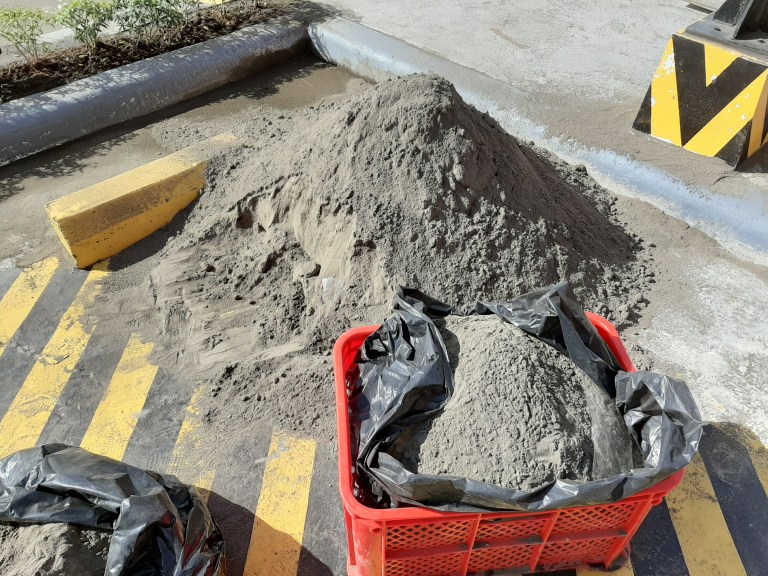
The gas station was dirty with the volcanic ash. Many cars that were there were also dirty and people, including the maintenance workers, were seen wearing face masks. I witnessed one maintenance worker near me doing clean-up work by moving the volcanic ash into a pile and then collecting them and storing them into a black garbage bag.
More of the ash collected at the place.
Seeing him work like that made me pray that he and all other personnel assigned to do cleaning will get compensated well by their respective employers. There is so much Taal Volcano ash around, it will take quite some time and effort before achieving cleanliness.
I also pray that the victims – those who live in close proximity to Taal Volcano – will receive sufficient assistance from the local authorities as well as private donors or groups doing charity work. This is because those victims’ lives got disrupted and many of them had to leave their homes temporarily.
One credible organization to donate to is Operation Blessing Foundation Philippines which announced already its campaign to help Taal Volcano victims. Visit their website right here. Another worthy organization accepting donations is New Life Community Care.
The victims of the natural disaster need our help and prayers. Remember that.
So that’s it. January 13, 2020 will be remembered as one of the most unusual Mondays I had in many years. Given the tremendous amount of volcanic ash spotted EVERYWHERE I went that day, it is fitting for me to call the day as Ash Monday.
Thank you for reading. If you find this article engaging, please click the like button below and also please consider sharing this article to others. Also my fantasy book The World of Havenoris still available in paperback and e-book format. If you are looking for a copywriter to create content for your special project or business, check out my services and my portfolio. Feel free to contact me as well. Also please feel free to visit my Facebook page Author Carlo Carrasco and follow me at HavenorFantasy@twitter.com
Disclaimer: This is my original work with details sourced from reading the comic book and doing personal research. Anyone who wants to use this article, in part or in whole, needs to secure first my permission and agree to cite me as the source and author. Let it be known that any unauthorized use of this article will constrain the author to pursue the remedies under R.A. No. 8293, the Revised Penal Code, and/or all applicable legal actions under the laws of the Philippines.
When Marvel Comics first launched the 2099 imprint of comic books showcasing many futuristic versions of their present-day characters – like Spider-Man, Ravage and Dr. Doom – it was inevitable that the same treatment will be applied to their popular supervillains.
In 1993, the 2099 version of Vulture was introduced and he sure proved to be one tough opponent for Spider-Man 2099. Even back then, there already was clamor for a futuristic version of Venom which at the time was riding high with readers being the featured anti-hero in several limited series (starting with Lethal Protector) of comic books.
Then in 1995, after doing a creative teaser in issue #34, Marvel formally introduced Venom 2099 by releasing Spider-Man 2099 #35. This is my review of the comic book written by Peter David and drawn by Andrew Wildman (X-Men Adventures).
The cover drawn by Rick Leonardi.
Early story
Picking up from the events of issue #34, the story begins in Washington, DC with Dana freeing herself only to find out that Alchemax’s CEO Tyler Stone was down suffering from a gun shot and losing blood. Minutes later, emergency personnel take Stone’s body for immediate treatment.
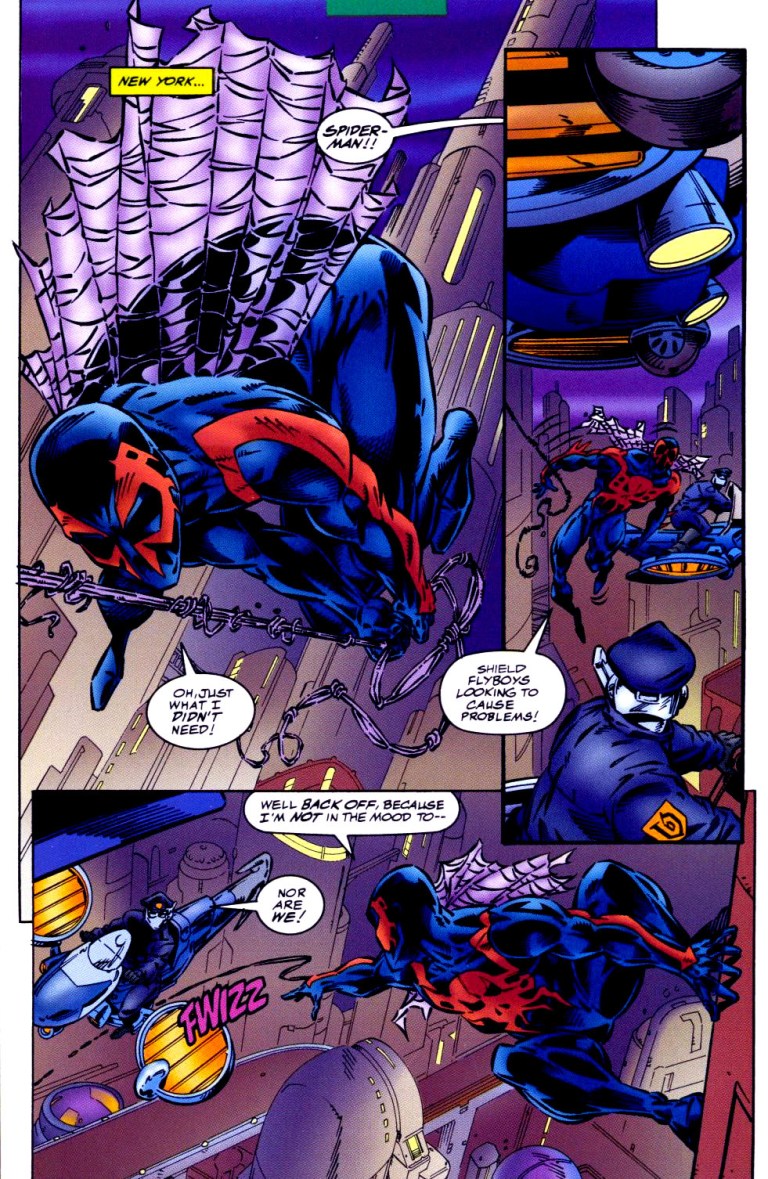
Meanwhile, Spider-Man 2099 (Miguel O’Hara) encounters the SHIELD flyboys in New York. After almost getting into trouble together, Spidey gets informed that US President Doom 2099 ordered them to leave him alone for a period of seventy-two hours while he considers a cabinet offer. Back in Washington, Dana gets interrogated by one of the authorities. President Doom enters the scene telling Dana that she will join Tyler Stone immediately in the medical center.
Andrew Wildman’s take on Spider-Man 2099 and the future was really nice to look at.
In New York, two guys sitting on the sidewalk witness a moving black liquid coming out of the sewer. The thing turns out to be a living symbiote (or alien costume) forming into a human-like shape – Venom 2099!
Quality
As with other comic books of this particular series, the writing by Peter David is pretty deep and engaging. The usual balance between dramatization, character development, plotting and spectacle is here once again but with a slight touch of horror in relation to the introduction of Venom of 2099. Speaking of dramatization, the portrayal of Venom 2099 as a vicious villain is similar to the 20th century Venom (Eddie Brock) but with a very powerful obsession to kill Miguel O’Hara and Tyler Stone.
Here’s an excerpt from the dialogue of Venom of 2099: Miguel O’Hara…and Tyler Stone…together again. We…I get to kill you…at the same time…how awfully…awfully…considerate. To show my appreciation…I’ll kill you slowly.
What makes this comic book unique is the artwork by Andrew Wildman who temporarily replaced regular illustrator Rick Leonardi. For comparison, I find Wildman’s art style a welcome thing in this comic book mainly because he draws with a lot more detail per panel and per page than Leonardi ever could. Instead of seeing the usual sketch-like art style of Leonardi, Wildman’s style is livelier and more expressive to look at. I also enjoyed Wildman’s visual take on Spider-Man 2099/Miguel O’Hara, Lyla, Tyle Stone, and the other established characters. Their facial expressions are also livelier to see.
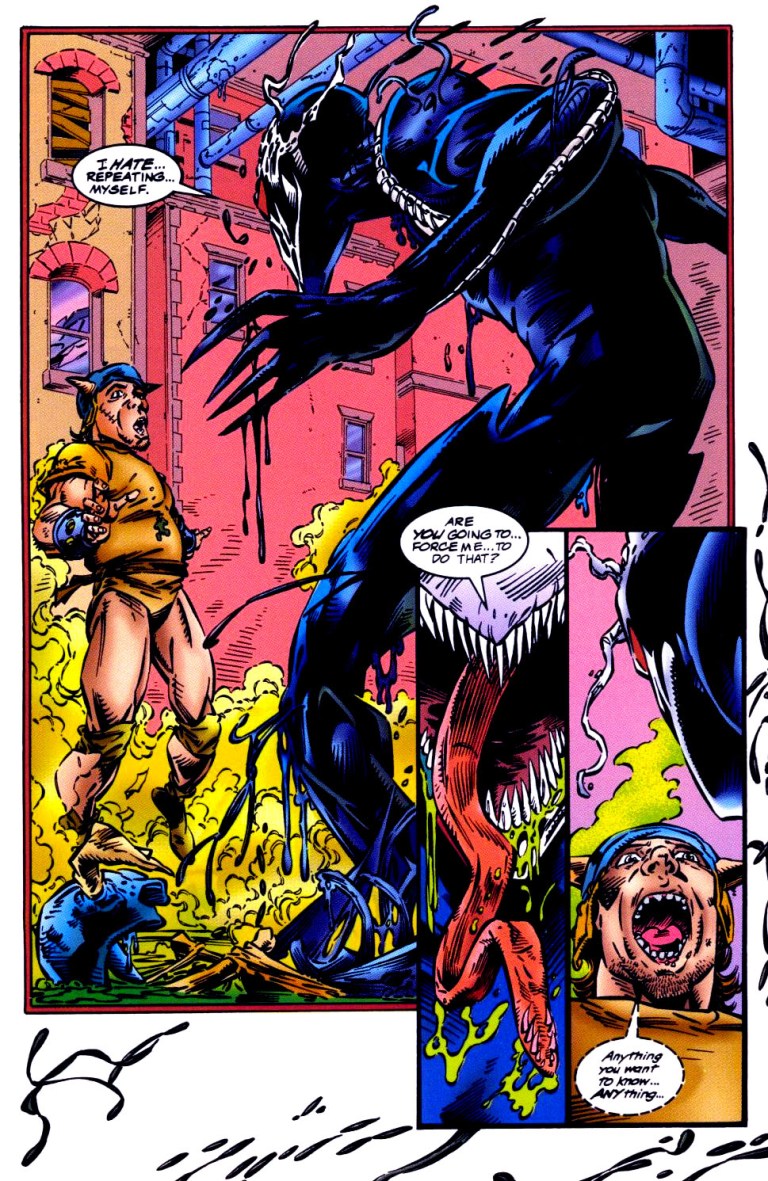
Venom 2099 appears! Take note of the “liquid” at the edges of the page.
More on visuals, Wildman’s take on Venom 2099 is unforgettable. Like 20th century Venom, he has a dark suit, elongated jaw with rows of sharp teeth and an elongated tongue but with green acid dripping all the time. There are also those tentacles-like things that stretch from his body until the arms. Also his white-colored mask with large eyes make him look horrific.
Conclusion
Despite being shorter than the usual 22-pages, Spider-Man 2099 #35 is still a very engaging and fun old comic book to read. Its purpose was to build-up anticipation leading to the introduction of Venom 2099 was achieved nicely and the respective qualities of the writing and visuals are very good even by today’s standards. More on the presentation of Venom of 2099, it seems like Peter David took inspiration from movie director James Cameron on building-up tension and suspense before showing the villain. That’s a move I enjoyed in this comic book.
Overall, Spider-Man 2099 #35 is highly recommended. If you plan to acquire an existing and legitimate hard copy, be aware that the near-mint copy of it is over $100 for the newsstand version while the Rich Leonardi-drawn “Venom 2099 AD” cover version is priced at over $80 at MileHighComics.comas of this writing.
Thank you for reading. If you find this article engaging, please click the like button below and also please consider sharing this article to others. Also my fantasy book The World of Havenoris still available in paperback and e-book format. If you are looking for a copywriter to create content for your special project or business, check out my services and my portfolio. Feel free to contact me as well. Also please feel free to visit my Facebook page Author Carlo Carrasco and follow me at HavenorFantasy@twitter.com
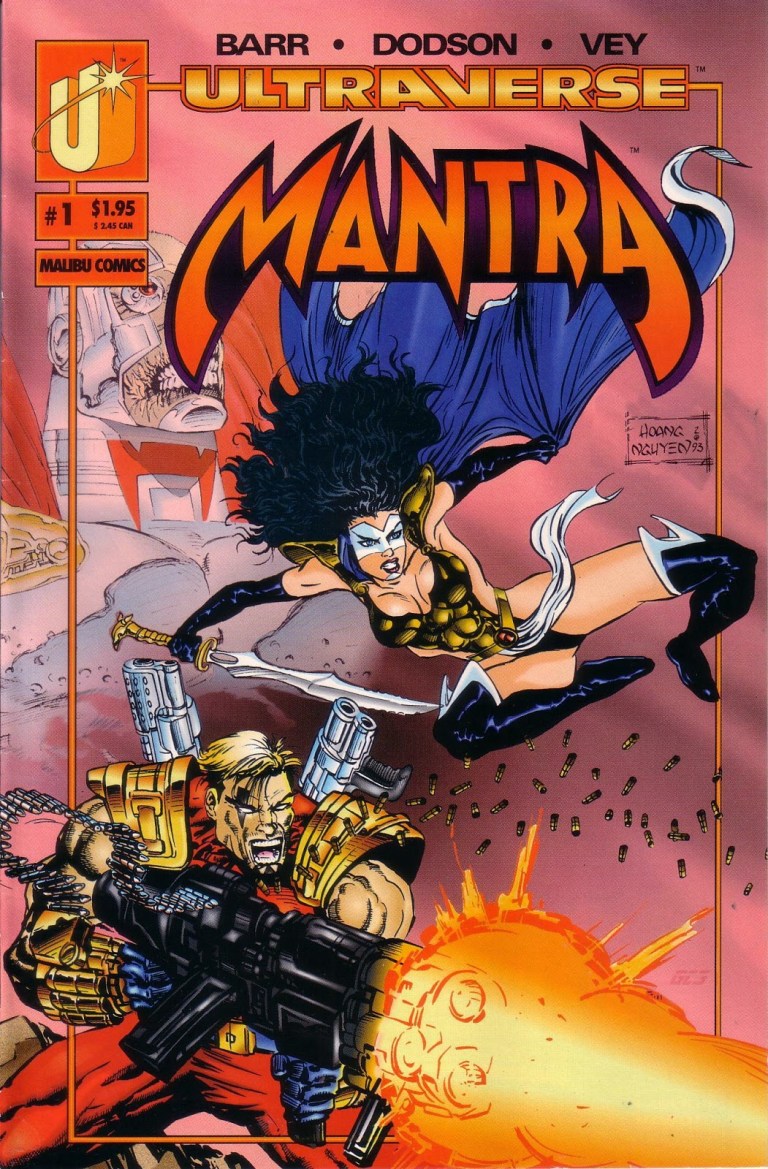
If there is any intriguing way of utilizing fantasy concepts to introduce a superhero (or superheroine) to readers, Mantra #1 from the Ultraverse published in 1993 by Malibu Comics is one fine example.
The cover of Mantra #1.
Early story
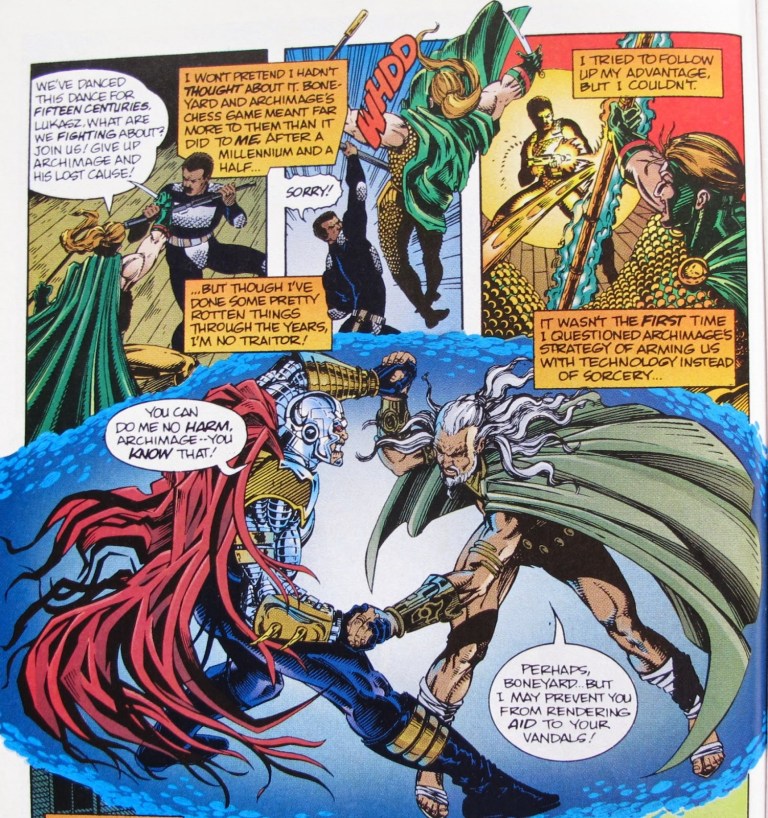
Written by Mike W. Barr with art by Terry Dodson, Mantra #1 was an Ultraverse launch comic book that follows Lukasz who is an eternal warrior belonging to a group of other warriors which had been fighting another group (led by eventual Ultraverse villain Boneyard) for several centuries.
How did that conflict last that long? As told through the views of Lukasz, any individual warrior who dies will eventually be placed in a new body (often that of an existing person) and take control of it effectively displacing the its soul. Behind it all, Archmage, the leader of the warriors’ group that includes Lukasz, uses magic to ensure that each member will be reincarnated after dying.
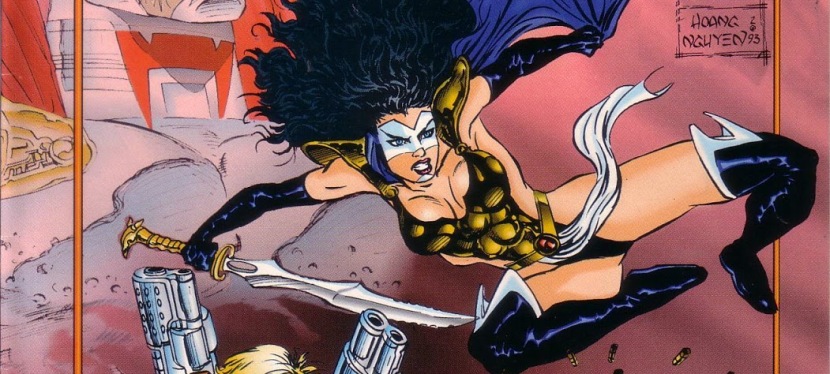
A page for your viewing pleasure.
The story takes a major turn for the shocking and intriguing when something unfortunate happens to Archmage and that the protagonist himself gets killed again. Fortunately for him, he gets to live one more time but there is one major difference – Lukasz occupies the body of a woman named Eden Blake (and the revealing scene remains shocking).
At this point, I don’t want to spoil the rest of the story. If you want to find out how Mantra came to be, you just have to read the comic book yourselves.
Quality
From an analytical view, I still find Mantra’s concept very intriguing to this day. In terms of mysticism, it reminds me a little bit of George Perez’s take on Wonder Woman in the mid-1980s and in some cases Mantra/Eden Blake herself reminds me bit of Wonder Woman/Diana albeit in a more motherly way.
When it comes to storytelling, Mike W. Barr’s script is very solid and made very good use of the twenty-eight (28) pages of the comic book. Unsurprisingly, there was a good amount of expository dialogue and narration but it was handled efficiently. The first-person views of Lukasz/Eden Blake are truly immersive to read. Along the way, there were several scenes that were intriguing to read and there were some nice moments of unintentional comedy which helped balance the overall tone of the story.
To say the least, Mantra’s concept about dead warriors’ souls entering bodies of existing people to live again sheds light on the moral or psychological implications of such events. If you were a warrior who just died and eventually got a new lease on life by occupying the body of let’s say a software company’s chief executive officer, would you not be concerned as to what happened to the soul (of the body) you displaced? Would you not think about how your control of that displaced soul’s body would affect not only the person’s established life but also the personal association with other people? Truly Mike Barr’s writing got me hooked and Terry Dodson’s art really brought his concepts to life.
Conclusion
So what else could I say? Mantra #1 is highly recommended not only because of its story and concepts but also because this particular series lasted several issues more and, for the most part, Mantra’s adventures and misadventures have often been fantastic and fun.
Even though it is fact that the Ultraverse remained in limbo and Marvel Entertainment showed no intention to revive the franchise, Mantra is still a fun and engaging comic book series to read and this comic book is the golden start of it. Mantra #1 itself is one of the most defining superhero comic books of the 1990s ever published and its mature themes combined with strong fantasy concepts made it stand out among all of those other superhero comic books I spotted on the shelf of a BF Homes comic book store that I visited in July 1993.
You guys can order copies Mantra #1 online at ComicCollectorLive.com, at MileHighComics.com (a near-mint holographic cover version of the comic book is worth over $40) or by visiting your local comic book retailer selling old issues.
Author’s Note: This article was originally published at my old Geeks and Villagers blog. What you just read on this website is the most definitive version.
Thank you for reading. If you find this article engaging, please click the like button below and also please consider sharing this article to others. Also my fantasy book The World of Havenoris still available in paperback and e-book format. If you are looking for a copywriter to create content for your special project or business, check out my services and my portfolio. Feel free to contact me as well. Also please feel free to visit my Facebook page Author Carlo Carrasco and follow me at HavenorFantasy@twitter.com
Hey everyone! Have you shopped at a Duty Free Philippines yet? Me? I have not been to a Duty Free Philippines outlet or shopping center for quite some time now.
Duty Free Philippines Corporation (DFPC) announced today that it grew 4% in 2019 in terms of year-on-year sales growth. Notably, the achieved growth was a clear improvement over the 2% growth it achieved in 2018.
To put things in perspective, the consolidated sales reached a total of $226 million in 2019 compared with $217 million the previous year.
In relation to the latest statistics, DFPC chief operating officer Vicente Pelagio Angala said the Philippines’ hosting of the Southeast Asian Games (SEA Games) and the opening of Duty Free Luxe have significantly contributed to the upswing.
He said the growing number of tourists visiting the newly-rehabilitated Boracay Island via Kalibo Airport has been beneficial to DFPC sales.
When it comes to the top source markets, 85% came from Filipino tourists, balikbayans (visiting Filipinos who live overseas) and overseas Filipino workers (OFWs).
Confectionery is still the major growth driver, with 31 percent share of the total sales, followed by liquor (21 percent), fragrance and cosmetics (18 percent), and fashion merchandise (10 percent).
The DFPC claimed it has met a number of significant milestones last year, including the opening of “Go Lokal’s” Marahuyo this past November.
“In line with the directive of Department of Tourism (DOT) Secretary Bernadette Romulo-Puyat and in partnership with the Department of Trade and Industry (DTI), we have augmented our product portfolio which now includes more local artisans,” Angala said.
With the agency’s strong commitment to giving top local products a global audience, DFPC was recognized as “Highly Commended CSR Initiative of the Year “at the 2019 Frontier Awards in Cannes, France for supporting The Micro Small & Medium Enterprises (MSMEs).
The DFPC has expanded the list of exclusive brands that it carries which now includes: Gucci Beauty, Armani Beauty, Hogan, and MCM. Last year, it also embarked on the renovation of the Fiestamall and NAIA Terminal 1 Arrival stores.
DFPC is expected to maintain the momentum in 2020 with the opening of Duty Free store at the Hilton Sun Valley Resort inside Clark Freeport Zone by the first quarter of this year.
For everyone’s reference, the DFPC is the country’s sole operator of the duty-and tax-free merchandising system, and a vital component of the DOT as it contributes to the efforts in the development of the country’s tourism infrastructure, programs, and projects through revenue remittances. There are Duty Free Philippines outlets and shopping centers around the Philippines including Parañaque City (Fiestamall shopping center), Cebu province, and Clark International Airport to name a few.
For further learning, posted below is the official FAQ of Duty Free Philippines.