RCBC chief economist says that Philippine economic growth target likely to be hit this year

In light of the recent news that the Philippine economy grew by 6.4% in the first quarter of 2023, the chief economist of Rizal Commercial Banking Corporation (RCBC) says that the nation’s economic target for this year (for references, click here and here) will likely be hit, according to a Philippine News Agency (PNA) news report.

To put things in perspective, posted below is an excerpt from the PNA news article. Some parts in boldface…

The government’s 6 to 7 percent economic growth target will likely be met this year despite possible effects of El Niño, an economist said on Friday.

Rizal Commercial Banking Corporation chief economist Michael Ricafort told the Philippine News Agency (PNA) that the 6 to 7 percent gross domestic product (GDP) expansion is possible amid easing year-on-year inflation that could help reduce the drag of higher prices on economic growth.

Fed (US Federal Reserve) and local policy rates could also be reduced later this year and into 2024 amid easing inflation, and as the economy further reopens towards greater normalcy with no more lockdowns as a policy priority,” he said.

Inflation reached as high as 8.7 percent in January. It has however started to decelerate and settled at 6.6 percent in April.

Ricafort said the possible effects of El Niño later this year and up to 2024 could lead to reduced agricultural output and some pick up in prices, “but would not have a significant drag on GDP growth.” he said.

“[Philippine] economic growth [is] expected to be among the fastest-growing in the region and among major economies around the world amid favorable demographics of the country with more than 110 million Filipinos, majority of Filipinos already at working age, (and) young average age of less than 25 years old, all of which would support GDP growth of at least 6%-7% in the coming years,” he said.

He noted that other possible drivers of growth would be increased consumer spending due to lower individual income tax rates, high overseas Filipino workers’ remittances, further increase in government spending, the continued growth of business process outsourcing, and the resumption of foreign tourism.

Let me end this piece by asking you readers: What is your reaction to this recent development? Do you think the Philippines will achieve 2023 economic growth between 6% to 7%?

You may answer in the comments below. If you prefer to answer privately, you may do so by sending me a direct message online.

+++++

Thank you for reading. If you find this article engaging, please click the like button below, share this article to others and also please consider making a donation to support my publishing. If you are looking for a copywriter to create content for your special project or business, check out my services and my portfolio. Feel free to contact me with a private message. Also please feel free to visit my Facebook page Author Carlo Carrasco and follow me on Twitter at  @HavenorFantasy as well as on Tumblr at https://carlocarrasco.tumblr.com/ and on Instagram athttps://www.instagram.com/authorcarlocarrasco

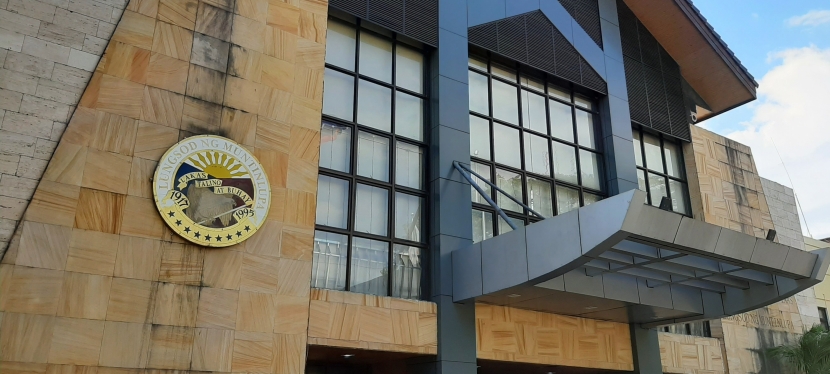
Muntinlupa City Government releases over P2.5 million zero-interest loans to local entrepreneurs

Recently in the progressive city of Muntinlupa, the City Government released zero-interest loans to over one hundred and twenty local entrepreneurs amounting to more than P2.5 million, according to a news report by the Manila Bulletin. This is the latest move by the City Government boost the local economy.

To put things in perspective, posted below is the excerpt from the Manila Bulletin news report. Some parts in boldface…

The Muntinlupa City government released P2.58 million worth of loans with zero interest to local entrepreneurs.

A total of 125 entrepreneurs were the beneficiaries of the city government loans released through the Muntinlupa Entrepreneurship Financing Division (MEFD).

One of the priorities of the local government is focusing on our home-grown entrepreneurs. This is part of our efforts to boost the local economy,” said Mayor Ruffy Biazon.

The beneficiaries, who are composed of micro, small, and medium-sized enterprises, comprised the 148th batch of the long-running program.

Biazon encouraged the beneficiaries to make the most of this opportunity to improve their business and their way of life.

Let me end this piece by asking you readers: If you are a Muntinlupa City resident, what is your reaction to this development? Do you hope to see the City Government release even more zero-interest loans to local entrepreneurs? If you are running a small business in the city, have you availed of the loans from the City Government?

You may answer in the comments below. If you prefer to answer privately, you may do so by sending me a direct message online.

+++++

Thank you for reading. If you find this article engaging, please click the like button below, share this article to others and also please consider making a donation to support my publishing. If you are looking for a copywriter to create content for your special project or business, check out my services and my portfolio. Feel free to contact me with a private message. Also please feel free to visit my Facebook page Author Carlo Carrasco and follow me on Twitter at  @HavenorFantasy as well as on Tumblr at https://carlocarrasco.tumblr.com/ and on Instagram at https://www.instagram.com/authorcarlocarrasco

For more South Metro Manila community news and developments, come back here soon. Also say NO to fake news, NO to irresponsible journalism, NO to misinformation, NO to plagiarists, NO to reckless publishers and NO to sinister propaganda when it comes to news and developments. For South Metro Manila community developments, member engagements, commerce and other relevant updates, join the growing South Metro Manila Facebook group at https://www.facebook.com/groups/342183059992673

Philippines tourism gains from influx of South Korean visitors

Tourism in the Philippines continues to progress in terms of attracting visitors from overseas as tourists from South Korea emerged as the top source of foreign visitors this year, according to a news article published by the Philippine News Agency (PNA).

To put things in perspective, posted below is an excerpt from the PNA news article. Some parts in boldface…

South Korea is again the Philippines’ top source of foreign visitors so far this year.

Tourism Secretary Christina Frasco bared this on Thursday when she greeted a batch of 300 travelers from South Korea at the Mactan-Cebu International Airport.

The travelers are members of the Korea branch of UNICITY, a direct selling company on health functional foods, cosmetics and household items and with over 60 markets globally. 

As a reward to their top agents, sellers, and distributors, UNICITY-Korea sends a big volume of incentive groups to Southeast Asian countries annually.

This year, the company is sending 1,400 people in four batches (April 9, 13, 17, and 21) to Cebu.

Department of Tourism data showed a significant pick up in Korean arrivals since last year, with 428,014 or a 16.13 percent share of the country’s arrivals received between Feb. 10 — when the country eased its borders for leisure travelers — up until Dec. 31, 2022

The good news is that as of today, we have over 1.5 million tourist arrivals to the Philippines and our number one top source market are the Koreans. So we’re very grateful to our friends from Korea for continuing to show their love for the Philippines as they have come back in droves, and the UNICITY group in particular, has come with a delegation of no less than 1,400 individuals,” Frasco said. 

Upon their arrival, the travelers were welcomed with leis and performances by Filipiniana-clad rondalla serenaders as well as by Sinulog dancers. 

Prior to the pandemic, Korea ranked number one in terms of visitor arrivals to the Philippines, with 1,989,322 or 24.08 percent of the country’s total number of arrivals for 2019.

Arrivals from Korea declined drastically during the pandemic, dropping to 338,877 and 6,456, for 2020 and 2021, respectively. 

“They’re coming on a daily basis and the numbers are increasing by the day. Last year, they were at number two, because it is the United States that [provided] our number one top source market. But this year, the Koreans have reclaimed the number one spot and we send out the message to all our friends in Korea, that you are more than welcome to keep coming back again and again to Cebu, Bohol, Palawan, and the rest of our beautiful islands in the Philippines,” Frasco said. 

PH as ideal MICE destination 

Frasco noted that the arrival of a delegation as big as the UNICITY group is a welcome development especially with the DOT “seeing MICE tourism become a very strong product for the Philippines and also for Cebu.”   

“They are staying for a few days and we expect that this will contribute greatly to the economy of Cebu in particular, and to the rest of the country in general, considering the multiplier effect of tourism is really so that they will support our local tourism stakeholders, our small and medium enterprises, and the like,” Frasco said. 

To further boost the Korean tourism source market and visitor arrivals, the DOT, through its office in Korea, carries out marketing initiatives including an online presentation to educate the MICE (meetings, incentives, conference, exhibitions) players in the Philippines about the Korean MICE market, as well as participation to upcoming key events such as business-to-business fairs, and a MICE roadshow. 

Let me end this piece by asking you readers: What is your reaction to this recent development? Do you think the Philippines will continue to attract even more visitors from South Korea? Do you hope to see some of the South Korean visitors settle here in the Philippines and help build up the national economy by establishing legitimate businesses and creating new jobs?

You may answer in the comments below. If you prefer to answer privately, you may do so by sending me a direct message online.

+++++

Thank you for reading. If you find this article engaging, please click the like button below, share this article to others and also please consider making a donation to support my publishing. If you are looking for a copywriter to create content for your special project or business, check out my services and my portfolio. Feel free to contact me with a private message. Also please feel free to visit my Facebook page Author Carlo Carrasco and follow me on Twitter at  @HavenorFantasy as well as on Tumblr at https://carlocarrasco.tumblr.com/ and on Instagram athttps://www.instagram.com/authorcarlocarrasco

For more South Metro Manila community news and developments, come back here soon. Also say NO to fake news, NO to irresponsible journalism, NO to misinformation, NO to plagiarists, NO to reckless publishers and NO to sinister propaganda when it comes to news and developments. For South Metro Manila community developments, member engagements, commerce and other relevant updates, join the growing South Metro Manila Facebook group at https://www.facebook.com/groups/342183059992673

SBMA chief Paulino declares 2022 a year of record-breaking accomplishments

During a high-level address to the stakeholders, Subic Bay Metropolitan Authority (SBMA) Chairman and Administrator Rolen C. Paulino declared that 2022 was a year of record-breaking accomplishments and the problems related to COVID-19 did not overwhelm them, according to a Business Mirror news article.

To put things in perspective, posted below is an excerpt from the Business Mirror news article. Some parts in boldface…

Subic Bay Metropolitan Authority (SBMA) Chairman and Administrator Rolen C. Paulino declared record-breaking accomplishments for Subic in 2022, as he made his first State of the Freeport Address (SOFA) here in a ceremony hosted by the Subic Bay Freeport Chamber of Commerce on Tuesday.

Comparing his administration’s undertakings against agency records in the last three years of the Covid-19 pandemic, Paulino presented a selection of successes under his “RCP” program that stood for revenue, customer-care, and plans and programs.

2022 was a banner year for the SBMA despite the fact that the country was just recovering from the hiatus brought about by the Covid-19 pandemic,” Paulino said.

“It was an opportune time to work together, so we could bounce back from the debilitating effects of the pandemic, [and] achieve our ultimate goal—to attract investments and, more importantly, create employment,” he added.

According to the Subic chief, revenue collections by various SBMA departments “have increased compared to 2021 figures and even surpassed pre-pandemic performance” because of intensive revenue collection measures.

As a result, the SBMA was able to turn over to the National Treasury a total of P1.33 billion, an amount 20 percent higher than the 2021 dividends of P1.11 billion, Paulino said.

Figures from the SBMA Business and Investment Group (BIG) indicated that the Subic agency recorded revenue collections of P1.69 billion from January to November 2022. Paulino was appointed chief of the SBMA in March 2022 at the tail end of the Duterte presidency.

On the other hand, the 2021 SBMA report to President Duterte indicated an operating revenue for the agency in the amount of P3.47 billion, or P270 million higher than the 2020 revenue.

Paulino also said that in July 2022, the Subic Bay Freeport was named the top tourist attraction in Central Luzon and number five in the Philippines, with 9.4 million same-day visitor arrivals in the free port.

SBMA figures indeed showed a growing year-on-year tourism growth, with the number of same-day visitors rising from 7.89 million in 2016 to 8.54 million in 2017, 9.23 million in 2018 and 9.56 million in 2019 before plunging to 5.19 million in 2020 when the Covid-19 pandemic curtailed tourism activities globally. Recovery, however, started immediately in 2021, putting the annual record at 7.37 million.

In terms of investments, Paulino reported approving 133 new investment projects with total committed investments of P14.06 billion and 38 expansion projects with commitments of P36.34 billion.

“That is a significant jump from P591 million in 2021, let alone P160 million in 2020,” he pointed out, crediting the accomplishment to “the aggressive marketing strategy of our Business and Investment Group.”

SBMA’s business group, according to its 2021 report, had recorded a strong performance at the tail end of the pandemic with P17.29 billion in committed investments in 2021, compared to P9.24 billion in 2019 before the pandemic, and P1.55 billion in 2020 at the height of the pandemic.

Paulino also said that with all the economic activities going on in Subic because of  new investments, an additional 4,700 jobs will be created soon on top of the 149,681-strong free port workforce today.

The Subic work force has consistently grown in numbers over the years: from 137,547 in 2019 to 138,966 in 2020, the beginning of the Covid-19 health crisis, and to 142,177 in 2021. Majority of the work force belonged to the services sector, which had continuously increased because of the growth in the transshipment and logistics business here, the SBMA Labor Department said.

Meanwhile, Paulino said that in 2022, the SBMA had provided revenue shares to neighboring local government units (LGU). He said Olongapo City received a total of P74.88 million last year, while Subic got P48.77 million; Castillejos, P29.74 million; San Marcelino, P38.54 million; San Antonio, P27.45 million; Morong, P28.1 million; Hermosa, P33.81 million; and Dinalupihan, P39.98 million for a total of P321.27 million.

This remittance was bigger than the LGU shares given by the SBMA during the pandemic: P277.98 million in 2020 and P306.77 million in 2021, but still did not top the shares given by the SBMA in 2019, which was P378.87 million, or even in 2018 at P369.26 million.

I myself was in the Subic Bay Freeport Zone during the summer of 2022 and I personally witnessed the post-pandemic revival there in the forms of tourists enjoying the places and the stores, restaurants and coffee shops attracting lots of customers. Indeed, the socio-economic recovery in Subic Bay Freeport is real and it will continue even though our nation is being hampered by inflation. If you are thinking about having a good time traveling here in the Philippines, I encourage you to visit the Subic Bay Freeport Zone. Also if you are looking for good places to eat or drink at during your next visit to Subic Bay, check out my feature articles of  Gourmet Garage Subic and Xtreme Xpresso Café. Also, there will be a big triathlon event there – the NTT ASTC Subic Bay International Triathlon (SuBIT) 2023.

+++++

Thank you for reading. If you find this article engaging, please click the like button below, share this article to others and also please consider making a donation to support my publishing. If you are looking for a copywriter to create content for your special project or business, check out my services and my portfolio. Feel free to contact me with a private message. Also please feel free to visit my Facebook page Author Carlo Carrasco and follow me on Twitter at  @HavenorFantasy as well as on Tumblr at https://carlocarrasco.tumblr.com/ and on Instagram athttps://www.instagram.com/authorcarlocarrasco

President Marcos says special powers not needed to curb inflation

In recent times, inflation has been strong in the Philippines and no less than the Bangko Sentral ng Pilipinas (BSP) confirmed this as it made its February 2023 inflation forecast. In relation to the high inflation, President Ferdinand “Bongbong” Marcos stressed that special powers are not needed to combat inflation, according to a news article by the Philippine News Agency (PNA).

To put things in perspective, posted below is an excerpt from the PNA news article. Some parts in boldface…

There is no need to ask for special powers to ease inflation, President Ferdinand R. Marcos Jr. said Wednesday, noting that several interventions are already in place to manage the prices of basic commodities.

Marcos made the remark a day after the Bangko Sentral ng Pilipinas (BSP) reported that the country’s headline inflation could surpass the 9 percent level in February because of high prices of cooking gas and key food items.

I do not think that it is necessary to ask for special powers,” he said in a chance interview on the sidelines of an event at the Rizal Park, when asked if he is considering asking Congress to grant him special powers to curb inflation.

I already have the power to declare an emergency and to control the prices of commodities. So, I don’t think there’s any need for more than that. That is efficient,” he added.

On Tuesday, the BSP said the inflation rate in February may fall within the range of 8.5 to 9.3 percent, citing the upside risks from higher prices of cooking gas and food items such as pork, fish, egg, and sugar.

Despite the BSP’s latest forecast, Marcos remained bullish that consumer prices would go down, saying his administration is exhausting all efforts to boost the supply of agricultural products.

“The other elements of inflation hindi natin masyado ma-control, kaya meron tayong ginagawang ganito para makabawi naman doon sa pagtaas ng presyo (We could not control the other elements of inflation, that’s why we are making a way to address the rise in prices of basic commodities),” he said.

Several lawmakers, including House Speaker Martin Romualdez, have expressed openness to granting Marcos special powers to curtail inflation.

In January, inflation accelerated further to 8.7 percent from 8.1 percent posted in December 2022.

Let me end this piece by asking you readers: What is your reaction to this recent development? Are you confident that the national authorities have what it takes to ease inflation without granting the President special powers? Do you see the current inflation as a temporary problem or as a longer lasting problem?

You may answer in the comments below. If you prefer to answer privately, you may do so by sending me a direct message online.

+++++

Thank you for reading. If you find this article engaging, please click the like button below, share this article to others and also please consider making a donation to support my publishing. If you are looking for a copywriter to create content for your special project or business, check out my services and my portfolio. Feel free to contact me with a private message. Also please feel free to visit my Facebook page Author Carlo Carrasco and follow me on Twitter at  @HavenorFantasy as well as on Tumblr at https://carlocarrasco.tumblr.com/ and on Instagram athttps://www.instagram.com/authorcarlocarrasco
AIA Philippines’ investment management arm expresses optimism of robust growth of the Philippine economy

Recently, the investment management arm of AIA Philippines expressed confidence that the Philippine economy will continue to have robust growth in connection with what they claim to be an expanding manufacturing sector, according to news article published by the Philippine News Agency (PNA).

To put things in perspective, posted below is the excerpt from the PNA news report. Some parts in boldface…

An official of the investment management arm of AIA Philippines is optimistic on the robust growth of the domestic economy as the manufacturing sector continues to expand.

In a briefing on Thursday, AIA Investment Management and Trust Corporation Philippines (AIAIM Philippines) chief executive officer Angie Pacis said the country’s manufacturing sector is expected to continue posting expansion following the seven-month high manufacturing index in January 2023.

“Notwithstanding the slight weakening of the business confidence and consumer confidence, businesses will still be on a growth track,” she said.

The S&P Global Manufacturing Purchasing Managers Index (PMI) hit 53.5 in the first month this year. An index of 50 and above indicate expansion while those below 50 indicate contraction.

Pacis said forecasts point to continued 50-level index in the coming months.

Pacis also identified demographic dividends as among the factors that will help boost domestic growth this year given the large number of young people who are part of the workforce.

It’s a young population, it’s a big population with a growing middle class that is actually becoming stronger. Because of that, we will continue to attract investments notwithstanding some of the structural problems,” she added.

These factors are seen to boost one-year-old AIAIM Philippine business, which currently offers three unit investment trust funds (UITFS) namely AIA Peso Adventurous Fund, AIA Peso Balanced Fund and AIA Peso Conservative Fund.

Pacis said the products they are offering are exclusively available for AIA Philippines policy holders for now, while the assets amounting to PHP155 billion they currently have will be handled purely without catering to outside investors.

Let me end this piece by asking you readers: What is your reaction to this new development? Were you able to understand the explanations from AIA Philippines investment management arm?

You may answer in the comments below. If you prefer to answer privately, you may do so by sending me a direct message online.

+++++

Thank you for reading. If you find this article engaging, please click the like button below and also please consider sharing this article to others. If you are looking for a copywriter to create content for your special project or business, check out my services and my portfolio. If you want to support my website, please consider making a donation. Feel free to contact me with a private message. Also please feel free to visit my Facebook page Author Carlo Carrasco and follow me on Twitter at  @HavenorFantasy as well as on Tumblr at https://carlocarrasco.tumblr.com/ and on Instagram at https://www.instagram.com/authorcarlocarrasco/.

Oxford Economics says Philippine economic growth will slow down to 4.1% this year

For Oxford Economics, the economy of the Philippines will achieve continued growth in 2023 but with a notable slow down to 4.1%, according to a BusinessWorld news report. Oxford Economics mentioned in its statement factors like the global economy entering recession, inflation and the lack of impact from China’s reopening.

To put things in perspective, posted below is the excerpt from the BusinessWorld news article. Some parts in boldface…

PHILIPPINE ECONOMIC GROWTH is expected to slow to 4.1% this year, as external headwinds and elevated inflation are seen to dampen domestic demand, Oxford Economics said.

After registering respectable growth of 7.6% in 2022, we expect the Philippines’ economy to slow to 4.1% amid global headwinds, elevated inflation, and a fading reopening boost. With monetary tightening set to continue, the economy could use a hand from the fiscal side, but chances are slim,” Makoto Tsuchiya, assistant economist at Oxford Economics, said in a research note released on Wednesday.

Oxford Economics’ gross domestic product (GDP) projection is well below the government’s 6-7% target.

It expects GDP to expand by 4.5% next year, still outside the 6.5-8% target set by the government.

We expect GDP growth to slow materially amid softer external demand as the global economy enters a recession, led by weakness in major advanced economies. We don’t think China’s reopening will be enough to offset this weakness, with the recovery in private consumption there likely to be lackluster,” Mr. Tsuchiya said.

There is a widely anticipated global recession this year, with the World Bank projecting global growth to slow to 1.7%.

Rising inflation is also seen to “substantially” slow the Philippine economy, Mr. Tsuchiya said.

In January, inflation soared to a 14-year high of 8.7%, marking the 10th consecutive month inflation was above the Bangko Sentral ng Pilipinas’ (BSP) 2-4% target range.

The central bank also raised its average inflation forecast to 6.1% this year from 4.5% previously.

Oxford Economics said that the BSP will continue to hike rates to tame inflation and keep in step with the US Federal Reserve.

Elevated inflation means policy makers will not be able to react by lowering interest rates. Indeed, we expect tightening to continue for at least the next two meetings, albeit at a slower pace — in contrast to other Asian central banks who can afford to pause,” Mr. Tsuchiya said.

Oxford Economics also cited the lack of policy support as a factor contributing to slower growth this year.

“We think significant support is unlikely given limited policy space on both the monetary and fiscal front. Ideally, fiscal policy would take over the burden of supporting growth. But debt accumulated during the pandemic era means the focus is instead on fiscal consolidation,” Mr. Tsuchiya said, noting that the Philippine government may adopt a more restrained approach in spending.

Oxford Economics expects the budget deficit will reach 2.7% of GDP by 2028, better than the 3% projection given by the Development Budget Coordination Committee (DBCC).

The government projects the fiscal deficit to hit 6.9% of GDP or around P1.5 trillion this year. In the 11 months to November, the budget deficit shrank by 7.2% to P1.24 trillion.

However, Oxford Economics said the debt-to-GDP ratio may remain elevated at 61.1% by 2025. This is higher than the 60% target set by the government in the same period.

The country ended last year with a debt stock at 60.9%, better than the 63.7% seen in end-September but still above the 60% threshold considered manageable by multilateral lenders for developing economies.

Let me end this piece by asking you readers: What is your reaction to this recent development? Do you think Oxford Economics’ prediction about 4.1% economic growth for the Philippines this year will turn out to be true? Do you think Oxford Economics made a strong case explaining why economic growth in 2023 will be smaller for the Philippines?

You may answer in the comments below. If you prefer to answer privately, you may do so by sending me a direct message online.

+++++

Thank you for reading. If you find this article engaging, please click the like button below, share this article to others and also please consider making a donation to support my publishing. If you are looking for a copywriter to create content for your special project or business, check out my services and my portfolio. Feel free to contact me with a private message. Also please feel free to visit my Facebook page Author Carlo Carrasco and follow me on Twitter at  @HavenorFantasy as well as on Tumblr at https://carlocarrasco.tumblr.com/ and on Instagram athttps://www.instagram.com/authorcarlocarrasco

For more South Metro Manila community news and developments, come back here soon. Also say NO to fake news, NO to irresponsible journalism, NO to misinformation, NO to plagiarists, NO to reckless publishers and NO to sinister propaganda when it comes to news and developments. For South Metro Manila community developments, member engagements, commerce and other relevant updates, join the growing South Metro Manila Facebook group at https://www.facebook.com/groups/342183059992673

BSP sees 6-7% economic growth in 2023 for Philippines

As far as the Bangko Sentral ng Pilipinas (BSP) is concerned, the Philippine economy will grow between 6% to 7% this year, according to a news report by BusinessWorld. By comparison, HSBC and the World Bank forecast growth rates of 4.4% and 5.4% respectively.

To put things in perspective, posted below is the excerpt from the BusinessWorld news article. Some parts in boldface…

THE “CONTINUED NORMALIZATION” of post-pandemic mobility will help the Philippine economy expand within the government’s 6-7% target this year, but slower growth is likely in 2024, the Bangko Sentral ng Pilipinas (BSP) said.

“GDP (gross domestic product) growth is projected to settle within the DBCC’s (Development Budget Coordination Committee) target of 6-7% for 2023, but economic headwinds could result in slower GDP growth in 2024,” the BSP said in its latest Monetary Policy Report (MPR).  

“The full-year growth forecast for 2023 was adjusted upward from the previous MPR. Meanwhile, the growth forecast for 2024 is lower compared to previous round, reflecting weaker global prospects and the impact of cumulative policy rate adjustments of the BSP,” it added.  

While the central bank does not give its exact growth forecasts, the DBCC targets 6.5-8% GDP growth in 2024.

According to the central bank, the economy will be “driven by growth in the industry sector as manufacturers signal increased production plans as the economy reopens further.”  

Based on data from the Philippine Statistics Authority (PSA), the service sector expanded by 9.8% in the fourth quarter last year, while the industry sector grew by 4.8%. Annually, services jumped by 9.2%, and industry expanded by 6.7%.

Better labor market conditions, higher demand for tourism, and greater economic activity due to the resumption of face-to-face classes are seen to boost growth in the services sector, the BSP said.  

“Moreover, the implementation of the Corporate Recovery and Tax Incentives for Enterprises (CREATE) Law, Financial Institutions Strategic Transfer (FIST) Act, and the second tranche of the reduction in personal income taxes could help further bolster the domestic outlook in 2023-2024,” it added.

Meanwhile, the overall balance of supply and demand conditions, as reflected by the output gap, is expected to “remain broadly neutral” in the near term.  

“Estimates from the BSP’s Policy Analysis Model for the Philippines (PAMPh) indicate that the output gap is estimated to be slightly positive in early 2023, reflecting the sustained economic expansion in 2022,” the central bank said.  

The economy grew by 7.6% in 2022, exceeding the government’s 6.5-7.5% target, and the fastest growth since 1975.

“Thereafter, the output gap is seen to remain in broadly neutral territory as the impact of policy interest rate adjustments takes hold on the economy. A projected slowdown in global growth owing in part to tightening monetary conditions across countries could likewise dampen aggregate demand,” the BSP said.  

The Monetary Board last week increased the benchmark policy rate by 50 basis points (bps) to 6%, the highest in nearly 16 years. Rates on the overnight deposit and lending facilities were also increased to 5.5% and 6.5%, respectively.

According to analysts, higher interest rates could drag economic growth slower this year.

Let me end this piece by asking you readers: What is your reaction to this recent development? Do you think the Philippines can achieve economic growth beyond 6% this year? Do you think the government should do more with post-pandemic living and economics in mind?

You may answer in the comments below. If you prefer to answer privately, you may do so by sending me a direct message online.

+++++

Thank you for reading. If you find this article engaging, please click the like button below, share this article to others and also please consider making a donation to support my publishing. If you are looking for a copywriter to create content for your special project or business, check out my services and my portfolio. Feel free to contact me with a private message. Also please feel free to visit my Facebook page Author Carlo Carrasco and follow me on Twitter at  @HavenorFantasy as well as on Tumblr at https://carlocarrasco.tumblr.com/ and on Instagram athttps://www.instagram.com/authorcarlocarrasco

Philippines achieves 7.6% economic growth in 2022

The Philippines’ recovery from the downturn of the COVID-19 crisis continued strongly as it has been confirmed that the national economy expanded by 7.6% for the entire year of 2022 which includes a 7.2% 4th quarter economic growth, according to a news article by the Philippine News Agency (PNA). Take note that the Philippines is expected to grow between 6.5% and 7% in 2023 according to the national authorities while there are signs that the United States economy will fall into a recession this year. Regardless, the Philippines ended 2022 competitively in terms of economic expansion among its Asian neighbors.

To put things in perspective, posted below is the excerpt from the PNA news report. Some parts in boldface…

The Philippine economy expanded by 7.2 percent in the last quarter of 2022, bringing full-year growth to 7.6 percent, driven by increased economic activity mainly from pent-up demand as it fully reopened amid elevated inflation rate.

National Economic and Development Authority (NEDA) Secretary Arsenio Balisacan said among the major emerging economies in the region that have released their fourth-quarter gross domestic product (GDP) growth, the Philippines grew the fastest, followed by Vietnam at 5.9 percent and China at 2.9 percent.   

Our improved Covid-19 (coronavirus disease 2019) risk management and the easing of mobility restrictions have created a positive economic outlook, boosting economic activity and creating more jobs despite external headwinds,” he said in a briefing on Thursday. 

Balisacan said measures being implemented by the government to further buoy the economy’s recovery are working.

Our strong economic growth performance for 2022 proves that our calibrated policies and strategies have helped put us on the path to recovery and on track to achieving our aspiration for an inclusive, prosperous, and resilient society by 2028,” he said.

Balisacan said pent-up demand drove growth in the fourth quarter as the economy was fully reopened during the period, with household consumption accounting for around three-fourths of domestic output, and investments contributing around a fifth.

The improvements in labor market conditions, increased tourism, revenge and holiday spending, and resumption of face-to-face classes supported growth in the quarter, further reflecting a solid rebound in consumer and investor confidence in the economy,” he said.

Balisacan said had it not been for the elevated inflation rate, which rose to its highest since November 2008 last December when it accelerated to 8.1 percent, “growth could have been higher by another perhaps 1 to 2 percentage points.”

“It shows how overall demand is sensitive to inflation,” he added.

In terms of the volume of economic activities, Balisacan said domestic growth has recovered for many sectors, except for others such as tourism.

“(But) in so far as per capital income… we haven’t fully recovered yet,” he said.

Balisacan said the government is firm on ensuring that quality jobs will be available to Filipinos to lessen their need to work abroad.

“Inclusive growth across the archipelago will be our vehicle for reducing poverty incidence from 18 percent of the population in 2021 to a single-digit level by 2028,” he said.

National Statistician Dennis Mapa said 2022 full year GDP growth of 7.6 percent exceeded the government’s 6.5 to 7.5 percent growth assumption for the year and the highest after the 8.8 percent in 1976.

Mapa said the fourth-quarter growth, slower than the 7.6 percent in the previous quarter, was driven by the wholesale and retail trade, repair of motor vehicles and motorcycles, financial and insurance activities and retail estate and ownership of dwellings boosted domestic growth.

He said domestic demand remained strong, with the household final consumption expenditure (HFCE) rising by 2.1 percent quarter-on-quarter, led by the restaurants and hotels, food and non-alcoholic beverages, and miscellaneous goods and services. Year-on-year expansion of HFCE stood at 7 percent.

Among the major economic industries, Mapa said agriculture, forestry, and fishing contracted by 1.7 percent because of the lower output of sugarcane, palay (rice), and poultry and egg production.

Meanwhile, Balisacan said the government is doing pro-active assessment of the current situation to address the elevated inflation rate in the country, which is expected to go back to within the government’s 2 to 4 percent target band by the second half of this year.

He said the government continues to allow the importation of several food items to boost domestic supply, adding that not doing so will hurt both the consumers and domestic growth.

Let me end this piece by asking you readers: What is your reaction to this new development? Do you believe that the economy of the Philippine economy will grow between 6.5% to 7% this year? Do you think that more foreign tourists coming into the country will be able to help the nation achieve its economic growth targets this year? Apart from what was already mentioned, what do you think the national government should do to combat inflation? Do you think that the lower income tax for middle income earners will make a positive contribution to economic growth?

You may answer in the comments below. If you prefer to answer privately, you may do so by sending me a direct message online.

+++++

Thank you for reading. If you find this article engaging, please click the like button below and also please consider sharing this article to others. If you are looking for a copywriter to create content for your special project or business, check out my services and my portfolio. If you want to support my website, please consider making a donation. Feel free to contact me with a private message. Also please feel free to visit my Facebook page Author Carlo Carrasco and follow me on Twitter at  @HavenorFantasy as well as on Tumblr at https://carlocarrasco.tumblr.com/ and on Instagram at https://www.instagram.com/authorcarlocarrasco/.

For more South Metro Manila community news and developments, come back here soon. Also say NO to fake news, NO to irresponsible journalism, NO to misinformation, NO to plagiarists, NO to reckless publishers and NO to sinister propaganda when it comes to news and developments. For South Metro Manila community developments, member engagements, commerce and other relevant updates, join the growing South Metro Manila Facebook group at https://www.facebook.com/groups/342183059992673

Philippines Finance Secretary Diokno says the national economy is resilient enough to face post-pandemic world

Recently in a high-level economic meeting in Germany, Philippines Finance Secretary Benjamin Diokno declared that the national economy is resilient enough for the post-pandemic world and that the national government has been making adjustments, according to a news article published by the Philippine News Agency (PNA).

To put things in perspective, posted below is the excerpt from the PNA news report. Some parts in boldface…

Finance Secretary Benjamin Diokno on Monday told foreign investors and business leaders that the Philippine economy is resilient enough and that the government is doing its best to address post-pandemic challenges.

Diokno made the remarks during the Philippine economic briefing attended by the economic managers in Frankfurt, Germany that was streamed through various government agency Facebook pages.

The Finance chief noted that inflation is also a concern in the Philippines just like in other countries, but measures are being undertaken by the government to address the issue, such as managing prices by ensuring adequate supplies of agricultural products, and boosting the agriculture sector’s capacity and productivity to help address the rising commodity prices, among others.

“We also are continuing the importation of necessary commodities to ease inflation,” he said.

The government has allowed the continued importation of rice, sugar, and meat, which are among the primary factor for the elevated food prices due to supply issues.

Relatively, Diokno assured investors that the government has put in place a fiscal consolidation program to address the uptick in government liabilities, due in part to the increased borrowing to finance pandemic-related programs.

He identified three factors that will support the government’s fiscal consolidation and one of this is the fact that “only a small fraction of our outstanding debt is exposed to interest rate resetting.”

This, as bulk of the government liabilities are sourced from domestic fund sources, with around 75 percent of the borrowing program allocated to the domestic market.

“We already have anticipated the tightening monetary policy conditions when we formulated the interest rate payments in the 2023 budget,” Diokno said.

He added that “government securities market is dominated by local players that are bank-centric and homogeneous in investment governance.”

Let me end this piece by asking you readers: What is your reaction to this new development? Do you believe that the economy of the Philippines is resilient enough for the post-pandemic age even as there are concerns about high inflation and economic slowdown around the world? Do you believe that the national government has what it takes to make key adjustments to unforeseen developments that could happen anytime? Are you convinced that foreign investors as well as foreign tourists will come into the Philippines in great numbers over the next eighteen months? How is your local government doing when it comes to economic developments like livelihood, jobs training and other related activities?

You may answer in the comments below. If you prefer to answer privately, you may do so by sending me a direct message online.

+++++

Thank you for reading. If you find this article engaging, please click the like button below and also please consider sharing this article to others. If you are looking for a copywriter to create content for your special project or business, check out my services and my portfolio. If you want to support my website, please consider making a donation. Feel free to contact me with a private message. Also please feel free to visit my Facebook page Author Carlo Carrasco and follow me on Twitter at  @HavenorFantasy as well as on Tumblr at https://carlocarrasco.tumblr.com/ and on Instagram at https://www.instagram.com/authorcarlocarrasco/.

For more South Metro Manila community news and developments, come back here soon. Also say NO to fake news, NO to irresponsible journalism, NO to misinformation, NO to plagiarists, NO to reckless publishers and NO to sinister propaganda when it comes to news and developments. For South Metro Manila community developments, member engagements, commerce and other relevant updates, join the growing South Metro Manila Facebook group at https://www.facebook.com/groups/342183059992673