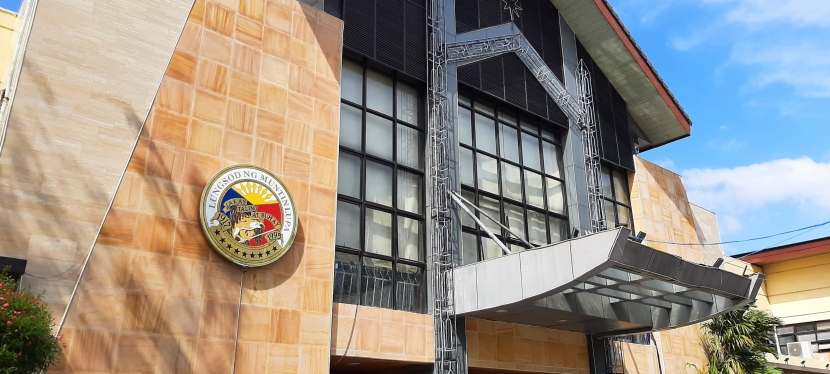
Recently in the progressive City of Muntinlupa, the City Government announced that March 1, 2024, will be a special non-working day locally in celebration of Muntinlupa City Charter Day, according to a Manila Bulletin news report. The mayor will deliver his State of the City Address on the said day.
To put things in perspective, posted below is an excerpt from the news report of the Manila Bulletin. Some parts in boldface…
The Muntinlupa City government reminded the public that March 1 is a special non-working day in the city.
This is based on Republic Act 9191, approved on Feb. 21, 2003, or “An Act Declaring the First Day of March of every year as a Special Non-Working Day in the City of Muntinlupa to be known as the Muntinlupa City Charter Day.”
The city government will celebrate Muntinlupa’s 29th cityhood anniversary on March 1. Mayor Ruffy Biazon will deliver his State of the City Address on that day.
Muntinlupa became a highly urbanized city on March 1, 1995 when then President Fidel V. Ramos signed Republic Act 7926 or “an act converting the Municipality of Muntinlupa into a highly urbanized city to be known as the City of Muntinlupa,” which is also known as the “Charter of the City of Muntinlupa.”
Let me end this post by asking you readers: What is your reaction to this recent development? If you are a resident of Muntinlupa City, are you very happy to see how much the city has progressed since March 1, 1995? Are you familiar with the history of Muntinlupa and how it formally became a city?
For more South Metro Manila community news and developments, come back here soon. Also say NO to fake news, NO to irresponsible journalism, NO to misinformation, NO to plagiarists, NO to reckless publishers and NO to sinister propaganda when it comes to news and developments. For South Metro Manila community developments, member engagements, commerce and other relevant updates, join the growing South Metro Manila Facebook group at https://www.facebook.com/groups/342183059992673
With renewed focus on the safety of travelers in mind, the Bureau of Immigration (BI) announced that registration with the eTravel system (electronic travel declaration system) is free of charge and people should avoid scammers who have been targeting travelers using fake websites, according to a Philippine News Agency (PNA) news article.
To put things in perspective, posted below is an excerpt from the PNA news article. Some parts in boldface…
The Bureau of Immigration (BI) on Wednesday warned travelers against scammers purportedly charging fees for the electronic travel declaration system or eTravel.
Commissioner Norman Tansingco clarified that registration in the eTravel platform is free of charge, thus travelers should be wary of unscrupulous elements who charges fees from passengers via fake websites.
“The eTravel registration process is absolutely free of charge. We, therefore, advise the traveling public to register only in the government’s official website at https://etravel.gov.ph,” he said in a statement.
Fees allegedly collected from the passengers amount to between PHP3,000 to PHP5,000 when converted to peso as the fees charged by the scammers are usually in US dollars.
The BI chief urged the public to beware of the such fraudulent websites or entities which require any form of online payment.
Likewise, he asked them to report to the Cybercrime Investigation and Coordinating Center (CICC) via its website at https://cicc.gov.ph/report/.
Tansingco issued the warning following reports of passengers at the airports who claim they have already registered in the eTravel platform and “paid” the supposed fees that were charged to them.
BI officers at the Ninoy Aquino International Airport (NAIA) have reported instances of many passengers who were surprised when informed that they have to register in the eTravel as the digital QR code they presented could not be accessed in the system.
“It is only when they encounter our officers at the airport that these passengers would realize they have been duped by these fraudsters and scammers in the internet,” he added.
The eTravel was launched earlier this year, and serves as the single data collection platform for arriving and departing passengers. It establishes an integrated border control, health surveillance and economic data analysis.
It is a joint project of the agency with the Department of Tourism (DOT), the Department of Information and Communications Technology (DICT), the Bureau of Quarantine (BOQ), the Bureau of Customs (BOC), the Department of Health (DOH), the Department of Transportation (DOTr), the Department of Justice (DOJ) and the National Privacy Commission (NPC).
The project abolished the paper-based arrival and departure cards, as well as the quarantine form.
Let me end this piece by asking you readers: What is your reaction to this recent report? Does this latest development make you feel safer to be online? If you had traveled overseas and came back home within the past six months, how was your experience registering with the eTravel system? Did you encounter any scammer online?
Recently in the progressive City of Muntinlupa, the City Government announced that it won the prestigious Consistent Regional Outstanding Winner in Nutrition (CROWN) award and a cash incentive of half-a-million Pesos during the National Nutrition Awarding Ceremony, according to a Manila Bulletin news report.
To put things in perspective, posted below is an excerpt from the news report of the Manila Bulletin. Some parts in boldface…
The Muntinlupa City government bagged the Consistent Regional Outstanding Winner in Nutrition (CROWN) award given by the National Nutrition Council (NCC).
Mayor Ruffy Biazon received the CROWN award and a cash incentive of P500,000 during the National Nutrition Awarding Ceremony on Feb. 12.
Muntinlupa received the award for the effective implementation of nutrition programs for three consecutive years.
According to Biazon, Muntinlupa previously received the Green Banner Seal of Compliance Award, the highest award given to LGUs for effective nutrition programs, in 2017, 2019, 2021, and 2022.
In addition, Alicia Tanabe of Barangay Alabang was named 2022 National Outstanding Barangay Nutrition Scholar awardee for implementing nutrition programs and improving the nutritional status of malnourished children in the barangay.
“Maraming salamat sa ating City Nutrition Committee at sa lahat ng nagtulung-tulong para makuha natin ang award na ‘to (Thank you to our City Nutrition Committee and to everyone who cooperated for us to receive this award),” said Biazon.
The CROWN award is given “to a municipality, city, or province that has been adjudged by the interagency regional nutrition evaluation team as outstanding in the region in the implementation of its nutrition action plan for three consecutive years.”
To date, 170 local government units (LGUs) have been given the CROWN award. Each awardee also gest P500,000 cash incentive and trophy.
LGUs that were able to maintain scores of at least 90 percent and 93 percent in the monitoring and evaluation of local level plan implementation (MELLP!) are conferred the first and second year CROWN Maintenance Award, respectively.
The CROWN Maintenance Award recipient gets P100,000 for first year maintenance. This year, the awardee for the second year CROWN Maintenance will receive P200,000 and certificate of recognition.
Let me end this post by asking you readers: What is your reaction to this recent development? If you are a resident of Muntinlupa City, are you delighted over this newest achievement by the City Government?
For more South Metro Manila community news and developments, come back here soon. Also say NO to fake news, NO to irresponsible journalism, NO to misinformation, NO to plagiarists, NO to reckless publishers and NO to sinister propaganda when it comes to news and developments. For South Metro Manila community developments, member engagements, commerce and other relevant updates, join the growing South Metro Manila Facebook group at https://www.facebook.com/groups/342183059992673
With more electric bikes (e-bikes) adding more traffic problems on national roads and highways in recent times, several local government units (LGUs) and agencies of the national government formally met to discuss regulating the use of e-bikes and the other electronic vehicles that remain unregistered, according to a Philippine News Agency (PNA) news article.
To put things in perspective, posted below is an excerpt from the PNA news article. Some parts in boldface…
Several national government agencies and local government units (LGU) on Thursday began discussions on regulating the use of e-bikes and other unregistered electronic vehicles (e-vehicles) nationwide.
The meeting was held at the headquarters of the Metropolitan Manila Development Authority (MMDA) between officials of the MMDA, Department of Transportation (DOTr), Land Transportation Office (LTO), Land Transportation Franchising and Regulatory Board (LTFRB), Department of the Interior and Local Government (DILG), and traffic heads of LGUs in the National Capital Region (NCR).
During the meeting, MMDA acting chair Don Artes said the proliferation of e-vehicles has become a “cause concern.”
“The LGUs have laid down their concerns, existing ordinances, regulations, and programs concerning e-vehicles. These will be reconciled with the policies of the national government,” Artes said.
Vendors of e-vehicles, he said, often cite that, unlike regular motor vehicles, e-vehicles are neither required to be registered nor need a license to operate.
“When these e-vehicle users violate the law, how can we issue a traffic violation ticket if the users do not possess a license? We also cannot charge the vehicle owners because they are not registered,” he said.
In addition to being a “grave risk” to their drivers, other motorists, and pedestrians, he said e-vehicles also slow down the flow of traffic.
Many of their drivers have also been monitored to be minors, do not wear helmets or other protective gear, and some use their e-vehicles in the middle of highways.
“We will consolidate and harmonize all existing rules and regulations, as well as ongoing programs of the LGUs and even national government concerning e-vehicles to make it comprehensive. This will also cover not just Metro Manila but nationwide,” he said.
Metro Manila LGUs have been asked to submit a list of their ordinances regarding the regulation of e-vehicles, particularly those used for commercial purposes.
“We will take a second look at the suggestions of the LGUs and propose the appropriate measures to regulate the use of e-vehicles in major thoroughfares,” he said.
In addition, LTFRB chair Teofilo Guadiz III said e-trikes are also a concern of the public utility vehicle (PUV) modernization program (PUVMP) as these compete with legitimate PUVs in getting passengers.
“We are coordinating with the MMDA and LTO to apprehend these units that do not have franchises to operate as PUVs,” Guadiz said.
Let me end this piece by asking you readers: What is your reaction about this recent development? Do you consider e-bikes and e-trikes a growing problem to traffic at major roads? Do you thinks laws should be made to prevent e-trikes from competing with the legitimate public utility vehicles when it comes to offering public transportation services? Should there be a law to prevent minors from driving e-bikes and e-trikes on all public roads nationwide?
In recent times, a lot of people have spotted electric bikes (e-bikes) and electric tricycles (e-trikes) traveling on national roads – including the South Luzon Expressway (SLEX) – and posted images of them online. That being said, the local authorities could not ignore the many complaints of these electric vehicles (EVs) and they will respond by issuing a new guideline soon, according to a Manila Bulletin news report.
To put things in perspective, posted below is an excerpt from the Manila Bulletin news article. Some parts in boldface…
Viral videos of complaints against e-bikes and e-trikes , including an elementary pupil driving one of them on a national road and their presence on major thoroughfares that include the South Luzon Expressway (SLEX), have prompted national government agencies to expedite the finalization of the rules and regulations that would govern both their ownership and use.
On the side of the Land Transportation Office (LTO), its chief, Assistant Secretary Vigor D. Mendoza II, said two of the measures that would be included in the recommendation they would submit to the Department of Transportation is for the registration of the e-bikes and e-trikes before the agency.
E-bikes and e-trikes are not required to be registered similar to motor vehicles and this is actually the major marketing strategy of its sellers, according to Metropolitan Manila Development Authority (MMDA) chairperson Don Artes.
Aside from registration requirements, Mendoza said they will also include in the recommendation the issue on whether or not the users of e-bikes and e-trikes will be mandated to obtain a driver’s license.
Artes, again, said the non-requirement of a driver’s license to drive them is another selling point of the e-bikes and e-trikes.
According to Mendoza, another argument that will be included in the recommendation is the total ban of e-bikes and e-trikes not only on national roads but also on major thoroughfares and even public roads, particularly the busy ones.
“The guideline (on e-bikes and e-trikes) must be released within this month because a publication of it is still needed before the implementation,” said Mendoza in a press briefing at the MMDA office in Pasig City on Thursday, Feb. 15.
“So we should be able to submit our recommendations to the Secretary (DOTr Secretary Jaime J. Bautista) within this week so that everything will be finally ironed out,” he added.
Exponential growth – Asked if the national government has a data on how many e-bikes and e-trikes in the country, Artes said they do not have the figure simply because there is no source of credible information since e-bikes and e-trikes are not required to be registered.
Artes, however, said that in Metro Manila alone, they have been seeing an exponential growth on the number of e-bikes and e-trikes.
But in Caloocan City where an ordinance was passed for the mandatory accounting of e-bikes and e-trikes, Artes said the figure is at around 18,000.
“So in just one LGU (local government unit) here in Metro Manila, there were already 18,000. So you can just imagine using the fact there are 17 LGUs here in Metro Manila. For sure, there are plenty of them,” said Artes.
“This is really concerning in terms of road safety because they are using roads, especially major roads, and some of the users do not even have the idea of basic road regulations that may cause accidents. So it’s about time that we come up with regulations on this matter,” he added.
E-bikes accident data – Based on the data released last month by the MMDA, a total of 556 road accidents were recorded in Metro Manila involving e-bikes and e-trikes from January to November last year.
There were two reported fatalities recorded in the same period—one was reported in February last year while the other one was reported in August last year.
The same data revealed that e-bikes and e-trikes accidents resulted in 282 non-fatal injuries and 281 cases of damage to property.
Enforcement difficulties – Artes admitted that their enforcers on the roads are having difficulty dealing with e-bikes and e-trikes.For one, they could not issue a citation ticket for traffic violation since the riders have no driver’s license in the first place.
Another one is that they could not also impound the e-bikes and e-trikes due to the absence of a guideline that would legally allow the MMDA to do so.
Consolidation of policies – Artes said there are a number of local government agencies which came up with guidelines on the use of e-bikes and e-trikes, one of them is their use for livelihood by allowing e-trikes to be used as public utility vehicles.
On the part of the national government, Mendoza said they will come up with a guideline that would be nationwide in scope in coordination with local government agencies and other stakeholders.
This is the reason, he said, why they have been continuously meeting even with representatives of groups advocating e-vehicles.
“The guideline that will be issued will be nationwide on scope. So it is important that coordination with LGUs and other stakeholders is important,” said Mendoza.
For road safety – Both Artes and Mendoza said that the guidelines that will be issued by the national government are purely aimed at ensuring the safety of all road users, including the riders of e-bikes and e-trikes.
To see why e-bikes and e-trikes are problematic on major roads and highways here in the Philippines, watch the following videos below…
Let me end this piece by asking you readers: What is your reaction about this recent development? Do you consider e-bikes and e-trikes traffic hazards on major roads and highways? Do you think the national authorities will be able to come up with new rules in response to the many complaints made against e-bikes and e-trikes? Do you want to see all e-bikes and e-trikes banned on major roads and highways nationwide? Should all e-bikes and e-trikes be registered and their respective drivers should be required to have drivers’ licenses?
If you are fond of ordering items online, better stay away from those mystery boxes offered to you because the Department of Trade and Industry (DTI) is closely watching online sellers offering those things, according to a Philippine News Agency (PNA) news report.
To put things in perspective, posted below is an excerpt from the PNA article. Some parts in boldface…
The Department of Trade and Industry (DTI) has intensified its scrutiny of online sellers, particularly those offering mystery boxes or parcels, to ensure consumer protection and uphold fair trade practices.
In an interview with Bagong Pilipinas Ngayon Wednesday, DTI Assistant Secretary Amanda Nograles said all online shops selling mystery items are subject to stringent verification procedures requiring them to provide evidence regarding the sourcing of the items they offer on their platforms.
Nograles said sellers must substantiate the items’ origin, demonstrating that they have acquired them through legal means. This could include proof of purchase from valid auctions or confirmation that the items were legally obtained from sources such as the Bureau of Customs (BOC) or through legitimate means like through abandoned parcels or “balikbayan” boxes.
“Kailangan iyong online seller ay makapagbigay ng ganoong ebidensiya; ngayon kung hindi, puwede natin siyang ipa-takedown doon sa platform – we have a good relationship with most online shopping platforms and kapag ni-request po ng DTI, napapakiusapan po natin na tini-takedown iyong mga seller na ganito at nang hindi po makabiktima ng mga consumers natin (The online seller needs to provide such evidence; now if not, we can have them taken down from the platform – we have a good relationship with most online shopping platforms, and when requested by the DTI, we ask them to have such sellers taken down so that they cannot victimize consumers),” she said.
Nograles said the DTI is regularly monitoring online stores.
Some items inside mystery boxes or parcels are illegally sourced, such as stolen products from warehouses, which is against the Anti-Fencing Law, the DTI official said.
The Anti-Fencing Law prohibits the selling of stolen goods or items obtained through illicit means. Both sellers and buyers can be charged if these items were stolen.
The DTI’s move to tighten regulations on online sellers aims to safeguard consumers from potentially fraudulent or unsafe products while also promoting transparency and accountability within the e-commerce sector, Nograles said.
Let me end this piece by asking you readers: What is your reaction to this recent report? Are you concerned that mystery boxes are harmful to consumers who are often looking for the best deals online? Do you think that items placed inside mystery boxes may have been stolen or smuggled? How many times have you availed of mystery boxes offers online?
Recently in the progressive City of Muntinlupa, the City Government of Muntinlupa received the Seal of Good Financial Housekeeping from the Department of the Interior and Local Government (DILG) as a result of passing the set criteria, according to a Manila Bulletin news report.
To put things in perspective, posted below is an excerpt from the news report of the Manila Bulletin. Some parts in boldface…
The Muntinlupa City government passed the 2023 Good Financial Housekeeping Assessment done by the Department of the Interior and Local Government (DILG) on all local government units in the country.
It received the Seal of Good Financial Housekeeping after passing the criteria set by the DILG including transparency, accountability, and compliance with financial regulations.
According to Muntinlupa City Treasurer Erwin Vibora, passing the assessment meant timely submission of financial reports, compliance with budget guidelines, effective revenue generation strategies, financial efficiency and internal control.
“Muntinlupa City’s attainment of the Seal of Good Financial Housekeeping for the year 2023 underscores its commitment to responsible financial stewardship, which in turn fosters public trust and confidence in the local government’s management of public funds,” he said.
Mayor Ruffy Biazon welcomed the results.
Let me end this post by asking you readers: What is your reaction to this recent development? If you are a resident of Muntinlupa City, are you delighted with the latest achievement by the City Government?
For more South Metro Manila community news and developments, come back here soon. Also say NO to fake news, NO to irresponsible journalism, NO to misinformation, NO to plagiarists, NO to reckless publishers and NO to sinister propaganda when it comes to news and developments. For South Metro Manila community developments, member engagements, commerce and other relevant updates, join the growing South Metro Manila Facebook group at https://www.facebook.com/groups/342183059992673
In response to the recorded numbers of accidents involving tricycles and pedicabs, the Department of the Interior and Local Government (DILG) told local government units (LGUs) to strictly enforce the ban on such vehicles on national roads and highways, according to a Philippine News Agency (PNA) news article.
To put things in perspective, posted below is an excerpt from the PNA article. Some parts in boldface…
The Department of the Interior and Local Government (DILG) on Tuesday reminded anew local government units (LGUs) to strictly enforce the ban on pedicabs and tricycles on national roads and highways.
“It is unfortunate that many LGUs have not been strictly implementing such regulations which often result in traffic congestion and accidents,” DILG Secretary Benjamin Abalos Jr. said in a statement.
This came after a tricycle was hit by a passenger bus plying the national highway in Labo, Camarines Norte on Feb. 4.
Abalos said that while tricycles and pedicabs provide accessible and affordable modes of transportation, the safety of drivers, passengers and road users are of utmost importance.
The DILG chief, however, emphasized that in cases where there are no alternative routes available and as a last resort, LGUs through their respective Sanggunian (councils) may issue an exception.
This is in compliance with the Land Transportation Office’s Memorandum Circular 94-199 issued 1994, which sets the guidelines on the devolution of the Land Transportation Franchising and Regulatory Board’s franchising power over tricycles-for-hire to LGUs, pursuant to the Local Government Code.
The DILG in 2020 issued Memorandum Circular (MC) 2020-036 prohibiting tricycles, pedicabs and motorized pedicabs from operating on national highways.
It also recently released MC 2023-195 urging all local chief executives to reorganize or reconvene their Tricycle Task Force (TTF) to update their Tricycle Route Plan (TRP) that would include penal provisions for violators.
Based on data from the Metro Manila Accident and Reporting System, Abalos said 2,829 road accidents involving bicycles, e-bikes and pedicabs were logged in 2022 alone, which is aside from 2,241 road accidents involving tricycles.
On Monday, the municipal government of San Mateo in Rizal province started apprehending e-bikes, tricycles and pedicabs plying national roads.
For further insight, posted below are images of DILG’s Memorandum Circular 2023-195.
Below is the PDF copy of the MC 2023-195 available for viewing and download.
Let me end this piece by asking you readers: What is your reaction to this recent report? Are you concerned that the rise of tricycles, pedicabs and electric bikes (e-bikes) on national roads and highways are the direct result of the local government’s negligence? Do you think your local government made a secret pact or deal with the operators of pedicabs, tricycles and e-bikes which granted them freedom to travel along national roads and highways? Do you think that e-bikes and electric tricycles (e-trikes) were designed to be safe and stable?
Recently in the progressive City of Muntinlupa, the City Government of Muntinlupa announced that its total revenue collected in 2023 reached P6.4 billion which is an improvement of over 3% over the 2022 revenue, according to a Manila Bulletin news report.
To put things in perspective, posted below is an excerpt from the news report of the Manila Bulletin. Some parts in boldface…
The Muntinlupa City government collected P6.4 billion revenue in 2023, translating to a higher collection efficiency rating.
According to the City Treasurer’s Office, the P6.4 billion revenue is higher by P200 million compared to P6.2 billion collected in 2022.
The 2023 revenue translated to a 100.98 percent collection efficiency rating for the Muntinlupa City government.
City Treasurer Erwin Vibora said the higher revenue was realized through the strict implementation of local taxation and fiscal policies.
“The strategies used by the City Treasurer’s Office – Muntinlupa City to meet or exceed the targeted income is through strict implementation of local taxation and fiscal matters of the Local Government Code or Republic Act No. 7160 and the Revenue Code of Muntinlupa, following the policy and guidelines of Local Treasury Operations Manual (LTOM) of the Department of Finance – Bureau of Local Government Finance, existing laws and ordinances,” said Vibora in his report.
He said offices that achieved high revenues for the city government are: Business Permits and Licensing Office (BPLO) – P2.4 billion, City Treasurer’s Office – P2.3 billion, Colegio de Muntinlupa – P108 million, City Engineering Office / City Building Office – P57.5 million, and City Zoning Office – P34.2 million.
Let me end this post by asking you readers: What is your reaction to this recent development? If you are a resident of Muntinlupa City, are you delighted with the higher revenue collected by the City Government for the year 2023? Do you consider Muntinlupa’s City Government to be transparent with regards to collections and financial transactions?
For more South Metro Manila community news and developments, come back here soon. Also say NO to fake news, NO to irresponsible journalism, NO to misinformation, NO to plagiarists, NO to reckless publishers and NO to sinister propaganda when it comes to news and developments. For South Metro Manila community developments, member engagements, commerce and other relevant updates, join the growing South Metro Manila Facebook group at https://www.facebook.com/groups/342183059992673
Recently in the province, agents of the Bureau of Immigration (BI) arrested three Chinese nationals for visa-related violations, according to a news article by the Philippine News Agency (PNA).
To put things in perspective, posted below is an excerpt from the PNA news report. Some parts in boldface…
The Bureau of Immigration (BI) on Friday reported the recent arrest of three foreigners in Ligao City, Albay for visa violations.
In a statement, BI intelligence division chief Fortunato Manahan Jr. said the case originated from the information from the Bureau’s Legazpi District Office against Chinese nationals Li Xiaodong, Shi Jiazhu, and Shi Yushuang, who were arrested last Jan. 24 for violating the limitations and conditions of their visas.
Verification of their records revealed that the foreigners, who initially underwent biometrics scanning for health reasons, were actually employed in different Metro Manila companies, which is clear violation of their visa limitations.
The foreigners were found by the intelligence agents to be working at a hardware and merchandise companies despite their visas.
“Our intelligence efforts, combined with effective operations, ensure that visa violators are identified and apprehended promptly. This operation underscores the importance of strict adherence to visa conditions,” Manahan said.
The three were transported to the BI Main Office in Intramuros in Manila for proper booking procedures, medical examinations, and legal disposition.
Let me end this piece by asking you readers: What is your reaction to this recent development? Are you concerned that there could be even more Chinese nationals here in the Philippines engaging in illegal activities? Are happy that immigration officials arrested the foreigners for violating their visa limitations and conditions?