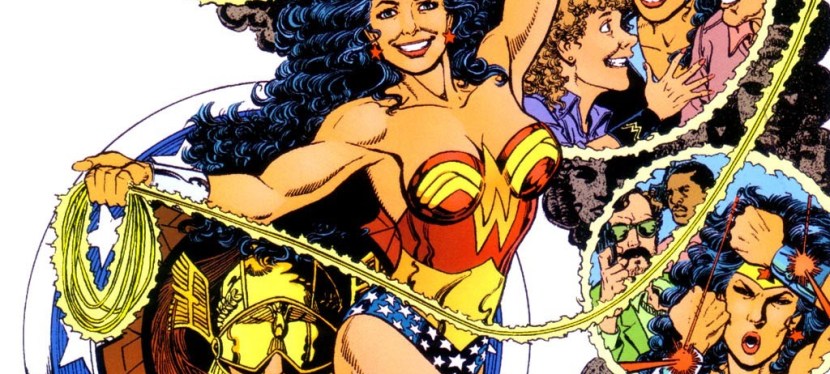
A Look Back at Wonder Woman Gallery (1996)

Disclaimer: This is my original work with details sourced from reading the comic book and doing personal research. Anyone who wants to use this article, in part or in whole, needs to secure first my permission and agree to cite me as the source and author. Let it be known that any unauthorized use of this article will constrain the author to pursue the remedies under R.A. No. 8293, the Revised Penal Code, and/or all applicable legal actions under the laws of the Philippines.

Welcome back, superhero enthusiasts, comic book collectors and fans of Wonder Woman! I should say that this is the most unusual comic book I have reviewed so far due to its main presentation of varied artworks featuring the Queen of all Superheroes herself – Wonder Woman!

For the newcomers reading this, there were several comic books back in the 1990s that did not really tell stories but showcased artworks of varied superheroes done by several artists. Such publications were in the form of swimsuit specials, apparently inspired by Sports Illustrated’s own publications. There were WildStorm Swimsuit Special , Ballistic Studios Swimsuit Special , Homage Studios Swimsuit Special , Lady Death Swimsuit Special and the Avengelyne/Glory: Swimsuit Special to name some.

The 1990s saw a rise of eroticism in superhero comic books. Not even the Wonder Woman monthly series of that time was spared from the trend. There was a time when DC Comics hired Mike Deodato to illustrate a number of Wonder Woman comic books in the mid-1990s which resulted a more eroticized look of Diana/Wonder Woman and her fellow Amazons. John Byrne took over after Deodato and his stint was not an improvement.

While the 1990s was a weak decade of Wonder Woman comics for me personally, not all was doom and gloom. Around twenty years before Gal Gadot debuted on the big screen as the cinematic Wonder Woman, DC Comics published an art gallery of the Queen of Superheroes in the form of a comic book.

With the details established, here is a look back at Wonder Woman Gallery, published by DC Comics in 1996 featuring the works of multiple artists.
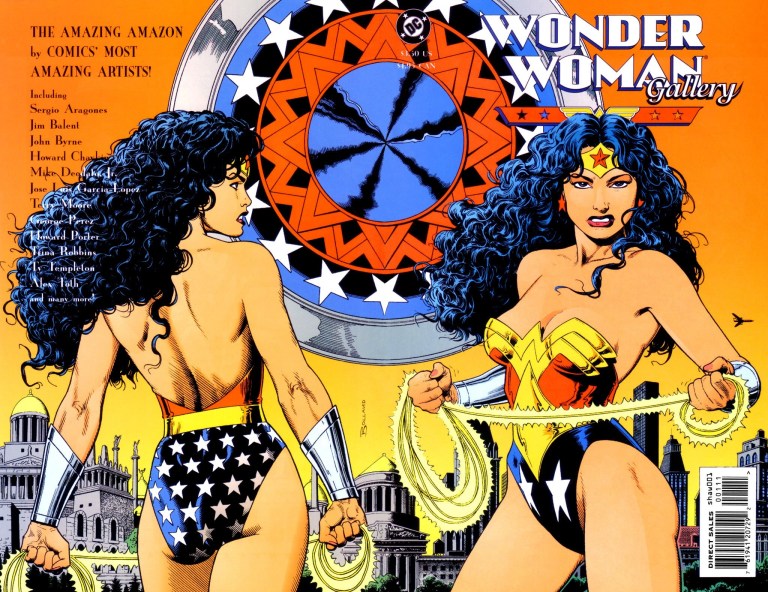
The cover.

What it is

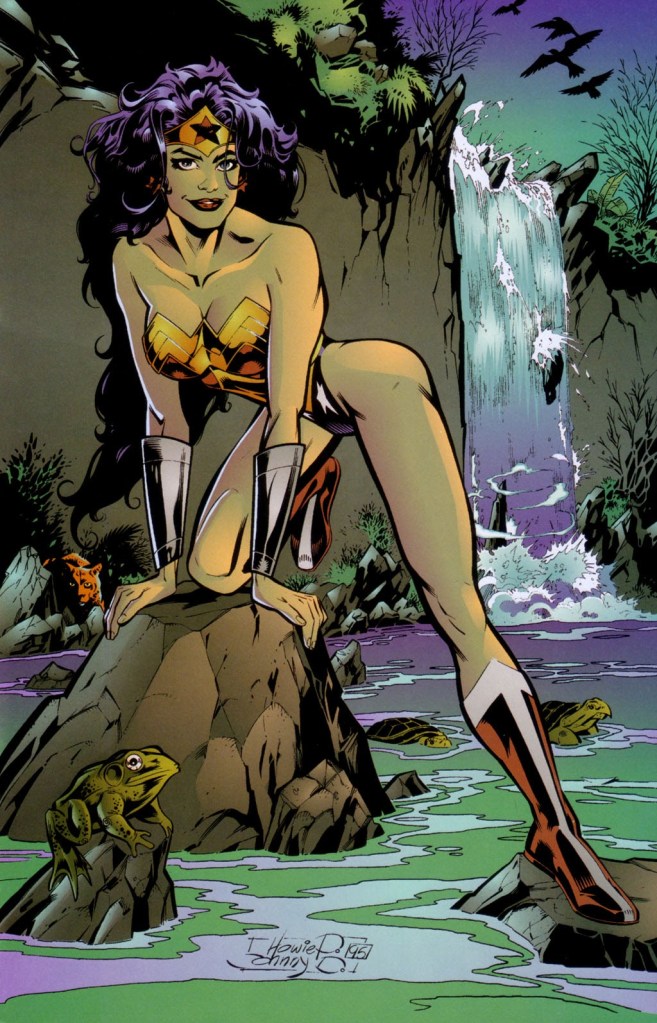
Wonder Woman Gallery is a showcase of thirty-two artworks done by George Perez, Stuart Immonen, Mike Wieringo and Richard Case, Brent Anderson, Howard Porter and John Dell, Jim Balent (misspelled as Jim Balant), Amanda Conner, Chuck Wojtkiewicz and Will Blyberg, Howard Chaykin, Steve Lightle and 22 others.

As this is an art gallery, there is clearly no story to tell. It is all artwork showcasing the different talents of the artists (and the inkers who helped them) on presenting Wonder Woman (note: the only exception here is a solo image of the forgettable WW replacement Artemis).
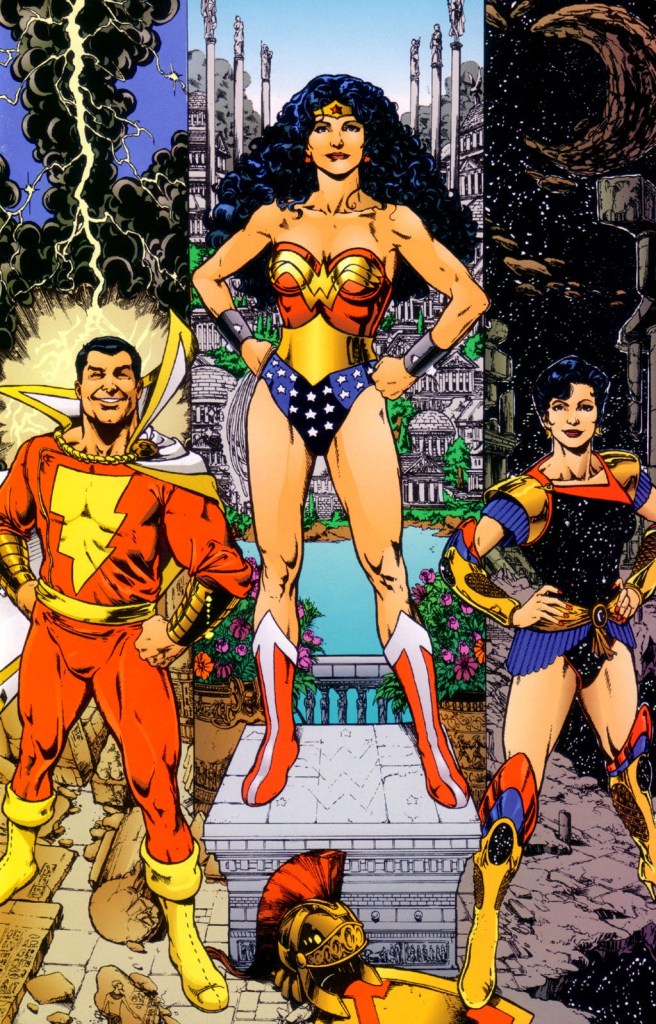
This artistic contribution by Phil Jimenez looks great.
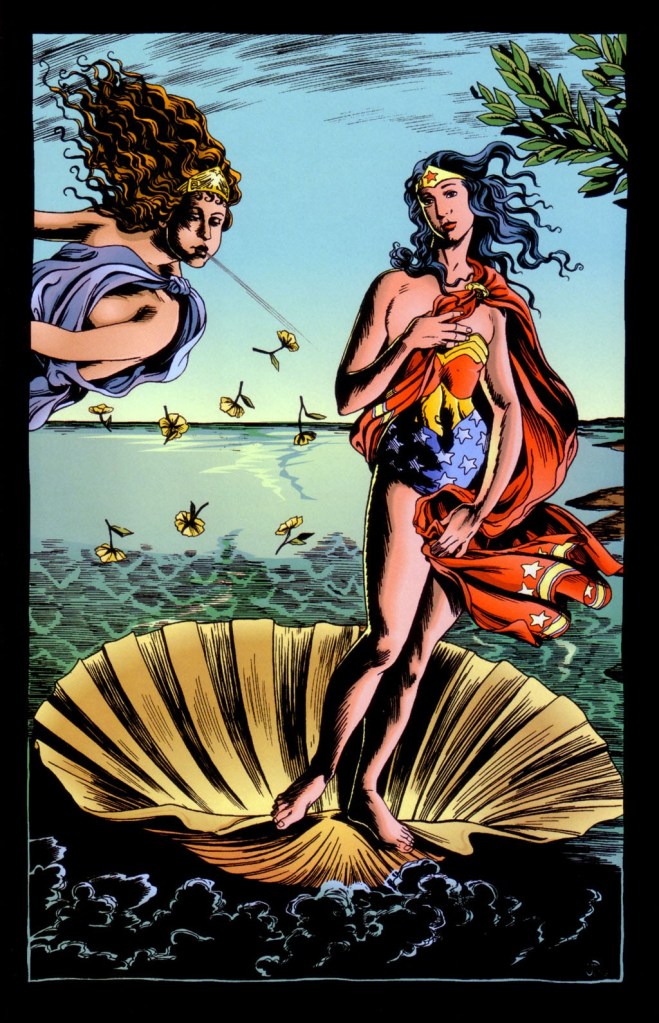
Jill Thompson’s inspired take on Wonder Woman.
Wonder Woman by Howard Porter and John Dell.
Wonder Woman by Ivan Reis and Barbara Kaalberg.

Quality

As this is an art showcase, the overall quality of the collected art here varies. Such a collection of different art styles will appeal to Wonder Woman fans depending on how they like their favorite superhero presented visually.

In my honest opinion, I always love the art style done by George Perez on Wonder Woman, her fellow Amazons, the supporting characters and more. His presentation here is flawless and timeless. What surprised me here in this collection is the contribution of Phil Jimenez whose quality and art style seem inspired by George Perez’s Wonder Woman legacy. As many of us know already, Jimenez later went on to become one of the top illustrators of DC Comics in the 2000s and his work here is nice to look.

There were a few artworks that showed Wonder Woman with a very cartoony look. Among them is the Wonder Woman piece done in the very distinct style of Sergio Aragones. Some art pieces here showed WW with a bizarre look and then there were a few others whose take on the Queen of Superheroes turned out good.

Conclusion
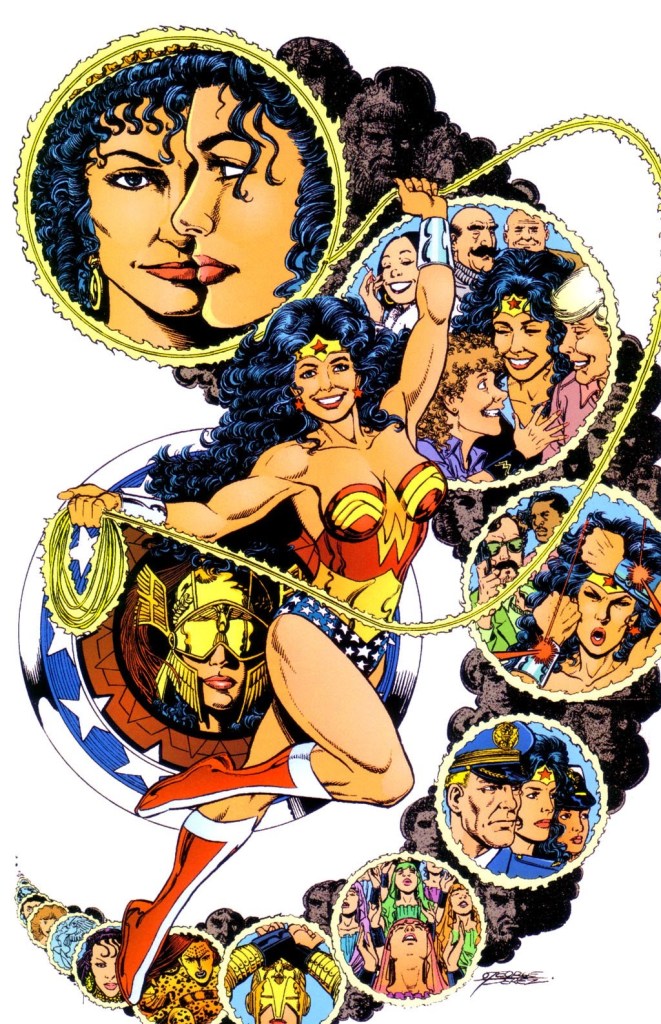
This work by George Perez is my favorite in this collection.

I can say that Wonder Woman Gallery (1996) is a published work that Wonder Woman fans will enjoy for as long as they are willing to accept images of their favorite superhero with styles ranging from realistic to cartoony, obscure and simple. Art styles aside, there is a lot here that fans will marvel at again and again, while art enthusiasts (who are not necessarily fans of the Queen of Superheroes) could find something eye-catching here.

If you are seriously planning to buy an existing hard copy of Wonder Woman Gallery (1996), be aware that as of this writing, MileHighComics.com shows that the near-mint copy of the comic book costs $40.

Overall, Wonder Woman Gallery (1996) is recommended.

+++++

Thank you for reading. If you find this article engaging, please click the like button below and also please consider sharing this article to others. If you are looking for a copywriter to create content for your special project or business, check out my services and my portfolio. Feel free to contact me as well. Also please feel free to visit my Facebook page Author Carlo Carrasco and follow me at HavenorFantasy@twitter.com
A Look Back at Catwoman #50 (1997)

Disclaimer: This is my original work with details sourced from reading the comic book and doing personal research. Anyone who wants to use this article, in part or in whole, needs to secure first my permission and agree to cite me as the source and author. Let it be known that any unauthorized use of this article will constrain the author to pursue the remedies under R.A. No. 8293, the Revised Penal Code, and/or all applicable legal actions under the laws of the Philippines.

I want to make things clear that I’m not really a fan of Catwoman, nor am I a big fan of Batman and other DC Comics characters related to the Dark Knight. While it is a fact that I grew up reading comic books and watching some episodes of the live-action TV series as well as varied animated series featuring Batman, I did not see much of him encountering Catwoman.

I got to watch the movie Batman Returns in 1992 showing Michael Keaton and Michelle Pfeiffer as Batman and Catwoman. Unsurprisingly Catwoman gained prominence in pop culture as a result of that movie. In 1993, DC Comics launched the monthly series of Catwoman.

Recently, I reviewed Web of Spider-Man #100 which showcased the iconic Spider-Man wearing a suit of armor. As the 1990s was a decade of excess which includes armors as a superhero comic book trend (or fashion craze), it was no surprise that DC Comics had Catwoman featured in armored form.

That being said, we can now take a look back at Catwoman #50, published by DC Comics in 1997 with a story written by Doug Moench and drawn by Jim Balent.

Early story

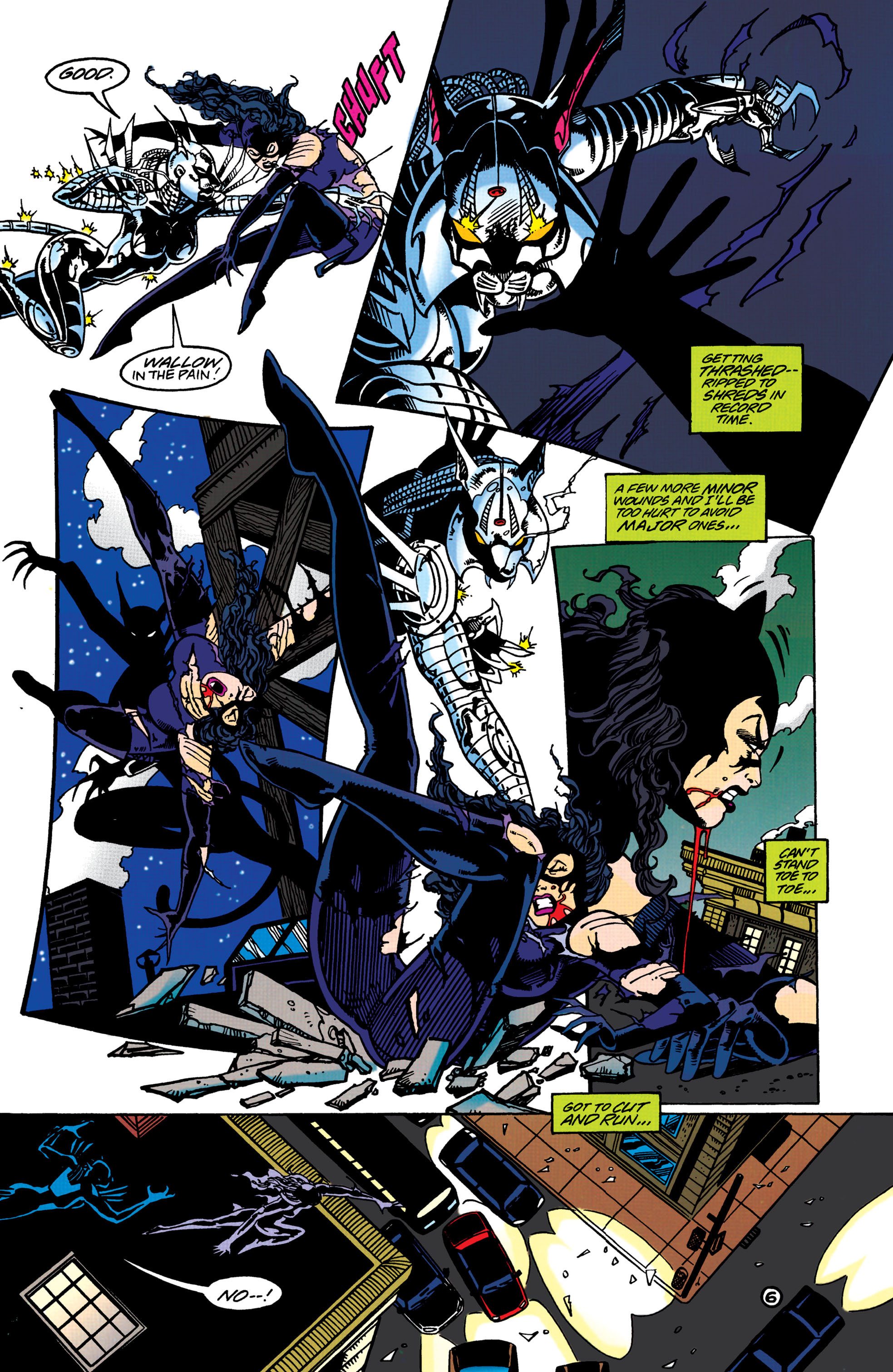
The story begins with Catwoman moving on the rooftop at night. Suddenly a small rocket is fired hitting a chimney near her knocking her out temporarily. After recovering and checking the area near her, she gets hit by Cyber-Cat (first appeared in Catwoman #42). As it turns out, Catwoman knew something about her having worked with Syntex but Cyber-Cat tells her that she’s worker for herself.

Driven by deep anger, Cyber-Cat moves at Catwoman who tries to escape. Catwoman gets hit and suffers slashes on her skin as a result of Cyber-Cat’s vicious attacks. Now losing some blood, Catwoman makes a desperate leap to another building across the street and barely makes it leaving Cyber-Cat behind.

5
Cyber-Cat viciously attacks Catwoman!

“Run, thief—but your run can’t last forever! I found you once, and I won’t rest until I do it agains—to finish what this night started! And remember –every time you cast your cowardly shadow across a roof…you’ll never know which gargoyle might come to sudden life,” Cyber-Cat tells Catwoman across the gap. “You’re finished, thief! Dead already!”

Badly wounded, Catwoman manages to find her motorcycle at an alley and drives on the way back to her hideout…

Quality

21
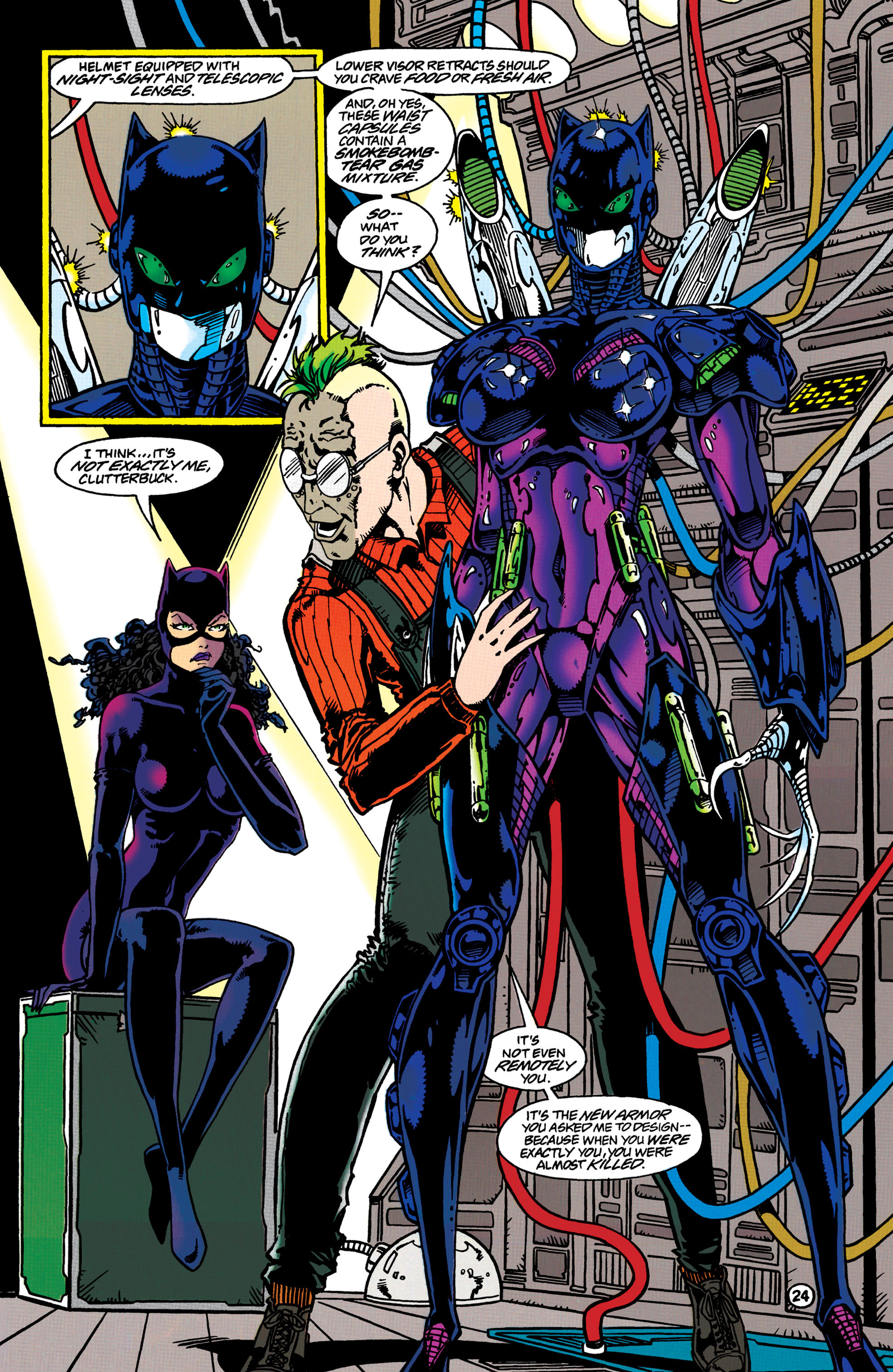
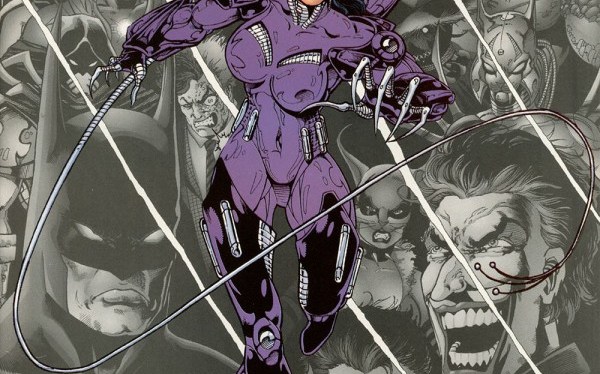
The money shot by Jim Balent! Check out the unrealistic look of the armor.

I should say that Catwoman #50 surprisingly has depth and a nice combination of spectacle, characterization, intrigue and even some detective story elements. Don’t let the cover fool you into thinking this is a shallow and terrible comic book.

For one thing, Doug Moench carefully crafted a story bringing Catwoman and Cyber-Cat back for a new conflict together, only this time the stakes are much higher given the fact that in the previous encounter, Catwoman put Cyber-Cat to shame. This explains why Cyber-Cat is not only more determined to kill Catwoman but also train harder and use cybernetic means more efficiently.

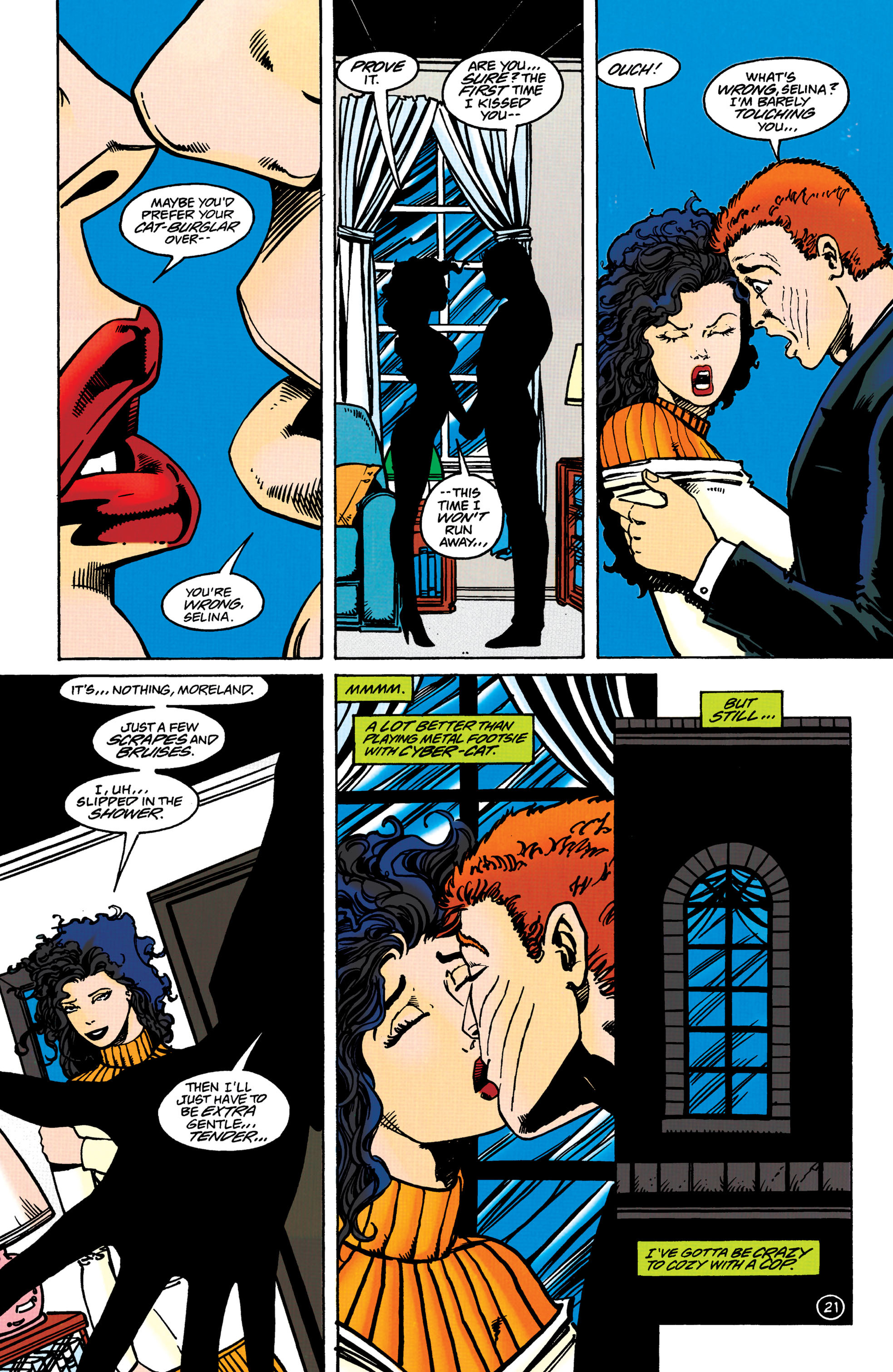
Rivalry aside, this comic book provides a nice look as to what would happen when a professional thief like Catwoman gets involved with a technology company and causes a disturbance not only in the tech sector but also with industry investigators. Doug Moench managed to insert some scenes exploring Selina Kyle/Catwoman’s social life and her involvement with a cop (who does not even know her secret criminal identity).

As for the Catwoman armor highlighted on the cover, I really like the way the creators efficiently implemented the “Batman approach” to preparation when it comes to assembling the armor done by Catwoman’s friend. While it is predictable that the armor helped improve her ability to fight and keep up with high-tech measures used against her, I found it rather unbelievable that she is able to maintain quick reflexes, move around fast like before and still look like she’s wearing tights (same problem with Cyber-Cat who is actually Christina Chiles behind the suit).

While the realism is not really a factor here, I should confirm that this comic book sure has a lot of action scenes and attractive visuals in the expected big battle between Cyber-Cat and the armored Catwoman. Artist Jim Balent, who helped start this monthly series, confidently paced the action and delivered lots of dynamic shots of hard action.

Conclusion

18
Selina Kyle the civilian.

Catwoman #50 is surprisingly fun to read and has enough depth to its story. It’s far from being brainless, really. With almost 30 pages of story and art, the creative team paced themselves to tell a cohesive story, add a bit of character development and then have Catwoman suited up for the big fight against the obsessive Cyber-Cat.

When it comes to executing the concept of having a hero or a villain using armor for a big conflict or special mission, Catwoman #50 easily beats the stuffing out of Web of Spider-Man #100 big time! Compared to that very disappointing Spider-Man comic book (featuring an armored Spider-Man), Catwoman #50 has more depth, is paced better, paid closer attention to detail (right down to the features of Catwoman’s armor), and has spectacle that is executed and presented better.

If you are seriously planning to buy an existing hard copy of Catwoman #50 (1997), be aware that as of this writing, MileHighComics.com shows that the near-mint copy of the regular edition costs $9. The near-mint copies of the deluxe, the newsstand deluxe and the newsstand editions cost $10, $22 and $17 respectively.

Overall, Catwoman #50 (1997) is recommended.


Thank you for reading. If you find this article engaging, please click the like button below and also please consider sharing this article to others. If you are looking for a copywriter to create content for your special project or business, check out my services and my portfolio. Feel free to contact me as well. Also please feel free to visit my Facebook page Author Carlo Carrasco and follow me at HavenorFantasy@twitter.com