COVID-19 Crisis: DTI says restaurants in MECQ areas are allowed to have outdoor dining

In what is clearly a move with economic recovery in mind, Department of Trade and Industry (DTI) Secretary Ramon Lopez declared that restaurants (located in places under MECQ or modified enhanced community quarantine status) with outdoor dining services and set-ups are allowed to resume but with certain limitations.

To make things clear, below is an excerpt from the Philippine News Agency (PNA) article which was published just yesterday. For greater emphasis, some parts are in bold.

In a text message to reporters Sunday night, Lopez said food establishments with alfresco dining services are only allowed up to 50 percent capacity, with diagonal seating arrangement and acrylic dividers on tables.

He added that indoor dine-in services are still not allowed in areas under MECQ, but food establishments can continue to operate with their take-out and delivery services.

From April 12 to 30, the National Capital Region, Bulacan, Cavite, Laguna, and Rizal or the NCR Plus as well as Santiago City in Isabela, and the provinces of Quirino and Abra were also placed under MECQ.

Earlier, the DTI chief said that the Inter-Agency Task Force for the Management of Emerging Infectious Diseases (IATF) might be sensitive in allowing indoor dine-in due to the highly contagious new variants of Covid-19.

“The IATF recommended to the President to shift to MECQ after two weeks of ECQ to restore more jobs and livelihood for the people,” Lopez said.

Clearly the local authorities are trying hard to balance themselves between economics and public health as new cases of COVID-19 (China Virus) continue to be counted in very high numbers on a daily basis in recent times. On April 2, the count of infections reached over 15,000.

Going back to the issue of allowing restaurants with outdoor dining (AKA alfresco) within the MECQ areas, it is good news that they are allowed to resume operations. It will still be a challenge for food establishments to attract enough paying customers and make their business’ financial ends meet.

On a personal experience, I love eating ramen and Tsukemen at Sigekiya Ramen in Alabang. I prefer that such meals would be cooked by the restaurant and be served to me at a table at their place. The alternative of taking the cooked ramen out and consume it at home is just not a convincing option for me because ramen is meant to be consumed quickly while it is hot. The alternative of taking home ingredients and noodles, and have them cooked at home does not appeal to me as I prefer Sigekiya’s cooks make the meal I paid for.

A delicious meal like this one is best to be eaten at the restaurant, even outdoors.

Also located in Alabang is the local branch of Akrotiri, a really fine restaurant that serves authentic Greek meals that my family and friends enjoyed. They also have meals that, in my opinion, are best consumed at their place and their Alabang branch (Commercenter to be precise) has space for outdoor dining. It was at Akrotiri Alabang where I treated 2019 SEA Games gold medalist Kim Mangrobang to a meal and organized an exclusive interview with her. They really have a fine-looking place. Visit their website at https://akrotiri.ph/

It is important to keep in mind that restaurants around the nation have struggled a lot since the pandemic started last year. These business establishments are also struggling with retaining their respective employees, notably their cooks, the baristas, waiters and waitresses. Remember that the meals and drinks you enjoy would not be the same when the people who prepared them get laid off.

With the DTI’s declaration of allowing food establishments with outdoor dining setups and services to resume, I encourage you my readers to consider supporting these businesses for your food and beverage needs. If you can’t have a meal with the family outdoors, perhaps you can push through with a business meeting with a corporate associate or reunite with your friend or relative with the outdoor setting of a restaurant while adhering to health protocols (wearing face masks, face shields, sanitizing yourselves, etc.). 

Now, let’s observe how the mayors, the barangay captains and other local authorities in MECQ areas will react to DTI’s declaration. You also might want to check with the local restaurants and coffee shops if they allow outdoor dining. Consider taking time out to call them or verify on their respective social media channels/accounts to see if outdoor dining is allowed.

+++++

Thank you for reading. If you find this article engaging, please click the like button below and also please consider sharing this article to others. If you are looking for a copywriter to create content for your special project or business, check out my services and my portfolio. Feel free to contact me as well. Also please feel free to visit my Facebook page Author Carlo Carrasco and follow me at HavenorFantasy@twitter.com

For more South Metro Manila community news and developments, come back here soon. Also say NO to fake news, NO to irresponsible journalism, NO to misinformation, NO to plagiarists, NO to reckless publishers and NO to sinister propaganda when it comes to news and developments. For South Metro Manila community developments, member engagements, commerce and other relevant updates, join the growing South Metro Manila Facebook group at https://www.facebook.com/groups/342183059992673
My Observations: Sigekiya’s Haruichiban Ramen

It has been quite some time since I last visited my favorite place for noodles here in Alabang. This is because mainly of the pandemic that started in March 2020 followed by a series of lockdown periods and varied forms of community quarantine. Along the way, I kept focusing on my corporate work and as a result of the social effects the pandemic had on local society, eating outside or having drinks at a coffee shop became much less frequent for me.

Very recently, I revisited Commercenter and, finally, I returned at last to Sigekiya Ramen which is a great place for Japanese meals, especially noodles (note: Sigekiya makes their own fresh noodles which always have nice texture and are always filling). For the newcomers reading this, I previously wrote my opinions about Sigekiya’s other meals like the Gojira Ramen, the Chicken Teriyakidon, the Yokohama Tantanmen, and my personal favorite the Tsukemen.  

Other than missing their great tasting food, I returned to the restaurant mainly to try out their latest offering – the Haruichiban Ramen.

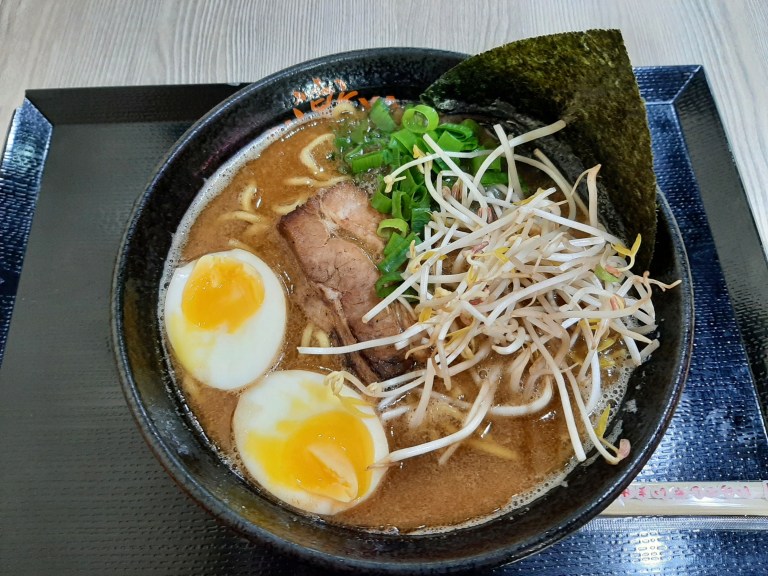
The Haruichiban Ramen with a nice presentation!

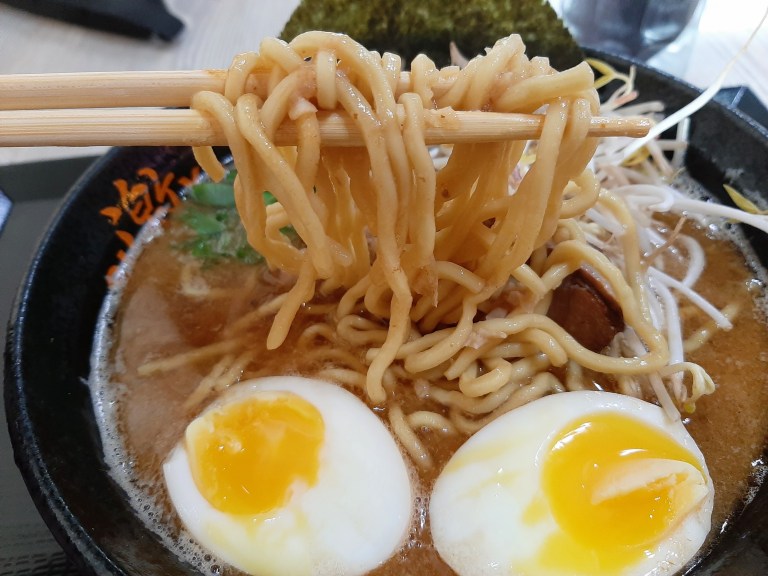
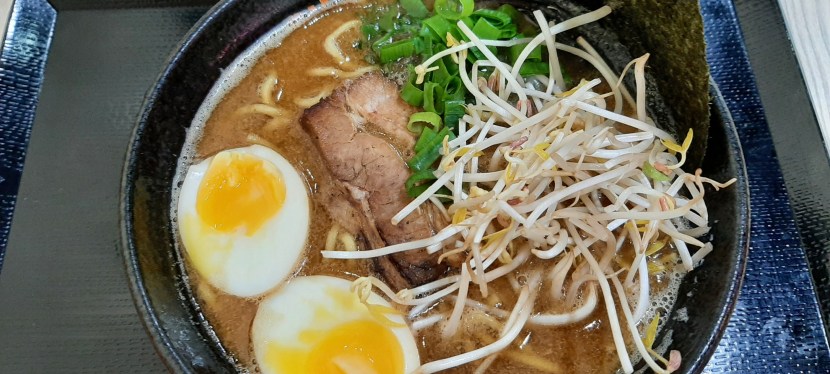
Shortly after taking my seat inside, I ordered one Haruichiban Ramen which was priced at P300 (introductory price) and it was served to me in less than ten minutes time. It came in a regular-sized bowl which was still large in terms of containing all the content. Right from the start, the Haruichiban Ramen was hot and it had a very nice smell.

As this was my first time to have Haruichiban Ramen, I slowly examined it and noticed it had a brown looking soup with Sigekiya-made noodles under it, an entire boiled egg slashed into two, vegetables and a nice serving of pork. Everything was well prepared!

A closer look…

Then I started consuming the soup. It was delicious! To be specific, it had a strong flavor and I felt the taste of garlic. This is no ordinary soup. It’s really something made with careful mixing of ingredients with the goal of giving customers a delicious and unique experience. According to the Sigekiya waitress I talked with, the soup for Haruichiban Ramen has the taste on tonkotsu combined with miso and shoyu. Minced garlic was a key ingredient.

From that point on, I went on to consume the rest.

The noodles made by Sigekiya are always nice and filling to eat with the rest of the meal!

Ultimately, I really enjoyed Haruichiban Ramen. In fact, I love it and I would not hesitate to come back for it again in one of my future visits at Sigekiya. Haruichiban Ramen is very delicious and since it has Sigekiya’s own ramen combined with a nice serving of vegetables and the pork serving, it was easily filling. For the P300 I paid, I got great taste and satisfaction in return.

That being said, Sigekiya’s Haruichiban Ramen is highly recommended!

+++++

Thank you for reading. If you find this article engaging, please click the like button below and also please consider sharing this article to others. If you are looking for a copywriter to create content for your special project or business, check out my services and my portfolio. Feel free to contact me as well. Also please feel free to visit my Facebook page Author Carlo Carrasco and follow me at HavenorFantasy@twitter.com

For more South Metro Manila community news and developments, come back here soon. Also say NO to fake news, NO to irresponsible journalism, NO to misinformation, NO to plagiarists, NO to reckless publishers and NO to sinister propaganda when it comes to news and developments. For South Metro Manila community developments, member engagements, commerce and other relevant updates, join the growing South Metro Manila Facebook group at https://www.facebook.com/groups/342183059992673
Have you tried Tsukemen?

tsukemen1

When it comes to dining at a Japanese restaurant, sushi and maki often interest me. On April of 2016, out of curiosity I tried the ramen of Sigekiya Ramen restaurant located inside Commercenter, Alabang, Muntinlupa City. The ramen was very good with its rich soup, pork servings and most notably freshly made, in-store noodles.

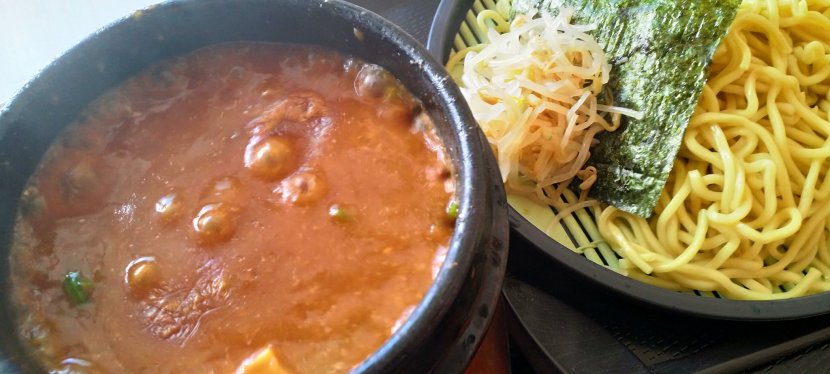
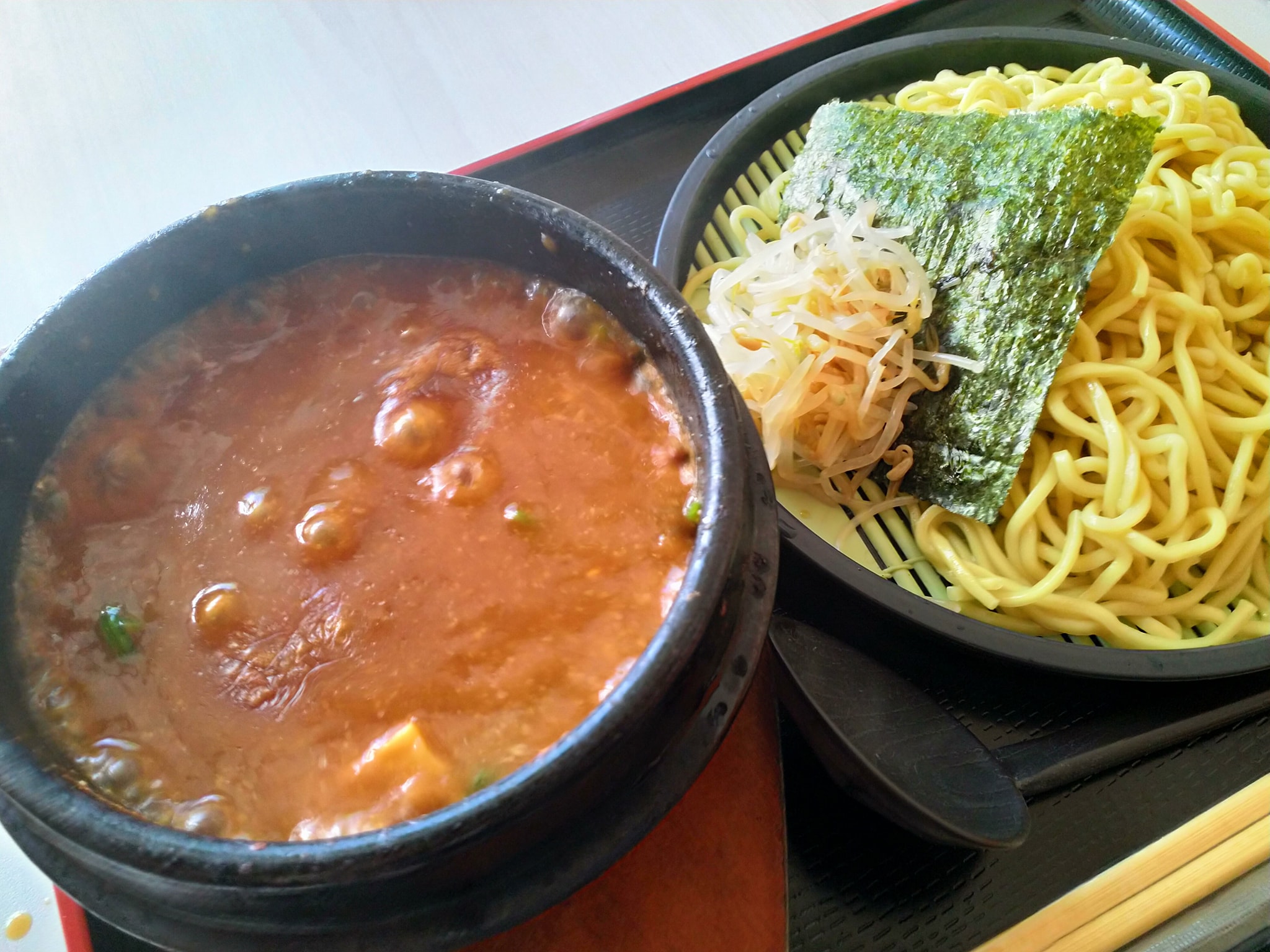
A few months later that same year, I returned to the restaurant and daringly tried something really new to me. Something I never tried before. That was Tsukemen. It was served to me with cold freshly made noodles (with a patch of seaweed and vegetable bits) and a bowl of hot broth that was pretty thick.

So there I was struggling a bit to drip the noodles into the soup and then consume it while using chopsticks (and sometimes the soup spoon provided). The struggle was worth it because the dish really tasted very delicious! The soup was so tasty, I never bothered to add some condiments. The noodles were so fresh and clearly thicker than most noodles, they were very satisfying to eat (pretty chewy) once they got wet with the hot soup. Since then, Tsukemen became my favorite dish to order at Sigekiya Ramen and for some time I’ve been searching for the dish in other Japanese restaurants in Alabang and BF Homes. So far I only saw two other restaurants serving Tsukemen.

What is Tsukemen?

Historically Tsukemen was invented by a Taishoken restaurant owner in Japan identified as Kazuo Yamagishi. At the age of seventeen, he came up with the concept of Tsukemen as a result of seeing a colleague consuming down the noodles after dipping them in a cup that contained soup. At his restaurant, in the year 1961, Yamagishi added Tsukemen to the menus identified as “special morisoba”. The experiment became a commercial success and the rest was history. Yamagishi died in 2015 and so far his contribution to Japanese and global cuisine won’t be fading away anytime soon. Slowly but surely, Tsukemen is making its way to more Japanese restaurants outside of Asia.

How to eat Tsukemen? Use the chopsticks to grab a manageable amount of noodles, slowly dip it into the soup, move them into your mouth then slurp it carefully. If this is too hard, you can use the soup spoon to help you support the noodles.

What you should NOT do when having Tsukemen is mixing the noodles into the soup to make it more like ramen. That’s wrong and improper. There is a good reason why the noodles and soup were served to you separately. Tsukemen is all about dipping the fresh cold noodles into the soup and then consuming it with a unique approach. Do not treat Tsukemen like ramen or like some other noodle soup dish.

Thanks for reading. Please feel free to share this article to others. Also please feel free to comment or ask questions.