A Look Back at Shin Godzilla (2016)

Disclaimer: This is my original work with details sourced from watching the movie and doing personal research. Anyone who wants to use this article, in part or in whole, needs to secure first my permission and agree to cite me as the source and author. Let it be known that any unauthorized use of this article will constrain the author to pursue the remedies under R.A. No. 8293, the Revised Penal Code, and/or all applicable legal actions under the laws of the Philippines.

There is no doubt that Japan’s fictional monster Godzilla (originally called as Gojira) made tremendous impact not only with the Japanese but also with other entertainment lovers around the world. Way back in 1954, the monster was portrayed as a destructive, walking symbol of nuclear weapons in the movie Gojira directed by the late Ishirô Honda.

As the years passed by, several more Godzilla movies were released by Toho Pictures. In 1998, an American-made movie about Godzilla was finally made in a disappointing form directed by Roland Emmerich. In 2014, Warner Bros. and Legendary Pictures made a more respectful film of the monster under the direction of Gareth Edwards. In 2019, the follow-up Godzilla: King of the Monsters was released and I enjoyed it a lot more than its 2014 predecessor.

Before the 2019 movie was released, Toho in Japan released Shin Godzilla (alternate titles: Shin Gojora and Godzilla: Resurgence) which was the result of the 2014 movie’s success as well as the fact that there were no restrictions in the contract with Legendary Pictures for the Japanese studio to make their own domestic versions.

Due to its lack very limited presence in cinemas here in the Philippines in 2016, I was unable to watch it on the big screen. Fortunately, it was released locally on original DVD some time after and I got to watch it in the comfort of home.

With those details laid down, here is a look back at Shin Godzilla co-directed by Hideaki Anno and Shinji Higuchi (both best known for Neon Genesis Evangelion).
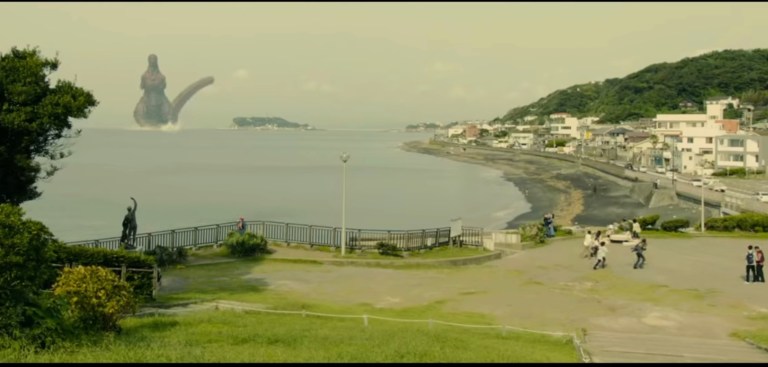
This is classic Godzilla.

Early story

The story begins at Tokyo Bay where the coast guard personnel found an abandoned yacht and searched inside. Suddenly a huge cloud of steam erupted from the ocean followed by blood-like water flooding the Tokyo Bay Aqua-Line. The tragedies compelled local authorities to take action starting with a committee meeting.

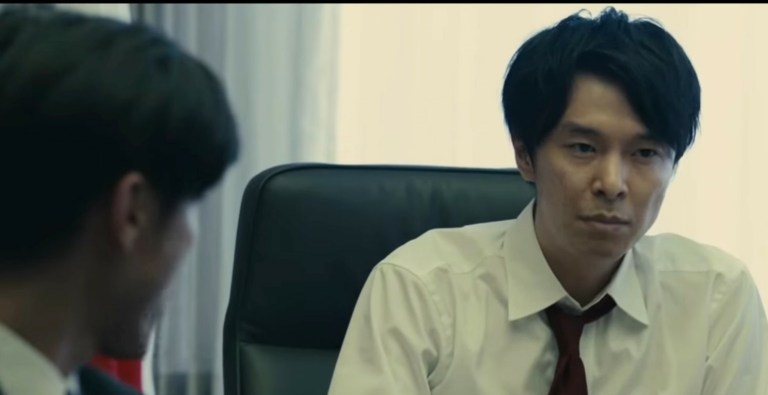
As emergency personnel save the victims in the damaged Tokyo Bay Aqua-Line, the tragedies reach the office of the Prime Minister who engages with many other government officials in an official meeting. They try to figure out what caused the incidents and, as such, theories and efforts to explain what happened were spoken until Deputy Chief Cabinet Secretary Rando Yaguchi (Hiroki Hasegawa) theorized that a living creature caused it (because he saw a viral video) which only resulted disbelief and dismissal.

Suddenly a massive tail rises from the ocean which got captured in video and photographs by the news media which confirms Yaguchi’s hunch. As the Prime Minister and the team of officials spend more time discussing and searching for real experts (because the three scientists they just met did not produce any breakthroughs), a huge creature makes its way into one of Tokyo’s districts through a waterway causing massive damage and displacing many people as well as all boats that got in its way.  

In a press conference, the Prime Minister gave his assurance to the public that they need not worry about the creature coming to shore. Just after giving his assurance speech, an assistant approaches the Prime Minister with really bad news that the creature has been crawling inland and causing even more damage…

Quality
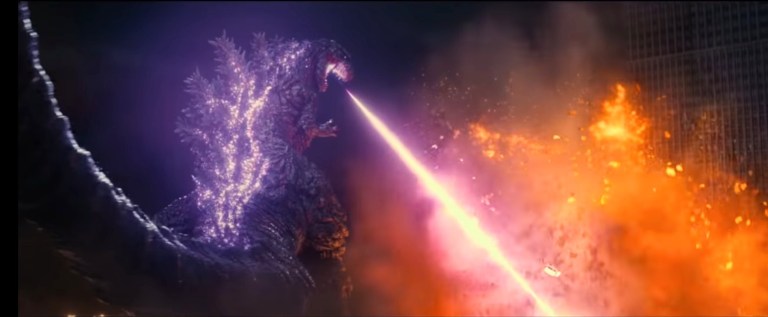
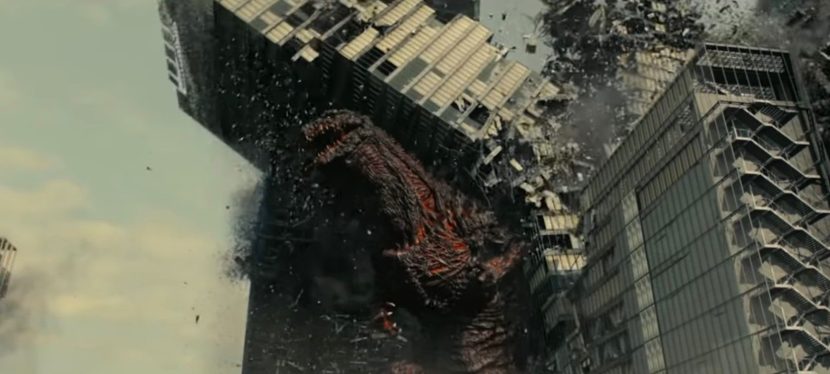
Japan’s iconic monster is not only terrifying here but also very deadly.

When it comes to presentation in comparison to all other Godzilla movies released, Shin Godzilla is very unique as it strongly brings to the viewers a very in-depth examination of the bureaucracy of the Japanese government complete with the many laws, requirements, rules and other elements of governance that made it so hard for the local authorities to respond to Godzilla’s invasion of the metropolis. There are key details that were raised such as the constitutionality of using local military force against the monster (which is not a foreign invader), which department should be in-charge of research about the same monster, etc.

Along the way, there is an overload of information – in terms of text, images and dialogue – that makes viewing quite a challenge. This makes watching Shin Godzilla a learning experience that viewers who are interested in governance and science will likely enjoy although it will alienate other moviegoers, especially those who only want to watch the spectacle of massive on-screen destruction that giant monster movies are known for. Going through all the exposition and explanations, and understanding most of it, however, will make the viewing experience worth it as these countless details do make sense in relation to Godzilla’s destructive impact on the people.

And then there is the huge cast of characters that needs to be followed. This is another big challenge for viewers because if one misses out on the key purpose a character has, then following the government’s efforts on dealing with Godzilla will make less sense. Not only will you have to follow the characters’ names, you will also have to remember their respective work titles. Apart from the government officials, there is also the huge batch of nerds and varied experts gathered by the government to do intense research. Again, those people need to be followed and remembered so you can understand what they do and how they contribute to their government’s efforts. When it comes to performances, they are collectively dramatic and you will be convinced of the pressure, the danger and uncertainty they face with Godzilla threatening Tokyo.
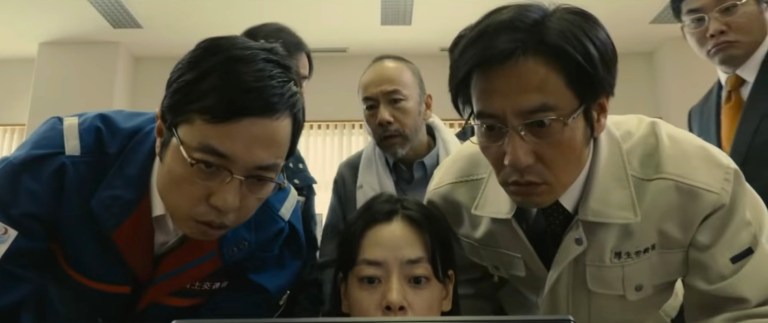
Better get used to seeing so many characters throughout the movie.
Hiroki Hasegawa as Rando Yaguchi.

As for the main spectacle of the movie, Godzilla, I can say that the monster here is very terrifying to watch. This is not your typical Godzilla as the Anno-Higuchi directorial duo really went all out with their creativity to remake Japan’s iconic monster into something new and deadly while still linking him creatively to the legacy of the classic Godzilla. There is even an element of evolution in this version of Godzilla and to see the Japanese military fire their expensive weapons at him really made a lot of spectacle to enjoy. I should also state that several scenes of disaster caused by the monster in this film were inspired by the tragedies of the Tōhoku earthquake and tsunami, and the Fukushima Daiichi nuclear disaster of 2011. Lastly, Godzilla here is really a super villain that is not only gigantic but also is made to be highly believable that it can destroy the nation, kill innocent civilians, demoralize the authorities and even bring Japan’s entire economy way down (note: one of the government officials explained the economic consequence of failing to defeat the monster).

When it comes to visual effects, this one is the best-looking Godzilla made by the Japanese yet! While the traditional approach of having an actor wear a rubber suit has been disregarded in favor of using modern, digital means (with motion capture), what the production team did here is very impressive as they focused strongly on having computer-generated graphics that are photo-realistic. While it is true that there were some moments of fake-looking CGI, the heavy photo-realism on the graphics of Godzilla (combined with strategic camera angles that really captured the scope and size of the monster) easily outweighed the weak spots. The lighting effects used for the laser blasts were very impressive, even competitive with what Hollywood has been doing. As for the scenes of destruction, a mix of CGI and practical effects (specifically miniatures) was used. In fact, certain scenes showing Godzilla interacting with the environment was done with pushing a prop through miniatures which resulted a high level of detail with organic and solid stuff.

The spectacle would not have been that effective, however, without the solid musical work done by Shiro Sagisu. Not only did the music add a lot to the intense sequences of Godzilla, it also brought out the sense of dread and horror out of the monster especially in the night-time scene when he was towering over a large section of Tokyo that lost power. Sagisu was also involved in Neon Genesis Evangelion.

Conclusion
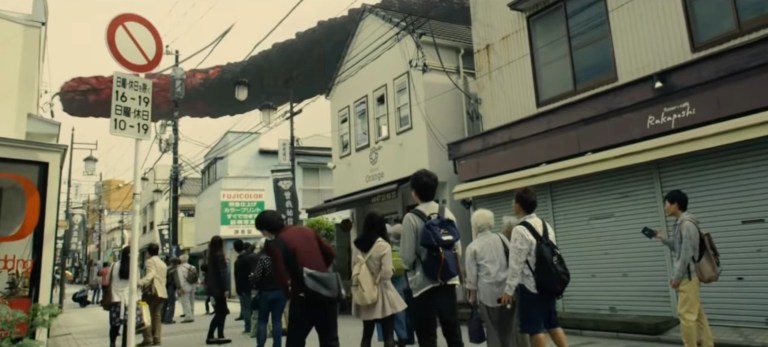
The emphasis on photo-realism on the computer-generated effects is something special.

I can say it out loud that Shin Godzilla (2016) is truly a spectacle to watch complete with tons of heavy drama, tons of information and the widest cast of characters to date. It is a new version of the Japanese icon that really impresses and when it comes to movie intelligence, it easily outshines many other Godzilla flicks. While it has a lot of spectacle to keep moviegoers entertained, its heaviness with the information and large cast of characters could turn off viewers who are not used to thinking and paying attention to lots of details while watching a giant monster movie. Personally, I welcomed the information overload and made efforts on paying close attention to the details and the characters. It really takes patience and focus to truly make the most out of the story and the overall presentation.

Ultimately, I enjoyed this movie for what it is and what its message was about with regards as to how governments should respond to immense disasters, what is Japan’s place in the world of the 21st century and, most notably, what Godzilla means to Japan and the international community. This is a very solid modernization of Godzilla and the Anno-Higuchi deserve admiration.

If you are seriously planning to buy an existing hard copy of Shin Godzilla (2016), visit Amazon for the Blu-ray disc release and see if it has the right price and special features to satisfy you.  

Overall, Shin Godzilla (2016) is recommended!

+++++

Thank you for reading. If you find this article engaging, please click the like button below and also please consider sharing this article to others. If you are looking for a copywriter to create content for your special project or business, check out my services and my portfolio. Feel free to contact me as well. Also please feel free to visit my Facebook page Author Carlo Carrasco and follow me at HavenorFantasy@twitter.com

My Observations: Christopher Nolan slams AT&T-controlled Warner Bros. over plan to release new movies in cinemas and HBO Max simultaneously

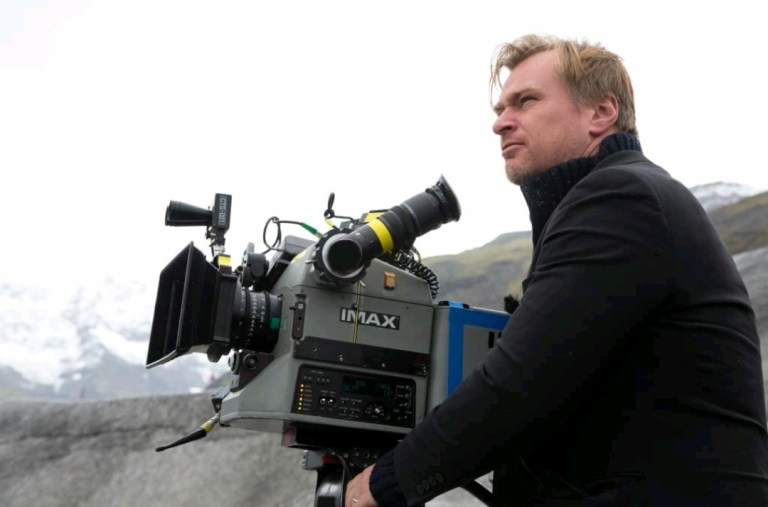
I am not a fan of director Christopher Nolan but I say he still deserves credit for the massive contributions he made in cinema, specifically with the Dark Knight trilogy (which strengthened the superhero film genre) and IMAX (Dunkirk and Interstellar come to mind.)

Director Christopher Nolan. (photo source – IMDB.com)

Very recently the acclaimed movie director and producer made tremendous buzz in the news as he slammed AT&T-controlled Warner Bros. over their plans to release their seventeen 2021 movies in both movie theaters and the streaming app HBO Max. As you already know, the much-awaited Wonder Woman 1984 is just the first of many WB films that will debut inside cinemas and via streaming on the same day. HBO Max is currently way behind rival streaming services Disney+ and Netflix in terms of subscribers, and this fact makes Warner Bros. look not only desperate but traitorous towards movie theatre operators (who lost money and have struggled to retain their employees).

Going back to Christopher Nolan, read closely below the excerpt from The Hollywood Reporter article.

For many in the movie business — producers, directors, stars and their representatives — Dec. 3, 2020 is a day that will live in infamy.

“Some of our industry’s biggest filmmakers and most important movie stars went to bed the night before thinking they were working for the greatest movie studio and woke up to find out they were working for the worst streaming service,” filmmaker Christopher Nolan, whose relationship with Warners dates back to Batman Begins in 2005, said in a statement to The Hollywood Reporter.

Nolan added: “Warner Bros. had an incredible machine for getting a filmmaker’s work out everywhere, both in theaters and in the home, and they are dismantling it as we speak. They don’t even understand what they’re losing. Their decision makes no economic sense and even the most casual Wall Street investor can see the difference between disruption and dysfunction.”

Personally, I agree with the Batman films director. Even with the ongoing pandemic, it still does not make sense economically to release brand new movies in both cinemas and online streaming simultaneously. I know that there are a lot of people who don’t want to leave their homes to watch a movie because of fear that they will get infected with COVID-19. I noticed a few people who posted on social media that the movie theatre is a death trap of COVID-19 and they disregarded the efforts movie theater operators made to have their facilities sanitized, cleaned and practiced social distancing. This contributes to them relying on streaming to watch brand new movies in their homes.

The WB plan to release new movies in both cinemas and HBO Max only made the tough situation of movie theater operators even worse. Cinemas have been struggling to survive and badly need customers to buy tickets, snacks and drinks, and most notably enjoy the grand experience of watch films on the big screen which streaming will never ever match nor replicate. It should be noted that the business model of standalone movies recovering the negative costs (production, marketing and others covered by movie producers and investors) by means of movie ticket sales (plus merchandising) followed MONTHS LATER by revenue from sales/rentals of DVD/Blu-ray/4K Blu-ray, cable TV, pay-per-view services, and public TV showing is still the best even though several theaters have been closed down due to the pandemic.

It should be noted that the fact that WB does not charge a dedicated upfront fee for viewing Wonder Woman 1984 on HBO Max only means that the said movie’s producers won’t be collecting proceeds from the payments of subscribers. If you are a dedicated fan of Wonder Woman, Gal Gadot, Chris Pine, Kristen Wiig and you want to see more Wonder Woman movies in the future, you are better off skipping streaming and instead pay for the movie by buying movie tickets, buying the movie’s eventual releases on DVD, Blu-ray and 4K Blu-ray, pay for the movie’s eventual pay-per-view release, pay for the future rental service of the movie, etc. Paying HBO Max only pays for the service, and not for Wonder Woman 1984. Streaming will NOT help Wonder Woman 1984’s producers, investors and filmmakers, and it also will NOT help movie theater operators.

As for me, I’ll make it a point to watch Wonder Woman 1984 in the local cinema (especially IMAX) a number of times and then anticipate its release on Blu-ray and 4K Blu-ray. I will not stream to watch it!

Going back to Christopher Nolan, he is not alone with his reaction towards WB’s plan. Major cinema chain AMC reacted negatively as well. Below is an excerpt from The Hollywood Reporter story.

“Clearly, Warner Media intends to sacrifice a considerable portion of the profitability of its movie studio division, and that of its production partners and filmmakers, to subsidize its HBO Max startup,” said Adam Aron, CEO and president of AMC Entertainment, in a statement to The Hollywood Reporter. “As for AMC, we will do all in our power to ensure that Warner does not do so at our expense. We will aggressively pursue economic terms that preserve our business.”

The move will see the studio’s 17-film slate hit HBO Max for a one-month window that starts the same day the titles will be available in theaters in the U.S. The move comes after the studio had already revealed plans to release Wonder Woman 1984 day-and-date on Christmas Day, a plan that AMC says it was notified about.

“These coronavirus-impacted times are uncharted waters for all of us, which is why AMC signed on to an HBO Max exception to customary practices for one film only, Wonder Woman 1984, being released by Warner Brothers at Christmas when the pandemic appears that it will be at its height,” read a statement from the exhibitor, which added, “However, Warner now hopes to do this for all their 2021 theatrical movies, despite the likelihood that with vaccines right around the corner the theatre business is expected to recover.”

CEO Aron added that the company has already started an “immediate and urgent dialogue” with the studio. AMC, which announced today that it would be selling 200 million shares in the hope of improving its liquidity, has seen its stock fall some 16 percent by Thursday afternoon.

You heard about the Independent Cinema Alliance? They too are disappointed with Warner Bros. They called for a return to theatrical exclusivity and expressed that releasing films solely in movie theaters for a period of time is “what drives that value – not streaming.” Below is the full statement of ICA from the Variety report.

“Unprecedented times call for unprecedented measures. The Independent Cinema Alliance, however, is disappointed in WarnerMedia’s questionable decision to release its entire 2021 film slate simultaneously in movie theaters and on HBO Max. WarnerMedia is correct that its content is extremely valuable, but it also must know that theatrical exclusivity is what drives that value—not streaming. Given that COVID-19 vaccines will begin distribution in the coming weeks, the ICA calls on our partners at Warner Bros. and other studios to help write the industry’s comeback story with a recommitment to exclusive theatrical content.

The ICA welcomes short-term, innovative film distribution models developed to bridge the coronavirus pandemic. It is important that our studio partners support independent exhibitors during this crisis with new theatrical releases backed by robust marketing campaigns. For our part, exhibitors will bring the magic of moviegoing to communities across America while implementing expert-backed, industry-specific health and safety protocols.

But let’s be very clear, it is essential to the success of the entire motion picture ecosystem that hybrid distribution models influenced by the pandemic properly reflect appropriate terms for movie theater owners. It is also imperative that these reactionary policies made in response to a public health crisis do not reflect long-term, formal shifts in distribution strategies for studio films. A theatrically driven business model is vital to the success of movie theater owners, studios, and the creative community. The ICA looks forward to collaborating with our partners in Hollywood on deliberate, innovative solutions that build a brighter future for this great industry.”

The hybrid film release model of WB is not only harming movie theater operators, it is also destroying the mutual trust movie theaters have with movie studios as we know it. As seen with Christopher Nolan, his long-time business relationship with Warner Bros. looks like it will crumble. Nolan might as well leave WB and find another Hollywood studio that agrees with him.

Not only that, Warner Bros. long-time business relationship with Legendary Pictures is in danger as well. Legendary Pictures co-financed WB’s upcoming films like Godzilla vs. Kong and Dune, and according to a Variety report, they may take legal action against the studio over its plan on launching movies in both cinemas and HBO Max. Here’s an excerpt from the said report.

It’s unclear what legal grounds Legendary would use to challenge the decision, though it would likely involve some breach of contract.

Legendary declined to comment, as did Warner Bros.

Part of Legendary’s frustration is that despite largely bankrolling “Dune” and “Godzilla vs. Kong,” the production company didn’t have much of a say in how its buzzy titles would be released. Moreover, the company felt that Warner Bros. wasn’t being transparent with its intentions. Months ago, Netflix had discussed a possible sale of “Godzilla vs. Kong” for a hefty $250 million but WarnerMedia, the parent company of Warner Bros., blocked that arrangement.

Denis Villeneuve, the director of “Dune,” is similarly disappointed with the HBO Max plan and would prefer a traditional theatrical release for his movie, according to insiders.

As if that was not enough, it has been reported that movie piracy has been rising as the studios skipped the struggling cinemas. Even Disney’s live-action Mulan was shared millions of times in the form of unlicensed copies! Below is an excerpt from the report by Bloomberg.

Studios have tried to salvage some of their big-budget films this year by selling them through streaming services for $20 to $30. But that business model has made it easier for pirates to illegally copy and share new releases, with an estimated loss of millions of potential customers for the production companies.

Unlicensed downloads of Walt Disney Co.’s most-recent picture, “Mulan,” have outpaced those of other movies since its Sept. 4 U.S. debut on the Disney+ streaming service, according to TorrentFreak, a website that tracks pirating activity on public servers. Compared with “The Lion King,” which came out last year in theaters, “Mulan” saw about twice as many downloads in the days and weeks after its release.

When a traditional movie is released in theaters, thieves struggle to obtain high-quality recordings of it, often resorting to bootlegging with a hidden camcorder. With digital releases, pirates use technologies not available to most consumers to make perfect copies quickly.

On the other side of the spectrum, Warner Bros. Entertainment chairman and CEO Ann Sarnoff defended her company’s decision and specified that they have “many movies which are ready to go, and they’ve been sitting on shelves. So we thought this was the most creative and win-win situation to bring them not only to theaters but simultaneously for 31 days on HBO Max.”

The same CNBC report also states that Warner Bros. did not consult the actors, the directors, the agents with regards to the 2021 movies, and that they did not make distribution deals with the cinemas.

In ending this, here is an excerpt from The Hollywood Reporter’s report. Play close attention to the details.

The Warners move poses big, maybe even existential questions: How do theaters survive this supposedly one-time, excused-by-the-pandemic move? Genies are hard to put back in the bottle and no one believes Warners intended this to be temporary anyway. What damage will be done to exhibitors by training customers that if they sit on their sofas, the biggest movies will come? And will Warners face serious backlash from important producers, filmmakers, guilds and on-screen talent? “Warners was the quintessentially talent-friendly, filmmaker-friendly studio,” says one agent. “Now Warners isn’t the first place, second place or third place you want to go.”

Many in Hollywood think WarnerMedia jumped at this drastic move to play to streaming-infatuated Wall Street and re-do the botched launch of HBOMax, which netted a dismal 8.6 million subscribers. But one prominent agent notes that the top executives at WarnerMedia and its parent — AT&T CEO John Stankey, WarnerMedia CEO Jason Kilar and, of course, Sarnoff — “don’t understand the movie business and they don’t understand talent relations.”

+++++

Thank you for reading. If you find this article engaging, please click the like button below and also please consider sharing this article to others. If you are looking for a copywriter to create content for your special project or business, check out my services and my portfolio. Feel free to contact me as well. Also please feel free to visit my Facebook page Author Carlo Carrasco and follow me at HavenorFantasy@twitter.com