A Look Back at Shogun Warriors #3 (1979)

Disclaimer: This is my original work with details sourced from reading the comic book and doing personal research. Anyone who wants to use this article, in part or in whole, needs to secure first my permission and agree to cite me as the source and author. Let it be known that any unauthorized use of this article will constrain the author to pursue the remedies under R.A. No. 8293, the Revised Penal Code, and/or all applicable legal actions under the laws of the Philippines.

When it comes to showcasing giant robots fighting other robots or monsters, there is no denying that Japan is the leader. In my lifetime, I have seen lots of episodes of varied anime TV series, some anime feature films as well as OVAs (original video animation) of such a genre of entertainment made by lots of Japanese creators. While I never saw any episodes of Brave Raideen nor any episodes of Chōdenji Robo Combattler V, I saw episodes of Dangard Ace on home video.

As seen already in issues #1 and #2 of the Shogun Warriors comic book series, the giant robots were adapted but not their respective original concepts and characters the Japanese established. As such, an all-new concept with Westerners in mind was implemented for the said series.

With those details laid down, here is a look back at Shogun Warriors , published by Marvel Comics in 1979 with a story written by Doug Moench and drawn by Herb Trimpe.
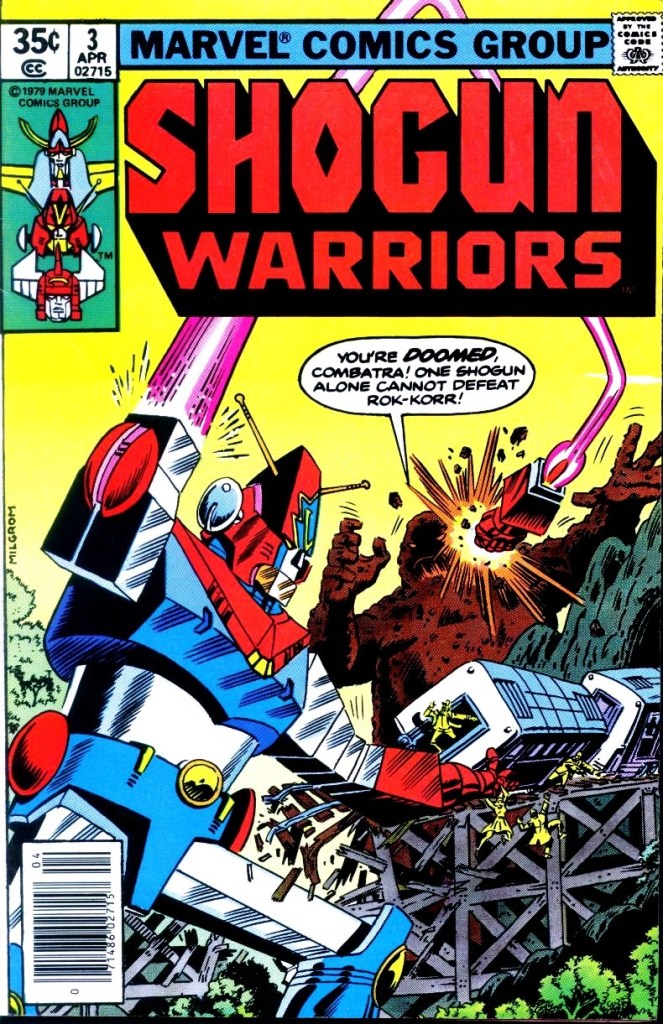
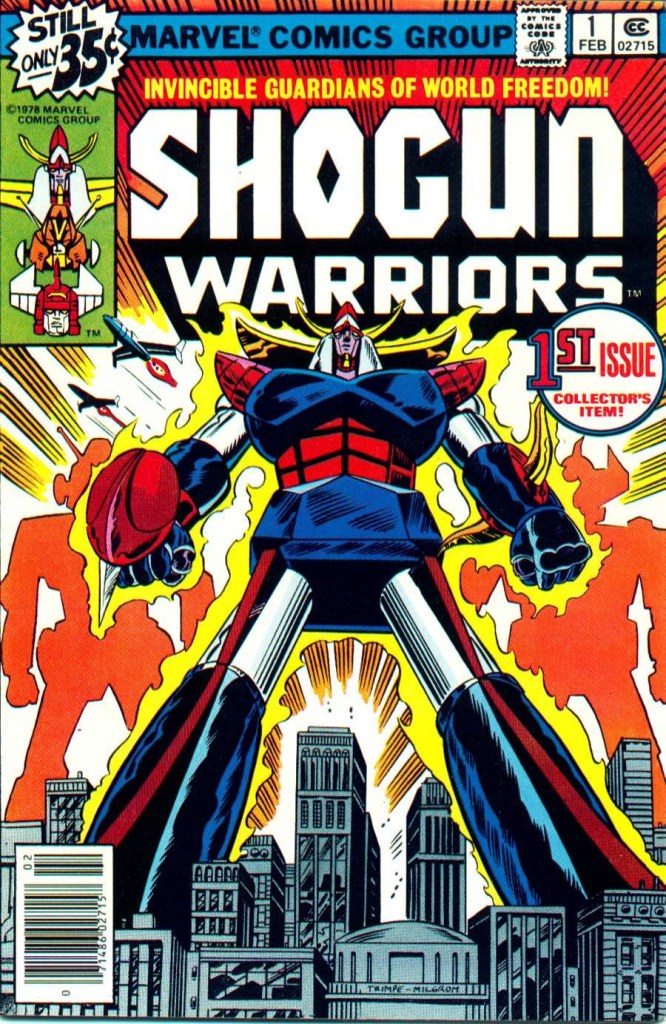
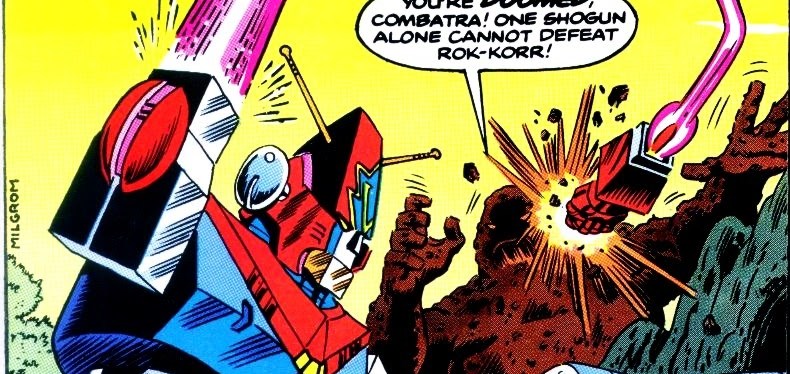
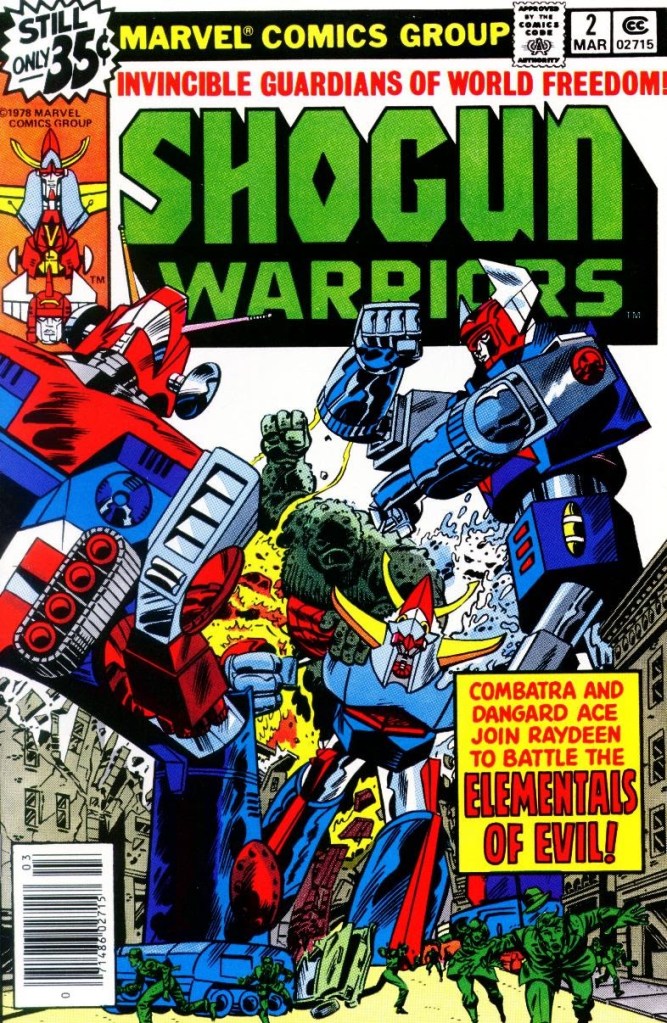
The cover.

Early story

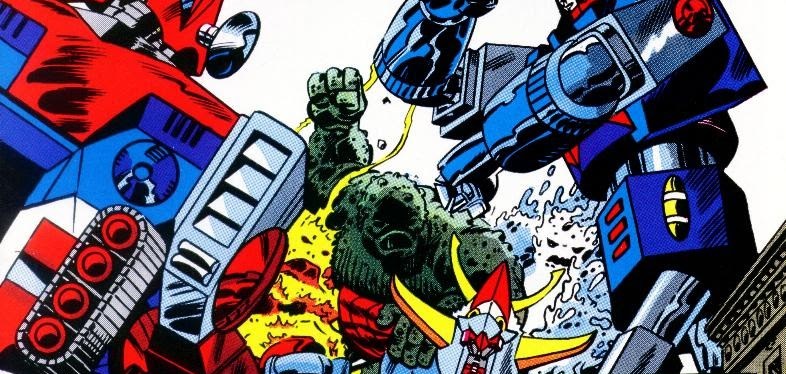
The story begins with Raydeen, Combatra and Dangard Ace on the field facing three giant enemies (each one representing a different element – fire, earth and water). Right near them is the train (on an elevated track) that they just saved which Combatra (piloted by Genji Odashu) notices.

The battle begins with Dangard Ace taking on the water monster while Raydeen and Combatra take on the fire monster and earth monster respectively. During the heat of battle, the stalled train begins to fall as the elevated track gets damaged…

Quality
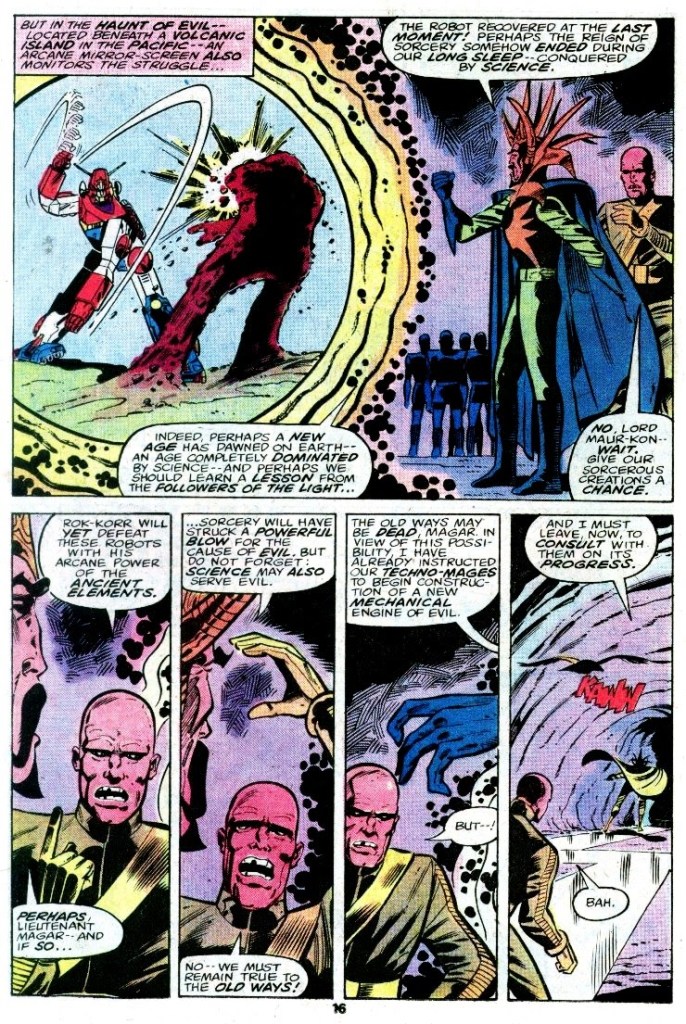
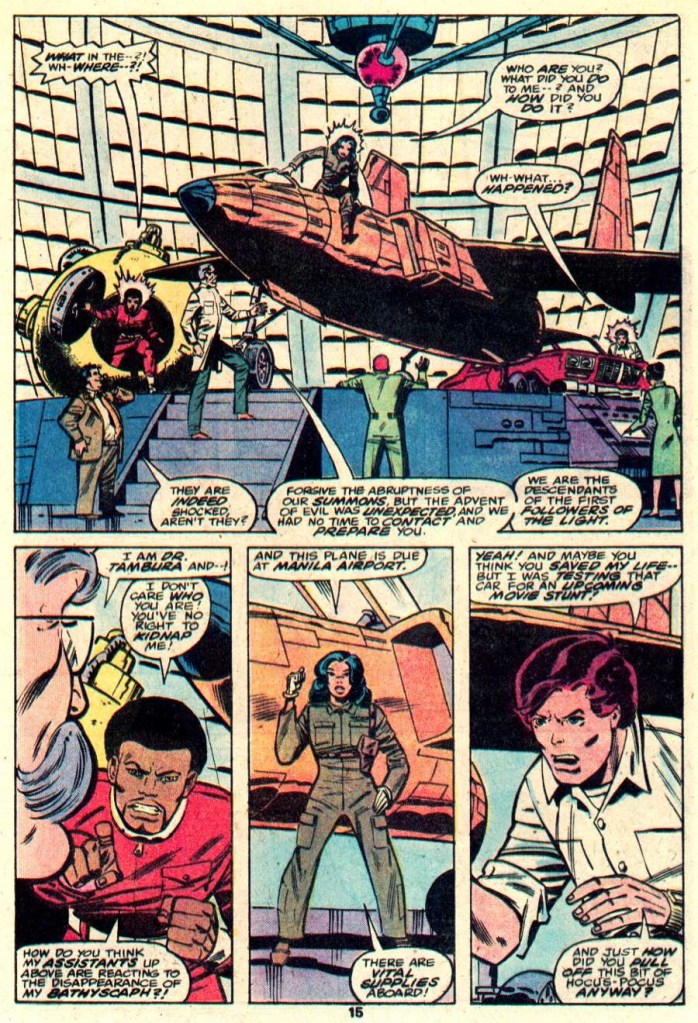
The bad guys watch behind the scenes during the battle.

To be clear and specific, this comic book creatively rebounded when it comes to spectacle. Compared to issue , this one has a lot of action scenes mixed with suspense and some talk scenes that were supposed to be intriguing. When it comes to exposition, this one is a refreshing change from what happened in issue . The exposition was clearly lessened but the creators still managed to insert some scenes to dramatize and explain to readers what the villains are up to and why sorcery is a core element of their power (which kinda explains how they were able to make giant monsters that are capable of talking). Interestingly, this comic book shows that there is division between members of the forces of evil.

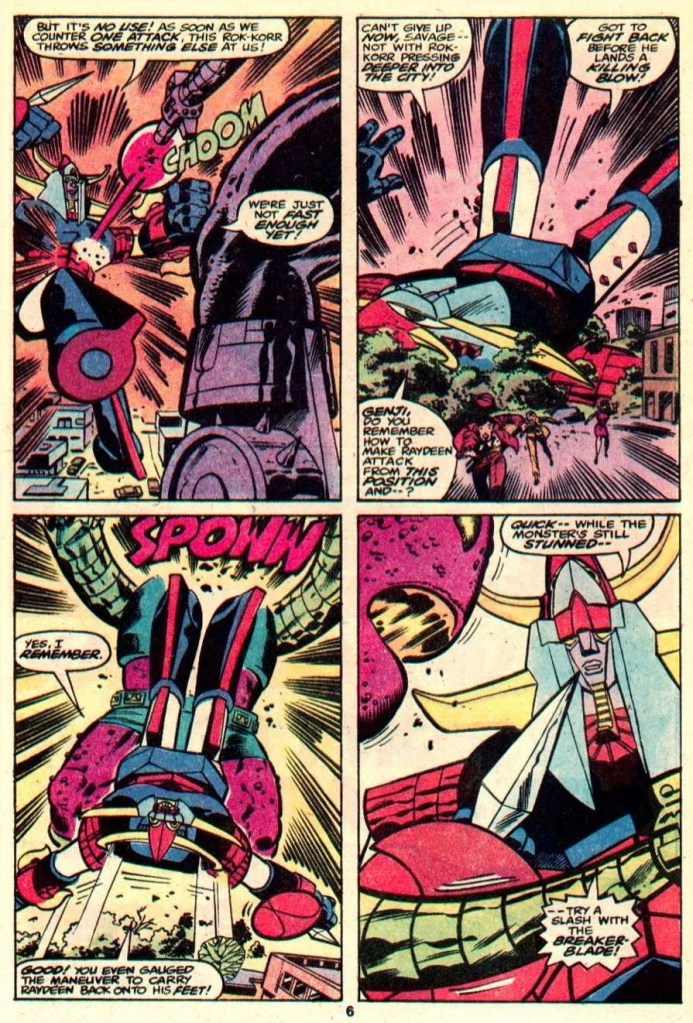
Fans who love the three giant robots will have something fun to read. Take note, however, that the action scenes per robot are short and even predictable with the way the spectacle turned out. If you are looking for character development on their respective pilots, you won’t see any here.

Conclusion
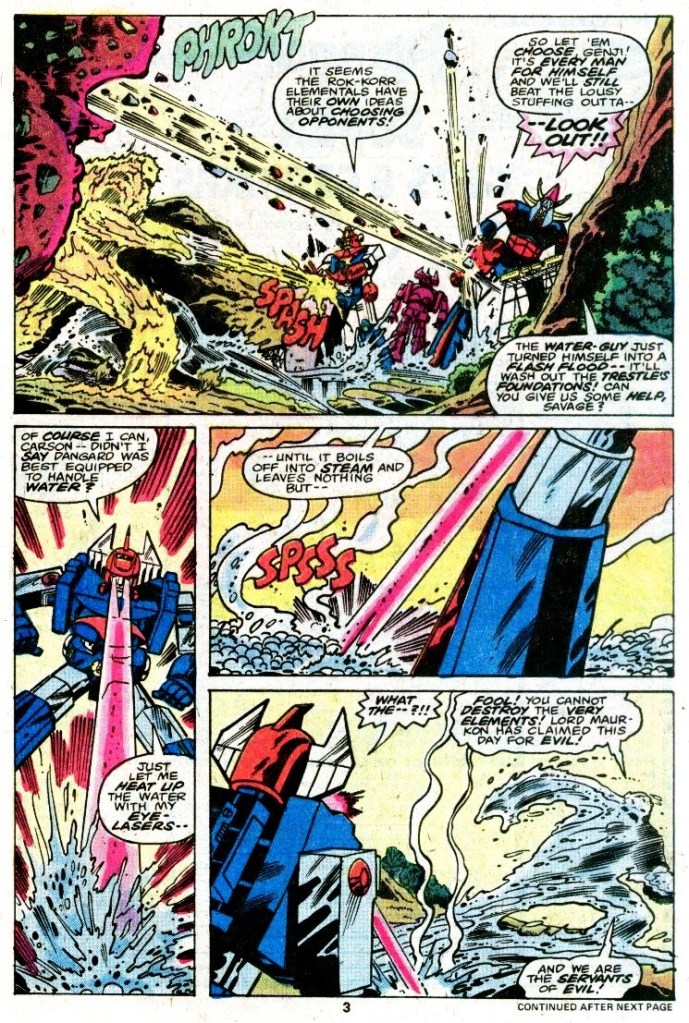
Dangard Ace, Raydeen and Combatra fighting their respective counterparts.

Shogun Warriors (1979) does not have much depth but still managed to deliver the goods when it comes to showcasing giant robot spectacle. On the aspect of fun, this one is an improvement over the exposition-heavy issue but that is not saying much. It should be noted that, like the first two issues, this comic book has less than twenty pages of art and story. More notably, there is not much new here other than the very lame and corny attempt by the creators for the big reveal they came up with at the end.

If you are seriously planning to buy an existing hard copy of Shogun Warriors (1979), be aware that as of this writing, MileHighComics.com shows that the near-mint copy of the comic book costs $35.

Overall, Shogun Warriors (1979) is satisfactory.

+++++

Thank you for reading. If you find this article engaging, please click the like button below and also please consider sharing this article to others. If you are looking for a copywriter to create content for your special project or business, check out my services and my portfolio. Feel free to contact me as well. Also please feel free to visit my Facebook page Author Carlo Carrasco and follow me at HavenorFantasy@twitter.com
A Look Back at Shogun Warriors #2 (1979)

Disclaimer: This is my original work with details sourced from reading the comic book and doing personal research. Anyone who wants to use this article, in part or in whole, needs to secure first my permission and agree to cite me as the source and author. Let it be known that any unauthorized use of this article will constrain the author to pursue the remedies under R.A. No. 8293, the Revised Penal Code, and/or all applicable legal actions under the laws of the Philippines.

Long before Pacific Rim (2013) presented giant robots and monsters slug it out on the big screen with a strong emphasis on action and scale, there were varied animated series of such giants shown in television sets in Japan way back in the 1970s. Then by the end of the decade, Marvel Comics published the Shogun Warriors comic book series in relation to a business deal with Mattel.

Last time, only one giant robot was heavily featured as a defender for human civilization as it became a target by a force of evil that unleashed a giant monster. That robot was Raydeen and as a result of what happened, something led to the unveiling of Combatra and Dangard Ace.

To find out more, here is a look back at Shogun Warriors , published by Marvel Comics in 1979 with a story written by Doug Moench and drawn by Herb Trimpe.

The cover.

Early story

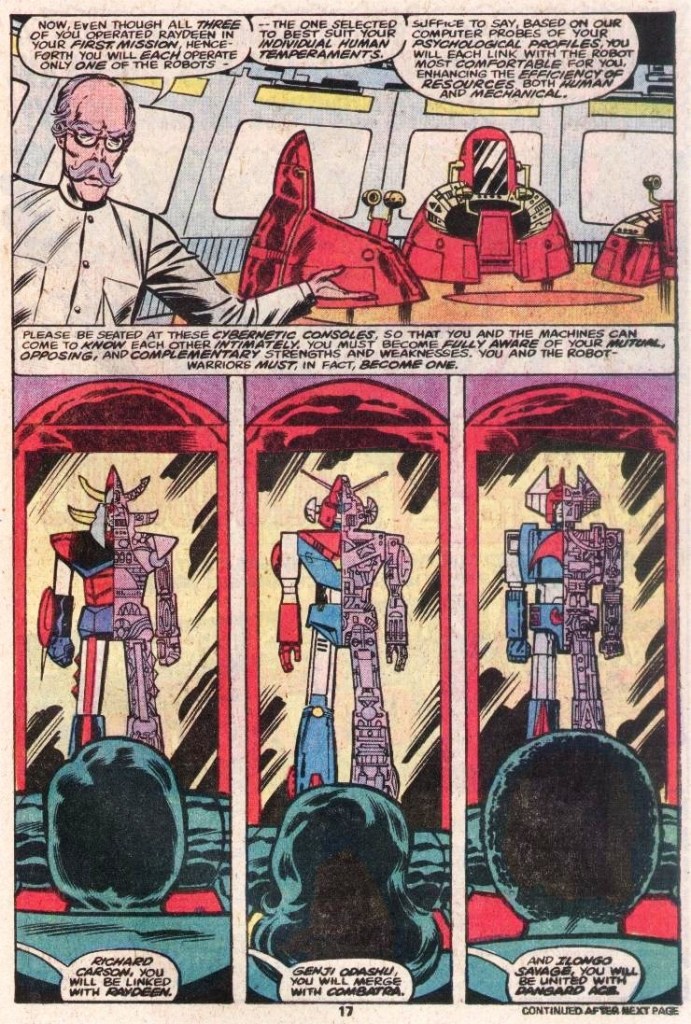
The story begins at the secret facility of Shogun. There the three pilots – Genji Odashu, Ilongo Savage and Richard Carson – are being briefed by Dr. Tambura explains to them that their first mission piloting Raydeen was not a failure at all. While acknowledging that the giant monster Rok-Korr is still a threat, he states to them that giant robots Combatra and Dangard Ace will be deployed and controlled by them.

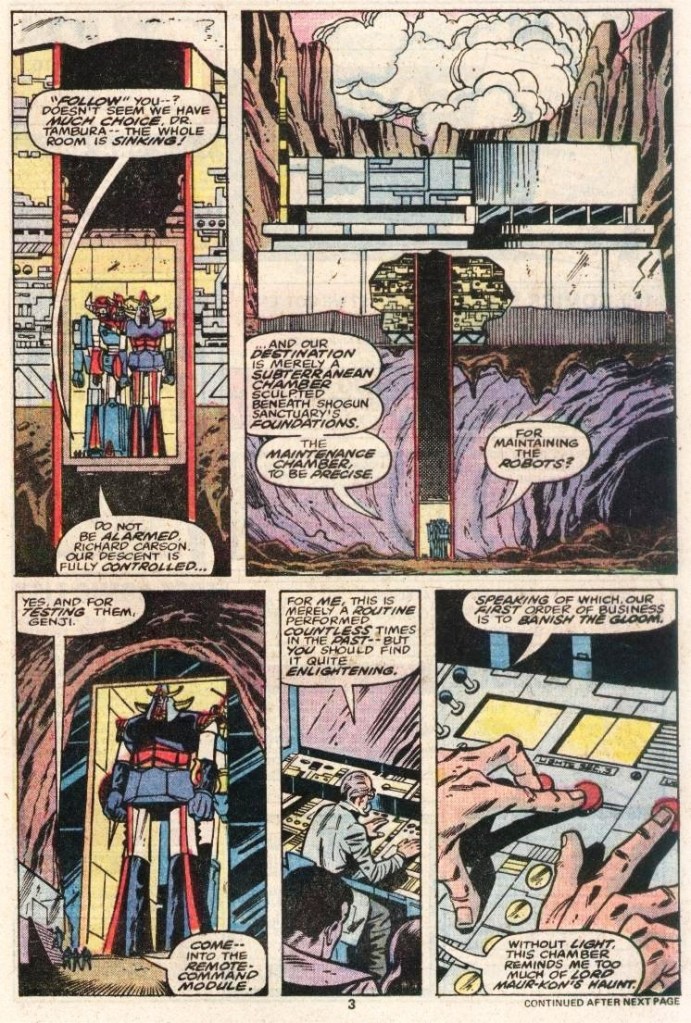
After giving them a quick tour of their subterranean chamber (where the robots receive maintenance and get tested), Dr. Tambura bring the three pilots into another place filled with high-tech controls. From there, they watch Dangard Ace, Raydeen and Combatra perform in field tests via remote control.

Meanwhile on a different island, the evil leader Maur-Kon rallies his so-called dark agents to rise and work together in seeking vengeance for their defeat in the great war chaos as they have found the forces of eternal good anticipating them. After much talk, Maur-Kon and his minions bow and kneel over bubbling magma murmuring evil phrases…

Quality

The three pilots get assigned with each robot.

Like the previous issue, this comic book has less than twenty pages of story and art. This results another heavy load of exposition or information dump on readers, and the narrative had a rushed pace. With regards to the battle between Raydeen and the giant monster, there is indeed a continuation of it. The giant monster was given some personality.

Again, there is no real character development here. The three pilots were not written to display any personality nor did the writer exert any effort to make readers relate with them. Instead, you will see them in training in speed beyond belief.

The highlight here is that Dangard Ace and Combatra finally got revealed and emphasized. Be warned, however, that there is lesser spectacle in this comic book and the story predictably served as a setup for what could be a more promising battle.

Conclusion

The pilots and the Shogun Warriors (the robots) go deep down.

Shogun Warriors (1979) suffered from pretty much the same problems as issue . The noticeable difference here is that there is lesser action and lesser giant-sized spectacle shown here. That is not exactly surprising as the creators had to sacrifice something to make way for further explanation of the comic series’ grand concept.

If you are seriously planning to buy an existing hard copy of Shogun Warriors (1979), be aware that as of this writing, MileHighComics.com shows that the near-mint copy of the regular edition costs $35 while the near-mint copies of the price-less and the Whitman editions cost $350 and $35 respectively.

Overall, Shogun Warriors (1979) is less than satisfactory.

+++++

Thank you for reading. If you find this article engaging, please click the like button below and also please consider sharing this article to others. If you are looking for a copywriter to create content for your special project or business, check out my services and my portfolio. Feel free to contact me as well. Also please feel free to visit my Facebook page Author Carlo Carrasco and follow me at HavenorFantasy@twitter.com
A Look Back at Shogun Warriors #1 (1979)

Disclaimer: This is my original work with details sourced from reading the comic book and doing personal research. Anyone who wants to use this article, in part or in whole, needs to secure first my permission and agree to cite me as the source and author. Let it be known that any unauthorized use of this article will constrain the author to pursue the remedies under R.A. No. 8293, the Revised Penal Code, and/or all applicable legal actions under the laws of the Philippines.

If you are fond of giant robots from Japanese pop culture as well as giant monsters and scenes of city structures getting destroyed, then you might want to take a look at the Shogun Warriors comic book series that was published by Marvel Comics from 1979 to 1980. To put things in perspective, Shogun Warriors was made possible through licensing deals and back in the 1970s, Marvel Comics had the rights to publish comic book about Japan’s famous icon Godzilla.

Specifically, Shogun Warriors involved Marvel Comics and Mattel which in turn organized a line of imported toys from Japan based on varied Japanese shows about giant robots. Among the many giant robots of the toy line, the robots Raideen, Combattler V and Dangard Ace became the featured fighting-for-good robots of the Shogun Warriors comic book series. For the literary works, Raideen was renamed as Raydeen while Combattler V was renamed as Combatra. Dangard Ace’s name was left unchanged.

With those details laid down, here is a look back at Shogun Warriors , published in 1979 by Marvel Comics with a story written by Doug Moench and drawn by Herb Trimpe.

The cover.

Early story

The story begins in the outskirts of Tokyo in Japan where giant robot Raydeen fights a large, tentacled creature enhanced with cybernetics. As the people on the street below them run away from the ongoing destruction, the monster fires a shot at Raydeen who blocks it but subsequently gets tied with one of the tentacles. The giant robot, which is operated by three pilots inside, breaks free and continues to fight the monster.

As the battle rages on, the city continues to get damaged heavily affecting the people…

Quality

Technically the organization kidnapped three people to be the pilots of their robots for Earth’s defense.

Having seen a lot of anime TV series episodes about giant robots, I’m familiar already with the storytelling formula that often focuses first on the human characters and their struggles before shifting the narrative on the giant robots that often fight large monsters or opposition robots. This particular comic book has some of that but the way the story is structured, it is different and can be a bit jarring.

Doug Moench structured the story to have Raydeen and the monster fighting in the present time followed shortly by a flashback that took place just hours prior. The flashback, which occupies 9 of the comic book’s 18 pages, is heavily filled with exposition meant to introduce readers to the three pilots Genji Odashu/Ilongo Savage/Richard Carson, what Earth defense force The Followers of the Light is, and why there are giant monsters ravaging the world. The exposition’s writing felt crammed and rushed for reading although it still succeeds in establishing the comic book’s grand concept.

When it comes to spectacle, this comic book is loaded with giant robot action and it is quite varied in style and execution. The funny thing is that you will only get to see Raydeen in action as this is an introductory story with only 18 pages of story.

The dialogue is a bit of a mess here, particularly with the early Raydeen scenes. As the battle with the monster goes on, there are these lines of dialogue reflecting the conversations between the pilots inside Raydeen who are not shown talking until late in the comic book.

Conclusion

Raydeen and the giant monster in battle.

Shogun Warriors (1979) has a nice concept and its Westernized take on portraying giant robots and human characters is clearly different from the way things were done in the varied giant robot anime TV series of Japan. There is clearly no Japanese style melodrama as this one has its characters portrayed straight with a touch of American science fiction. That being said, do not expect to see the Japan-made characters of Raideen, Combattler V and Dangard Ace appear here as new characters were made in their place. The comic book’s story structure is a bit jarring to follow and the heavy exposition dump makes reading a bit of a chore. It is fun to read but not great. Those of who are fans of Combatra and Dangard Ace will be disappointed about the near-total absence of those robots.

If you are seriously planning to buy an existing hard copy of Shogun Warriors (1979), be aware that as of this writing, MileHighComics.com shows that the near-mint copy of the regular edition costs $63 while the near-mint copy of the Whitman edition costs $35.

Overall, Shogun Warriors (1979) is satisfactory.

+++++

Thank you for reading. If you find this article engaging, please click the like button below and also please consider sharing this article to others. If you are looking for a copywriter to create content for your special project or business, check out my services and my portfolio. Feel free to contact me as well. Also please feel free to visit my Facebook page Author Carlo Carrasco and follow me at HavenorFantasy@twitter.com