COVID-19 Crisis: Stricter quarantine outside of NCR Plus ruled out

Are you feeling tired of the restrictions that come with the quarantine for the past month? Moving from GCQ (general community quarantine) to ECQ (enhanced community quarantine) and recently MECQ (modified enhanced community quarantine) made life in the so-called NCR Plus region (the National Capital Region plus the nearby provinces of Bulacan, Cavite, Laguna and Rizal) a bit more complicated. Not only were people told to stay at home, there were several businesses that negatively got affected too.

As for those living outside the NCR Plus region, there has been fear brewing that they will find themselves living under a stricter quarantine soon. Those fears can be put to rest as Malacañang officially ruled out the possibility of a restrictive quarantine in communities and places outside of NCR Plus.

The brewing fear was the result of recent reports of the Department of Health (DOH) showing an increase of COVID-19 cases in five regions other than the National Capital Region and the provinces of Bulacan, Cavite, Laguna and Rizal. To put things in perspective, posted below is an excerpt from the article published through Philippine News Agency (PNA).

In an online press briefing, Health Secretary Maria Rosario Vergeire said there was an upward trend of Covid-19 infections in Ilocos Region, Cagayan Valley, Central Luzon, Calabarzon, and Cordillera Administrative Region.

While the government is monitoring the situation in areas outside NCR Plus, it does not see the need to impose stricter quarantine rules in the entire Luzon, Roque said.

“Sa ngayon po, binabantayan naman po natin ang datos at wala pa naman pong ganoong conclusion ang nakikita natin. Ang talagang paglobo po ng mga kaso ay nandito sa NCR Plus. At kaya nga po ang response natin dito muna sa NCR Plus (As of now, we are monitoring the data and we have not arrived at a conclusion [to implement stricter quarantine measures in Luzon]. Rise in Covid-19 cases is seen in NCR Plus. So our response is focused on NCR Plus),” Roque said.

Roque added that the Covid-19 surge in other areas is not that “bad” unlike in NCR Plus.

“As I said, binabantayan din natin ang kaso sa iba’t ibang lugar ng Pilipinas pero so far po (we are monitoring the cases in different parts of the Philippines but so far), nothing as bad as what we are seeing in the NCR Plus,” he said.

Two weeks after being under the most restrictive enhanced community quarantine (ECQ), Metro Manila, Bulacan, Cavite, Laguna, and Rizal are now under the less stringent modified ECQ (MECQ) until April 30.

Apart from NCR Plus, the City of Santiago in Isabela, Quirino province, and Abra are also under MECQ.

A more relaxed general community quarantine (GCQ) is imposed in Cagayan, Isabela, Nueva Vizcaya, Batangas, Tacloban City, Iligan City, Davao City, Lanao del Sur, and Quezon.

The rest of the country remains under modified GCQ.

So there you have it. The above news and details should remind you that it is essential to follow health protocols by means of sanitizing yourself frequently, wearing face masks and face shields, and practicing social distancing.

Please share this article to others so that they will know that no stricter quarantine is planned outside of NCR Plus.

Now if only more vaccines could be made available locally so that this China virus pandemic will stop…

+++++

Thank you for reading. If you find this article engaging, please click the like button below and also please consider sharing this article to others. If you are looking for a copywriter to create content for your special project or business, check out my services and my portfolio. Feel free to contact me as well. Also please feel free to visit my Facebook page Author Carlo Carrasco and follow me at HavenorFantasy@twitter.com

For more South Metro Manila community news and developments, come back here soon. Also say NO to fake news, NO to irresponsible journalism, NO to misinformation, NO to plagiarists, NO to reckless publishers and NO to sinister propaganda when it comes to news and developments. For South Metro Manila community developments, member engagements, commerce and other relevant updates, join the growing South Metro Manila Facebook group at https://www.facebook.com/groups/342183059992673
Buy-bust operation in Las Piñas City results two fatalities and over P200 million worth of suspected illegal substance seized

Following the anti-drug operations it pulled off in the cities of Parañaque and Pasay, the Philippine National Police (PNP) and its strategic partners scored another one with its buy-bust operation in the city of Las Piñas where they seized 31 kilograms of the suspected illegal substance referred to as shabu which was estimated to be worth P210 million. The same operation also resulted the deaths of two men.

To put things in perspective, posted below is an excerpt from the report published through Philippine News Agency (PNA)…

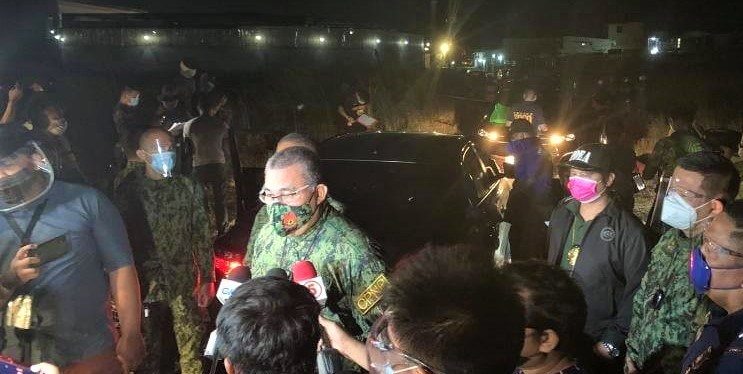
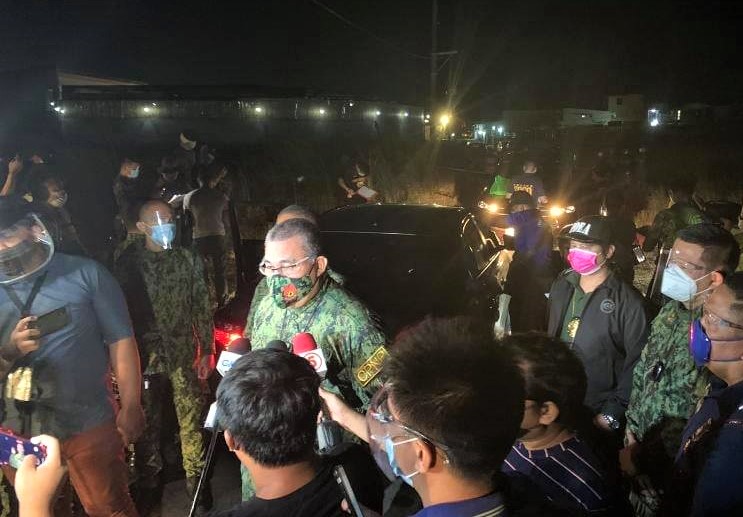
PNP Chief General Debold Sinas facing the media at the scene of the crime. (source – Philippine National Police Facebook page)

Philippine National Police (PNP) Chief, Gen. Debold Sinas, on Wednesday identified the slain suspects as Jen Jieko Amarga, alias Koy-koy and Coco Amarga, and Andrew Garcia.

Citing a report from the PNP Drug Enforcement Group (PDEG), Sinas said the two were known distributors of illegal drugs in Metro Manila, Calabarzon, and Central Luzon and were connected to drug syndicates operating in the country.

“Their source of illegal drugs came from a certain Chinese national from the country of Myanmar and being discreetly transported to a warehouse somewhere in Pampanga,” he said.

The operation, conducted by police officers and agents of the Philippine Drug Enforcement Agency (PDEA), started at about 10 p.m. along Sherack St. in Barangay Almanza Uno after a poseur buyer was able to convince the suspects to sell a kilogram of shabu worth PHP6.8 million.

Sinas said after the exchange of the shabu and the buy-bust money, the policemen declared that the suspects were being arrested.

“Nakipagbarilan sila, so namatay yung dalawang suspects (They shot it out with our personnel so they got killed),” he said.

The PDEG is conducting follow-up operations to find the suspects’ cohorts.

It is notable in the above news report that the illegal substance came from Myanmar handled by a still unidentified Chinese national. How it got smuggled all the way from Myanmar to Pampanga has yet to be explained. As for the two men who died and were alleged to be experienced distributors, it remains to be seen how their demise will impact the local drugs problem for at least the short term.

+++++

Thank you for reading. If you find this article engaging, please click the like button below and also please consider sharing this article to others. If you are looking for a copywriter to create content for your special project or business, check out my services and my portfolio. Feel free to contact me as well. Also please feel free to visit my Facebook page Author Carlo Carrasco and follow me at HavenorFantasy@twitter.com

For more South Metro Manila community news and developments, come back here soon. Also say NO to fake news, NO to irresponsible journalism, NO to misinformation, NO to plagiarists, NO to reckless publishers and NO to sinister propaganda when it comes to news and developments. For South Metro Manila community developments, member engagements, commerce and other relevant updates, join the growing South Metro Manila Facebook group at https://www.facebook.com/groups/342183059992673
500 LGUs reminded to automate biz one-stop shop this year

Are you a business owner who recently struggled with the processes at your local government unit (LGU) because their electronic Business One-Stop Shop (e-BOSS) did not function properly and proved to be inefficient? Perhaps they did not have an e-BOSS?

Here are some good news – a Joint Memorandum Circular (JMC) was approved yesterday designed to ensure that the e-BOSS systems of LGUs get automated this year.

To put things in perspective, e-BOSS uses the Electronic Business Permitting and Licensing System or eBPLS developed by the Department of Information and Communications Technology allowing the public to perform government transactions online. e-BOSS targets to fully automate transactions in LGUs from downloading of forms, using e-signature, up to online payment.

By comparison, the old system BOSS is defined as a single-window system that streamlines application forms and submission of documents in government offices in one window only.

Going back to the news related to the JCM, below is an excerpt from the news release published through Philippine News Agency (PNA). Some parts are in bold to highlight importance of details.

Anti-Red Tape Authority (ARTA) director general Jeremiah Belgica targets to have at least 500 local government units (LGUs) rolling out the electronic Business One-Stop Shop (e-BOSS) by end-2021.

During the virtual signing ceremony of the Joint Memorandum Circular (JMC) 01-2021 Tuesday, ARTA reminded LGUs that they should have automated their BOSS before June 17 this year.

The JMC establishes the guidelines for processing business permits, related clearances, and licenses in all cities and municipalities.

“Hopefully by the end of the year, we will have 500 LGUs already automated by DICT’s (Department of Information and Communications Technology) IBPLS (Integrated Business Permits and Licensing System) software,” Belgica said.

DICT project manager for IBPLS Del Basada said the department has signed memoranda of agreement with 446 LGUs, of which more than 200 LGUs are already in the operational stage of the system.

“(We are) just making sure that everyone’s (is) onboard for IBPLS which is an online system. We look at their readiness first if they can adopt the system,” Basada said, adding the DICT is assisting LGUs in addressing challenges to do online transactions.

Meanwhile, Belgica said while the IBPLS software works well even with smaller LGUs, he urged highly urbanized cities to fast-track adopting the integrated system so they can go online for their BOSS before the June 17 deadline.

“We are encouraging the highly urbanized cities to actually automate the soonest because they have the most number of businesses,” he added.

Under the newly signed JMC, the e-BOSS should have the following functions: accepting electronic submission of application; electronic issuance of tax bill or order of payment; accepting online payment, releasing of electronic version of permits, licenses, and clearances; and providing gateway facility linked to courier service where applicant prefers hard copy of the documents.

The JMC also limits the documentary requirements and will implement a unified application form with a unique identification number.

ARTA reminds LGUs that they should not require notarization of the requirements.

It added barangay clearances related to business permit applications shall be integrated and processed by the Business Processing and Licensing Office. Number of signatories in the documents shall be limited to three.

So there you have it! An official document made it final that local government units should have the e-BOSS automated and functioning with the expected efficiency, transparency and results fulfilled. Given the fact that we are all still living under the pandemic of the China Virus (COVID-19), this latest development is indeed crucial and improvements on the part of LGUs should happen this year.

If you are a business owner who struggled with the processes at your local government and you wish to speak out, please post in the comments below. You can also send to me a private message.

+++++

Thank you for reading. If you find this article engaging, please click the like button below and also please consider sharing this article to others. If you are looking for a copywriter to create content for your special project or business, check out my services and my portfolio. Feel free to contact me as well. Also please feel free to visit my Facebook page Author Carlo Carrasco and follow me at HavenorFantasy@twitter.com

For more South Metro Manila community news and developments, come back here soon. Also say NO to fake news, NO to irresponsible journalism, NO to misinformation, NO to plagiarists, NO to reckless publishers and NO to sinister propaganda when it comes to news and developments. For South Metro Manila community developments, member engagements, commerce and other relevant updates, join the growing South Metro Manila Facebook group at https://www.facebook.com/groups/342183059992673

COVID-19 Crisis: DTI says restaurants in MECQ areas are allowed to have outdoor dining

In what is clearly a move with economic recovery in mind, Department of Trade and Industry (DTI) Secretary Ramon Lopez declared that restaurants (located in places under MECQ or modified enhanced community quarantine status) with outdoor dining services and set-ups are allowed to resume but with certain limitations.

To make things clear, below is an excerpt from the Philippine News Agency (PNA) article which was published just yesterday. For greater emphasis, some parts are in bold.

In a text message to reporters Sunday night, Lopez said food establishments with alfresco dining services are only allowed up to 50 percent capacity, with diagonal seating arrangement and acrylic dividers on tables.

He added that indoor dine-in services are still not allowed in areas under MECQ, but food establishments can continue to operate with their take-out and delivery services.

From April 12 to 30, the National Capital Region, Bulacan, Cavite, Laguna, and Rizal or the NCR Plus as well as Santiago City in Isabela, and the provinces of Quirino and Abra were also placed under MECQ.

Earlier, the DTI chief said that the Inter-Agency Task Force for the Management of Emerging Infectious Diseases (IATF) might be sensitive in allowing indoor dine-in due to the highly contagious new variants of Covid-19.

“The IATF recommended to the President to shift to MECQ after two weeks of ECQ to restore more jobs and livelihood for the people,” Lopez said.

Clearly the local authorities are trying hard to balance themselves between economics and public health as new cases of COVID-19 (China Virus) continue to be counted in very high numbers on a daily basis in recent times. On April 2, the count of infections reached over 15,000.

Going back to the issue of allowing restaurants with outdoor dining (AKA alfresco) within the MECQ areas, it is good news that they are allowed to resume operations. It will still be a challenge for food establishments to attract enough paying customers and make their business’ financial ends meet.

On a personal experience, I love eating ramen and Tsukemen at Sigekiya Ramen in Alabang. I prefer that such meals would be cooked by the restaurant and be served to me at a table at their place. The alternative of taking the cooked ramen out and consume it at home is just not a convincing option for me because ramen is meant to be consumed quickly while it is hot. The alternative of taking home ingredients and noodles, and have them cooked at home does not appeal to me as I prefer Sigekiya’s cooks make the meal I paid for.

A delicious meal like this one is best to be eaten at the restaurant, even outdoors.

Also located in Alabang is the local branch of Akrotiri, a really fine restaurant that serves authentic Greek meals that my family and friends enjoyed. They also have meals that, in my opinion, are best consumed at their place and their Alabang branch (Commercenter to be precise) has space for outdoor dining. It was at Akrotiri Alabang where I treated 2019 SEA Games gold medalist Kim Mangrobang to a meal and organized an exclusive interview with her. They really have a fine-looking place. Visit their website at https://akrotiri.ph/

It is important to keep in mind that restaurants around the nation have struggled a lot since the pandemic started last year. These business establishments are also struggling with retaining their respective employees, notably their cooks, the baristas, waiters and waitresses. Remember that the meals and drinks you enjoy would not be the same when the people who prepared them get laid off.

With the DTI’s declaration of allowing food establishments with outdoor dining setups and services to resume, I encourage you my readers to consider supporting these businesses for your food and beverage needs. If you can’t have a meal with the family outdoors, perhaps you can push through with a business meeting with a corporate associate or reunite with your friend or relative with the outdoor setting of a restaurant while adhering to health protocols (wearing face masks, face shields, sanitizing yourselves, etc.). 

Now, let’s observe how the mayors, the barangay captains and other local authorities in MECQ areas will react to DTI’s declaration. You also might want to check with the local restaurants and coffee shops if they allow outdoor dining. Consider taking time out to call them or verify on their respective social media channels/accounts to see if outdoor dining is allowed.

+++++

Thank you for reading. If you find this article engaging, please click the like button below and also please consider sharing this article to others. If you are looking for a copywriter to create content for your special project or business, check out my services and my portfolio. Feel free to contact me as well. Also please feel free to visit my Facebook page Author Carlo Carrasco and follow me at HavenorFantasy@twitter.com

For more South Metro Manila community news and developments, come back here soon. Also say NO to fake news, NO to irresponsible journalism, NO to misinformation, NO to plagiarists, NO to reckless publishers and NO to sinister propaganda when it comes to news and developments. For South Metro Manila community developments, member engagements, commerce and other relevant updates, join the growing South Metro Manila Facebook group at https://www.facebook.com/groups/342183059992673

Ordering from Pepsi-Cola Philippines online makes sense

Before I talk about Pepsi-Cola Products Philippines Inc. (PCPPI), have you heard the disappointing news lately? For those who missed out, the National Capital Region (NCR) and the bordering provinces of Laguna, Cavite, Rizal and Bulacan (note: these form the so-called NCR Plus region) is now under extended ECQ (enhanced community quarantine) until April 11, 2021. The extension was recommended by the Inter-Agency Task Force for the Management of Emerging Infectious Diseases (IATF-EID) in relation to the ongoing spikes in counted new cases of COVID-19 (China Virus) which reached as high as 15,310.

Going back to the Philippine News Agency (PNA) report, it was written that OCTA Research released its own report that the average of new daily cases of COVID-19 in NCR Plus dropped as a result of the return to ECQ. While there is no lockdown, the ECQ is bad for the economy due to reduced business activities (which affects employees and their income negatively).

Under ECQ, shopping malls here in South Metro Manila can only allow the so-called essentials to remain open. Essentials refer to groceries, banks, pharmacies, hardware stores and restaurants (which in turn are limited to processing take-out and delivery orders of customers).

When it comes to the local communities, fear about the rate of COVID-19 infection sparked authorities to discourage people from traveling around and that it is best for people to stay at home until the current bad situation improves. Some have encouraged people to order products they want or need online and have it delivered to their homes.

This brings me to the topic of this piece…why it makes more sense to order products from Pepsi Philippines via their online store and have such products delivered to the home.

To put things in perspective, Pepsi-Cola Products Philippines launched their online store at www.pepsiproducts.ph for home deliveries last October. What the company stated back then is still relevant with the current ECQ situation. Below is an excerpt from the PNA report for your reference…

PCPPI said its e-commerce website pepsiproducts.ph started to receive online orders from customers on October 5 and also providing in-home deliveries.

“With mobility restrictions brought about by varying phases of lockdown, we have decided to adopt e-commerce to our overall operations to heed the call of our customers who wish to have more access to our product while they are at home,” PCPPI president and chief executive officer Frederick Ong said.

Ong added that going online allows the company to counter business disruptions due to the limited foot traffic to physical stores.

“Pepsiproducts.ph is another way to make our products more accessible to entrepreneurs who want to venture into the distribution business. We are positive that this new revenue stream can boost PCPPI’s sales outlook in the months ahead,” he said.

Ong said the company has hired separate administrative and delivery personnel that will focus on the online venture.

The beverage firm is piloting its e-commerce business in the south part of Metro Manila — Las Piñas, Muntinlupa, and Parañaque as well as in San Pedro and Biñan in Laguna, and Carmona, Cavite.

PCPPI also targets to expand its e-commerce service in different parts of the country.

As you can see above, the company went the extra mile to make their products more accessible to customers backed with delivery services of their own. A month ago, I opened up an account with their online store, ordered a bunch of drinks that met their minimum requirement of P300, and in a little over 24 hours after posting my order, they delivered to our home. I received the drinks I ordered and paid them in cash (note: cash on delivery is the current method of payment). That being said, I really like Pepsi Philippines’ online store and delivery service not only for the user friendliness but also the fact that it spares me from having to go out to a nearby store to buy their drinks.

As such, this lessens the risk of getting infected with COVID-19 while being away from home. Again, it makes sense to order Pepsi beverages online during this time of pandemic and the company’s e-commerce effort deserves admiration.

To be clear, Pepsi Philippines is offering more than just soft drinks (Pepsi Cola, Pepsi Max, 7-Up, Mountain Dew, Mug root beer and Mirinda) on their online store. They are also offering such drinks like Gatorade, G-Active, Tropicana (orange juice and coconut juice), Sting energy drink, Premier water, Milkis, Lipton iced tea and more! I should also state that there also these temporary but really attractive online promos that will offer you a good return for your money.

Whether you like soft drinks or iced tea or milk or fruit juices, Pepsi Philippines has it all for you to choose from at their online store and they can deliver it to you if you meet the P300 minimum requirement and if your residence is located within their delivery coverage (South Metro Manila cities of Las Piñas, Muntinlupa and Parañaque plus Laguna cities San Pedro and Biñan, plus Carmona in Cavite province).

In ending this, I encourage readers who want or need drinks from Pepsi to visit their online store at https://pepsiproducts.ph/

+++++

Thank you for reading. If you find this article engaging, please click the like button below and also please consider sharing this article to others. If you are looking for a copywriter to create content for your special project or business, check out my services and my portfolio. Feel free to contact me as well. Also please feel free to visit my Facebook page Author Carlo Carrasco and follow me at HavenorFantasy@twitter.com

For more South Metro Manila community news and developments, come back here soon. Also say NO to fake news, NO to irresponsible journalism, NO to misinformation, NO to plagiarists, NO to reckless publishers and NO to sinister propaganda when it comes to news and developments. For South Metro Manila community developments, member engagements, commerce and other relevant updates, join the growing South Metro Manila Facebook group at https://www.facebook.com/groups/342183059992673

S-PaSS now essential for those who need to travel far and pass through police checkpoints

Moving around the Philippines, specifically in the National Capital Region (NCR) and the nearby provinces, has gotten tougher as President Rodrigo Duterte ordered the shift into ECQ (Enhanced Community Quarantine) for the said places. ECQ is a more restricted status that will last from March 29 to April 4, 2021. Again, this is the national government’s response to the recent spike in new COVID-19 cases which are very disturbing.

To put things in context, here is an excerpt about ECQ from Philippine News Agency’s (PNA) report…

An ECQ status mandates all households to observe strict home quarantine. Movements will be limited to Authorized Persons Outside Residence, those accessing essential goods and services, and workers in establishments allowed to operate.

Mass gatherings (more than 10 persons outside and non-household members indoors) and face-to-face classes are also prohibited in ECQ zones. Mass transportation is allowed at limited capacity.

With regards to local travel during this time of ECQ, the S-PaSS  (Safe, Swift & Smart Passage) online travel management system is more essential and it has an app that can be downloaded for free. This is the same S-PaSS that the City Government of Las Piñas promoted recently.

For those who have not been familiar nor started using it, the S-PaSS was designed to facilitate a safe, swift and smart coordination of travels to destination LGUs (local government units). The traveler may check if the destination LGU has a restricted or unrestricted travel policy. If the LGU is restricted, the traveler must use the S-PaSS to apply for a TCP or Travel Coordination Permit. Travelers are free to visit any unrestricted destination LGU, however it is recommended to generate a TPP or Travel Pass-Through Permit if they will be passing through LGUs with restricted statuses.

The S-PaSS is now the subject of a new article published yesterday at Philippine News Agency (PNA) and below is an excerpt…

The new paperless app S-PaSS (Safe, Swift and Smart Passage) recently launched by the Department of Science and Technology (DOST) offers a convenient and safe way to process travel authority online for local travelers, Philippine National Police (PNP) chief Gen. Debold Sinas on Saturday said.

Sinas said S-PaSS will boost the PNP’s imposition of the enhanced community quarantine (ECQ) in the quarantine control points (QCPs) that have been set up in different local government units (LGUs).

“It will continue to help and benefit LGUs in recording and monitoring in real time, traveler’s information, such as those who are going in and out of their respective localities,” Sinas said in a statement.

He said the implementation of S-PaSS by Inter-Agency Task Force for the Management of Emerging Infectious Diseases (IATF-MEID) promises to be a one-stop-shop app for the local stranded individuals (LSIs), returning overseas Filipinos (ROFs), emergency travelers (ETs) and other essential travelers during the pandemic.

“The PNP welcomes the development of this local mobility feature as a tool which integrates the processing system for the issuance of Travel Pass-Through Permit or TPP and Travel Coordination Permit or PCP, Travel Authorities and QR codes which quickly generates real-time reports needed,” he added.

Despite the use of the mobile S-PaSS app, Sinas said police deployment will continue to ensure strict public adherence to the implementation of minimum public health and safety protocols.

Last Friday, the DOST and partner government agencies officially launched the S-PaSS, a one-stop online communication and coordination platform for LGUs.

As you can see in the above information, the S-PaSS is crucial for those who need to travel far distances and reach their respective destinations (notably local government units). Apart from helping motorists, other travelers such as returning overseas Filipinos, the stranded people and the essential movers can avail of the system to move around. The Philippine National Police (PNP) recognizes S-PaSS officially.

To learn more about S-PaSS, https://www.facebook.com/spassph or visit their official website at https://s-pass.ph/

+++++

Thank you for reading. If you find this article engaging, please click the like button below and also please consider sharing this article to others. If you are looking for a copywriter to create content for your special project or business, check out my services and my portfolio. Feel free to contact me as well. Also please feel free to visit my Facebook page Author Carlo Carrasco and follow me at HavenorFantasy@twitter.com

For more South Metro Manila community news and developments, come back here soon. Also say NO to fake news, NO to irresponsible journalism, NO to misinformation, NO to plagiarists, NO to reckless publishers and NO to sinister propaganda when it comes to news and developments. For South Metro Manila community developments, member engagements, commerce and other relevant updates, join the growing South Metro Manila Facebook group at https://www.facebook.com/groups/342183059992673

Majority of Metro Manila Mayors support shift to MGCQ status by March 1, 2021

President Rodrigo Duterte will have a big decision to make that will affect millions of residents and businesses in Metro Manila as a majority of the mayors voted to shift the metropolis from general community quarantine (GCQ) to modified general community quarantine (MGCQ) status by March 1, 2021, as based on a news release on Philippine News Agency (PNA) that got published just last night.

Here’s an excerpt from the PNA report:

The Metro Manila Council (MMC), composed of Metro Manila mayors and national government officials, has voted to support the proposed shift to the less restrictive modified general community quarantine (MGCQ) in Metro Manila.

“Ang karamihan po ng alkalde ng kalakhang maynila ay bumoto na MGCQ na po ang magiging posisyon nila pagdating sa Metro Manila (Most of the mayors in Metro Manila voted for having MGCQ as their position in Metro Manila),” Metropolitan Manila Development Authority (MMDA) chairman Benjamin “Benhur” Abalos Jr. said in a press conference on Thursday.

This, he said, will be sent to the Inter-Agency Task Force for the Management of Emerging Infectious Diseases (IATF-EID) and to President Rodrigo R. Duterte who will make the final decision on whether to implement eased quarantine restrictions by March 1.

He declined to provide the actual number of votes the proposal received but said that all Metro Manila mayors will support the decision.

Indeed, Abalos did not reveal the number of Yes and No votes but the Manila Bulletin reported that the score among Metro Manila mayors was 9-8 in favor of MGCQ.

To put things in perspective, Metro Manila still has yet to adjust to MGCQ status. Metro Manila is the hot spot of multiple cities where a lot of residents as well as business entities of varied sizes are located at. Right now, the nation needs a major boost to its economy even as there is still the need to be vigilant to avoid new COVID-19 infections. Lots of people in the metropolis remain unemployed and badly need income, and having Metro Manila shift to MGCQ status will help revive other businesses and pave the way for more people to get back to work.

It would be nice to see the Metro Manila Council research more and observe closely how other cities and provinces are doing while maintaining MGCQ statuses for months already.

On a grander scale, the Department of Trade and Industry (DTI) supports the recommendation to have the entire nation placed under MGCQ status by March. The said recommendation was made by Acting Socioeconomic Planning Secretary Karl Kendrick Chua in recent times. Below is an excerpt from the PNA report:

“It is about time we move to MGCQ after a year of lockdown,” Lopez told reporters in a Viber message Tuesday. “Lockdown was supposed to buy us time to prepare our health system and improve contact tracing and ‘Trace-Test-Treat’.”

Since June 2020, the National Capital Region (NCR) has not graduated from GCQ status, a stricter community quarantine measure than MGCQ.

It even went back to much stricter modified enhanced community quarantine (MECQ) from Aug. 4 to 18 last year as health care facilities in Metro Manila were overwhelmed due to the increasing number of Covid-19 cases during that period.

“As the Philippines recovers, Metro Manila has a very weak recovery, worse in employment and hunger recovery, and that means more urban poor. The damages to malnutrition and other health and social issues will be irreversible,” Lopez said.

NCR accounted for around 40 percent of the Philippine gross domestic product (GDP).

But Lopez added the reopening of more economic activities should depend on the Covid-19 statistics.

As pointed out by Trade secretary Lopez, Metro Manila is lagging behind in terms of recovery from the pandemic. Apart from joblessness and lack of income, poverty in the National Capital Region is an important problem to solve. The more people fall under poverty, the more local government units (LGUs) need to exert and spend their limited resources to support them.

Right now, the Metro Manila Council’s approval of shifting to MGCQ status will soon be dealt with by the Inter-Agency Task Force for the Management of Emerging Infectious Diseases (IATF-EID) and President Duterte.

In ending this, here are some videos about combatting the China virus.

+++++

For more South Metro Manila community news and developments, come back here soon. Also say NO to fake news, NO to irresponsible journalism, NO to misinformation, NO to plagiarists, NO to reckless publishers and NO to sinister propaganda when it comes to news and developments. For South Metro Manila community developments, member engagements, commerce and other relevant updates, join the growing South Metro Manila Facebook group at https://www.facebook.com/groups/342183059992673

A chance for recovery for more Philippine cinemas (and their employees)

Wow. That was quite a ride of information updates that happened the last few days. Last Friday, the Inter-Agency Task Force for the Management of Emerging Infectious Diseases (IATF-EID) announced that it has allowed a variety of businesses around the Philippines to resume operations so that they can recover from this ongoing COVID-19 pandemic.

Such businesses specified were driving schools, video arcades, theme parks, natural sites, historical landmarks, parks and, most notably of all, cinemas (or movie theaters).

However, the Metro Manila mayors reacted and expressed their opposition against the national government’s decision on allowing cinemas to reopen. Through the media, Metropolitan Manila Development Authority (MMDA) chairman Benhur Abalos stated that a “majority of Metro Manila mayors agreed not to open as far as cinema is concerned.”

Below is an excerpt from the Manila Times article on Abalos…

He noted that movie theaters are enclosed and air-conditioned spaces where people stay for more than 30 minutes, conditions that increase the risk of coronavirus transmission.

To put things in perspective, Metro Manila is composed of many major Philippine cities such as Makati, Quezon City, Manila and Muntinlupa to name a few. Until now, Metro Manila remains under GCQ (General Community Quarantine) status while certain other cities or provinces have been enduring the MGCQ (Modified General Community Quarantine) status. As of this writing, the only cinemas operating here in the Philippines are those located in MGCQ areas.

Here in Metro Manila, movie theaters have been closed since March 2020. Take note of that.

As a result of the Metro Manila mayors’ opposition, it has been announced that the reopening of cinemas has been moved to March 1, 2021, but that is not guaranteed. According to the news release published yesterday at Philippine News Agency, the reopening of cinemas in GCQ areas has been moved to the first of March to allow consultations with local officials, and this is the result of talks with MMDA’s Abalos, MMDA General Manager Jojo Garcia and Trade Secretary Lopez.

Malacañang stated in the release: The IATF respects the position of mayors, especially those in Metro Manila. That’s why the resolution stated that the reopening of cinemas will be effective after drafting guidelines with local governments particularly when it comes to seating capacity in cinemas.

As you can see, there is still some work needed to be done before Metro Manila movie theaters (or any theaters in GCQ areas in general) can be allowed to reopen. This is why, in my view, the March 1 target for reopening could be missed.

More on the cinemas, I wonder if the Metro Manila mayors and their advisers did enough research about the economics. I understand they want to avoid the risk of people getting infected with COVID-19 within their respective cities, but there is still the need for economic recovery even if cinemas are to operate at less than 100% capacity and efficiency

From an economic point of view, thanks to information released by Trade Secretary Ramon Lopez, the so-called traditional cinema industry of the nation employed 300,000 workers and had generated revenues of P13 billion BEFORE the pandemic started last year. Because of the pandemic, 2020 theater revenues shrunk down to only P1.3 billion.

Whatever happened to them as a result of the pandemic, 300,000 cinema employees is a figure that should not be ignored nor dismissed so quickly by the mayors and their advisers. Economic recovery is a must.

In an ABS-CBN news report, the cinema operators and movie producers have decided to adopt a so-called wait-and-see approach on the reopening of cinemas in GCQ areas.

Here’s an excerpt from the report:

Although they welcome the easing of quarantine restrictions, local producers and theater operators believe that ultimately, the reopening of cinemas will still be dependent on the clearance of local government units.

Roselle Monteverde and Vincent del Rosario, who helm Regal and Viva Entertainment, respectively, told ABS-CBN News that they have the capability to provide cinemas with movie material, some of which have long been canned. Nonetheless, along with other members of the local producers association, the movie magnates are still awaiting the IATF guidelines and, more important, the guidance of mayors.

And here’s another excerpt, this time about two major cinema chain operators.

Megaworld Cinemas and SM Cinemas, which both control a vast chain of theater chains, told ABS-CBN News that they will wait for the final guidelines of the IATF and local government units.

Bomboy Lim of Robinson Cinemas also told ABS-CBN News that the bottomline is securing the approval of local government units. “Priority din namin ang ligtas na panonood ng tao. Kailangan nating sundin ang lahat ng guidelines including the IATF. Right now, they are still making it.”

Robinson Cinemas, which has an estimated 200 theaters nationwide in its malls nationwide, have not reopened since March 2020.

Over at the City of Manila, the local authorities there announced it will offer free swab tests to movie theater workers within their jurisdiction. Mayor Isko Moreno said that the swab tests are required before the city government allows malls to open their movie houses. Cinema workers specified are janitors, security guards, tellers, ushers, porters, ticket sellers and snack bar attendants to name some. Managers of malls in the city were asked by the mayor to present to the city government their respective preparations for the reopening of their cinemas with public safety in mind.

As I personally observed in shopping malls with cinemas here in South Metro Manila, each of them has established rules and set up special equipment to monitor the health statuses of people entering their respective places. I can imagine local cinemas inside these malls having similar equipment, disinfectant machines, and temperature scanners. It would be helpful if the malls or cinema operators can afford to set up sanitation tunnels (like those in Israel) for moviegoers to pass thru when entering and exiting the movie theater. Watch the video below…

Even though things look unclear, the fact remains is that operators of movie theaters and their employees now have a chance to resume their business and do their part in the recovery economically and socially. How the IATF and the Metro Manila mayors will decide the fate of the cinemas remains to be seen.

If there are any major updates, you will be notified right here at www.CarloCarrasco.com

+++++

For more South Metro Manila community news and developments, come back here soon. Also say NO to fake news, NO to irresponsible journalism, NO to misinformation, NO to plagiarists, NO to reckless publishers and NO to sinister propaganda when it comes to news and developments. For South Metro Manila community developments, member engagements, commerce and other relevant updates, join the growing South Metro Manila Facebook group at https://www.facebook.com/groups/342183059992673

CREATE bill to boost Philippine economy by cutting corporate income tax and implementing incentives

Yesterday, Department of Trade and Industry (DTI) Secretary Ramon Lopez announced that the Corporate Recovery and Tax Incentives for Enterprises (CREATE) Act is aimed to reduce the corporate income tax which should lead to creating more jobs as well as attracting investments.

Given the dramatic fall of the Philippine economy as a result of the COVID-19 pandemic, the CREATE bill could be the big solution to boost the economy and pave the way for recovery. For almost a year now, the said pandemic caused a lot of people to lose their jobs and much of their income. A lot of businesses closed down as well.

For your reference, here is a long excerpt of the news release about the said bill published via Philippine News Agency (PNA). Key words are highlighted in bold:

The recent bicameral approval of the game-changing CREATE Act can also provide a big boost to the National Employment Recovery Strategy (NERS) Task Force chaired by the DTI and co-chaired by the Department of Labor and Employment (DOLE) and the Technical Education and Skills Development Authority (TESDA), which was signed last Feb. 5 by several agencies.  

“The landmark tax and incentives reform bill that we expect to be signed by the President is expected to bring in (a) massive inflow of investments that will create more jobs, especially as we focus efforts in the National Employment Recovery during this period of the pandemic and beyond. The passing of CREATE will firm up the tax and incentive reforms that will make the investment climate significantly more attractive than the current tax and incentive regime,” Lopez said in a statement.

He said the bill will certainly encourage more investments with the lowering of the corporate income taxes rate from 30 percent to 20 percent for micro, small and medium enterprises (MSMEs), and 25 percent for large corporations.

“Modernizing the incentives system likewise makes the incentives such as income tax holiday (ITH), special corporate income tax rates (SCIT) or enhanced deductions (ED), available to industries considered strategic, critical or export oriented,” he added.

The Trade chief said the length of incentives, such as four to seven years of ITH plus five or 10 years of SCIT or ED, will depend on the nature of industry, export or domestic oriented, degree of technology and value adding, and geographical location, with additional years outside the Metro Manila and urban centers.

“There is also (a) longer transition period for those currently granted incentives. Thus, incentives are now made more performance-based, focused and timebound,” Lopez said.

CREATE is a bill certified urgent by President Rodrigo Roa Duterte upon the recommendation of the economic team led by Finance Secretary Carlos Dominguez III.

Lopez also thanked the legislators at the Senate and the House of Representatives, with Sen. Pia Cayetano and Rep. Joey Salceda, respectively, as principal authors, for the hard work of the committee members in bringing the CREATE bill to fruition.

“The passing of CREATE will unleash the growth potential of investments by removing uncertainties during the period that the bill was under deliberation,” Lopez said. “Based on our estimate and those from Cong. Joey Salceda, CREATE can bring in over PHP200 billion of new investments that can generate 1.4 (million) to 2 million incremental jobs.”

CREATE will help boost investments in the Philippines, which would support the 2021 target of the Board of Investments (BOI) of PHP1.25-trillion investment approvals.

A report by the United Nations Conference on Trade and Development (UNCTAD) had also estimated that the Philippines bucked the trend in Southeast Asia, and had increased its foreign direct investments (FDIs) during the pandemic by 29 percent last year.

Meanwhile, the NERS 2021-2023 is a medium-term plan anchored on the updated Philippine Development Plan 2017-2022 and ReCharge PH by expanding the Trabaho, Negosyo, Kabuhayan initiative and improving access and security of employment.

The strategy also takes into consideration the changes in the labor market brought about by the pandemic and the fast adoption of Fourth Industrial Revolution (FIRe) technologies.

“NERS shall also consolidate all measures, programs, and institutions that influence the demand and supply of labor, as well as the functioning of labor markets,” Lopez said.

Members of NERS Oversight Committee include the Departments of Transportation (DOTr), Tourism (DOT), Public Works and Highways (DPWH), Science and Technology (DOST), Social Welfare and Development (DSWD), Agriculture (DA), Agrarian Reform (DAR), Interior and Local Government (DILG), Information and Communications Technology (DICT),  Environment and Natural Resources (DENR), Education (DepEd), Commission on Higher Education (CHED), and National Security Council (NSC), as well as the Office of the Cabinet Secretary (OCS), Departments of Finance (DOF) and Budget and Management (DBM), and the National Economic and Development Authority (NEDA).

DOLE Secretary Silvestre Bello III said: “This JMC (joint memorandum circular) will fortify our collective undertaking as a Task Force working to develop a policy environment that encourages the generation of more employment opportunities, improves employability and productivity of workers, and supports existing and emerging businesses.”

Lopez further stressed the importance of continuing with the calibrated and safe reopening of the economy to allow the country to regain the growth momentum that it had before the pandemic. 

+++++

Thank you for reading. If you find this post engaging, please click the like button below and also please consider sharing this article to others. If you are looking for a copywriter to create content for your special project or business, check out my services and my portfolio. Feel free to contact me as well. Also please feel free to visit my Facebook page Author Carlo Carrasco and follow me at HavenorFantasy@twitter.com

COVID-19 Crisis: PCOO Secretary Andanar expresses optimism in youth’s role in assisting the government’s fight against COVID-19

Disclaimer: This is my original work with details sourced by means of interviewing a top official of the Barangay BF Homes Sangguniang Kabataan in relation to a Philippine News Agency article about Presidential Communications Operations Office (PCOO) Secretary Martin Andanar’s statement that includes the Sangguniang Kabataan’s role in the national government’s COVID-19 Crisis campaign. Anyone who wants to use this article, in part or in whole, needs to secure first my permission and agree to cite me as the source and author. Let it be known that any unauthorized use of this article will constrain the author to pursue the remedies under R.A. No. 8293, the Revised Penal Code, and/or all applicable legal actions under the laws of the Philippines.

COVID-19 Crisis: PCOO Secretary Andanar expresses optimism in youth’s role in assisting the government’s fight against COVID-19

While delivering his opening remarks during the third COVID-19 virtual town hall meeting held yesterday, Presidential Communications Operations Office (PCOO) Secretary Martin Andanar prodded youth leaders – specifically the Sangguniang Kabataan or youth councils – on helping the national government in its campaign on combatting the coronavirus disease 2019 (COVID-19).

“I am confident that our country in the future will be in good hands with the current SKs (Sangguniang Kabataan or youth councils) and youth leaders we have today. May you continue to shine your bright light to the immediate generation behind you and just do everything to beat this virus together, to heal and to rise as one,” Secretary Andanar said in the PNA.gov.ph article.

Among those who attended the virtual town hall meeting were members of youth councils and youth organizations. It was organized to keep the stakeholders updated as the nation struggles with COVID-19. To date, many thousands got infected and lots of communities nationwide were quarantined to reduce the risk of further infection. Along the way, a lot of people lost their jobs and their income, and families are relying on whatever relief goods their respective barangays and/or LGUs could provide to them.

In reaction to Andanar’s statement above, Barangay BF Homes Sangguniang Kabataan (BFSK) chairwoman Mariel Angela Tumang expressed gladness since she and her fellow SK Kagawads had been doing their parts to protect their constituents from COVID-19 as well as the economic downturn involved.

“I’m glad with Secretary Andanar’s statement. As a youth or as a youth leader, I think we have played a big role on this pandemic. We did our best to provide something, even small things for our Contituents. We’ve started on giving hygiene kits, giving Hot meals like champorado and arozcaldo on every houses in mission areas and giving them Relief Goods,” Tumang stated.

I tried to get Barangay Baclaran SK chairwoman Rachel Garcia’s reaction to Andanar’s statement but she has not replied as of this writing.

Sangguniang Kabataan already working

To put things in perspective, the SKs around the nation have been working on local campaigns related to COVID-19 in their respective communities for the past few months as the barangays and local government units (LGUs) worked in accordance to the rules and standards issued by the national government and its units. Check out my exclusive local community articles about the COVID-19 campaigns done by the Barangay BF Homes SK and the Barangay Baclaran SK. Check out the pictures below.

FB_IMG_1584707073722.jpg
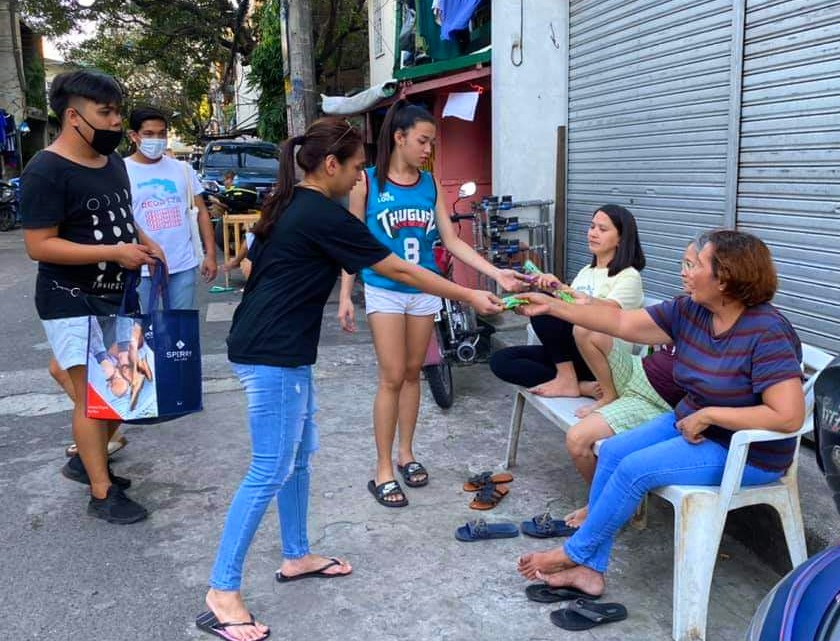
Barangay Baclaran SK chairwoman Rachel Garcia (black t-shirt) and companions handing out free items to local constituents for their safety from COVID-19. (photo approved for publishing by Barangay Baclaran Sangguniang Kabataan chairwoman Rachel Garcia)

received_257074765296486.jpeg
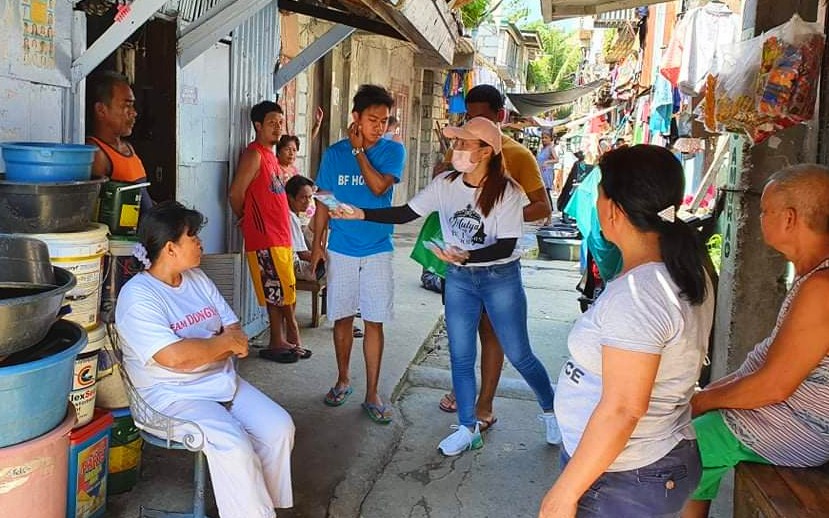
Barangay BF Homes SK chairwoman Mariel Tumang handing out hygiene kits and fliers at one of the local communities. (photo contributed by Barangay BF Homes Sangguniang Kabataan Chairwoman Mariel Tumang)

Barangay Baclaran and Barangay BF Homes are located within Parañaque, the city with the highest number of confirmed COVID-19 cases in South Metro Manila. Parañaque’s city government has been struggling with containing the China virus and, as of this writing, their number of confirmed COVID-19 cases is HIGHER than Las Piñas and Muntinlupa city COMBINED!

Speaking of Parañaque, Muntinlupa and , I am inviting all of you to join the South Metro Manila Facebook group where you will find lots of updates about the three cities, updates about related local communities, business and commercial updates, the occasional overseas updates and Christian worship. Being part of the FB group will also help you engage with others from the different cities and local communities. Visit the South Metro Manila group now at https://www.facebook.com/groups/342183059992673/


Thank you for reading. If you find this article engaging, please click the like button below and also please consider sharing this article to others. If you are looking for a copywriter to create content for your special project or business, check out my services and my portfolio. Feel free to contact me as well. Also please feel free to visit my Facebook page Author Carlo Carrasco and follow me at HavenorFantasy@twitter.com

For more South Metro Manila community news and developments, come back here soon. Also say NO to fake news, NO to irresponsible journalism, NO to misinformation, NO to plagiarists and NO to sinister propaganda when it comes to news and developments.