

Philippine inflation eases to 4.1% in November 2023

Inflation here in the Philippines continued to drop and eventually landed at 4.1% for the month of November 2023 and there were several factors behind it, according to a Philippine News Agency (PNA) news report.

To put things in perspective, posted below is an excerpt from the PNA news report. Some parts in boldface…

Let me end this piece by asking you readers: What is your reaction to this recent development? Do you think inflation will ease further and go below 4% by January 2024? Does the easing of inflation make you more confident about your economic prospects for 2024?  

You may answer in the comments below. If you prefer to answer privately, you may do so by sending me a direct message online.

+++++

Thank you for reading. If you find this article engaging, please click the like button below, share this article to others and also please consider making a donation to support my publishing. If you are looking for a copywriter to create content for your special project or business, check out my services and my portfolio. Feel free to contact me with a private message. Also please feel free to visit my Facebook page Author Carlo Carrasco and follow me on Twitter at  @HavenorFantasy as well as on Tumblr at https://carlocarrasco.tumblr.com/ and on Instagram athttps://www.instagram.com/authorcarlocarrasco
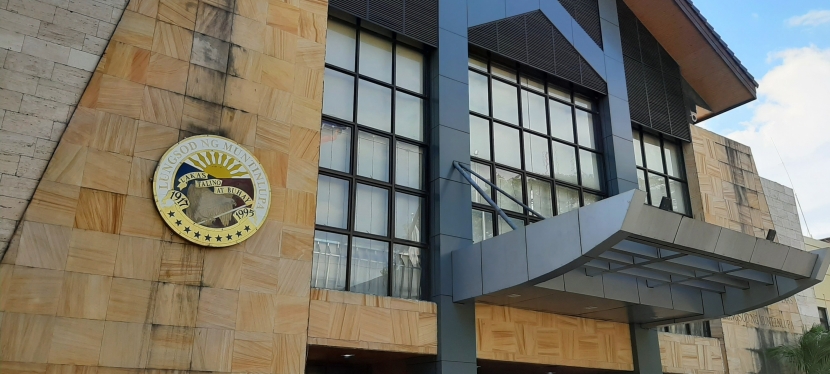
Muntinlupa City Mayor visits local market and personally inspects prices of goods

Recently in the progressive city of Muntinlupa, Mayor Ruffy Biazon personally visited a market in Barangay Poblacion and examined the prices of goods, according to a Manila Bulletin news report.

To put things in perspective, posted below is an excerpt from the Manila Bulletin news report. Some parts in boldface…

Let me end this piece by asking you readers: What is your reaction to this recent development? If you are a resident of Muntinlupa City, were you able to visit any local market lately? If you did, were the prices of good higher than they were six months ago? Do you wish that more your city government officials would personally visit other local markets? Do you believe that local market vendors are being harmed by vendors outside of the markets?

You may answer in the comments below. If you prefer to answer privately, you may do so by sending me a direct message online.

+++++

Thank you for reading. If you find this article engaging, please click the like button below, share this article to others and also please consider making a donation to support my publishing. If you are looking for a copywriter to create content for your special project or business, check out my services and my portfolio. Feel free to contact me with a private message. Also please feel free to visit my Facebook page Author Carlo Carrasco and follow me on Twitter at  @HavenorFantasy as well as on Tumblr at https://carlocarrasco.tumblr.com/ and on Instagram at https://www.instagram.com/authorcarlocarrasco

For more South Metro Manila community news and developments, come back here soon. Also say NO to fake news, NO to irresponsible journalism, NO to misinformation, NO to plagiarists, NO to reckless publishers and NO to sinister propaganda when it comes to news and developments. For South Metro Manila community developments, member engagements, commerce and other relevant updates, join the growing South Metro Manila Facebook group at https://www.facebook.com/groups/342183059992673

Philippine economic growth for 2023 could hit 5.5%

Philippine economy grew only 4.3% in 2nd quarter

World Bank raises forecast on Philippine economy growth for 2023

With the year 2023 nearing the half-way point, the World Bank revised its forecast on the Philippine economy seeing a 6% growth (versus the previous 5.4% growth forecast), according to a BusinessWorld news report.

To put things in perspective, posted below is an excerpt from the Manila Bulletin news article. Some parts in boldface…

THE PHILIPPINE ECONOMY is likely to grow by 6% this year amid strong domestic demand and despite elevated inflation, the World Bank said, raising its forecast from 5.4% in January.

A recovery in jobs, improved consumer sentiment and strong remittances from Filipinos overseas would drive local consumption, the multilateral lender said in its Global Economic Prospects report on Wednesday.

“Despite external challenges, high domestic inflation and tight monetary conditions, domestic demand has once again remained resilient, fueling growth,” World Bank Country Director for the Philippines Ndiame Diop separately told a virtual news briefing.

The latest growth forecast is the lower end of the government’s 6-7% growth target this year. The Philippine economy grew by 6.4% in the first quarter, slower than 8% a year ago and 7.1%  a quarter earlier.

Despite weak global conditions, our upward revision reflects this continued strength in domestic demand,” World Bank Philippines Senior Economist Ralph van Doorn said.

But the potential global slowdown could still affect growth. “Although the global economy displayed remarkable resilience in early 2023, economic conditions will remain subdued for the rest of 2023,” Mr. Diop said.

He said global growth is expected to wane due to “persistent inflation, slowdown of global trade and the effect of recent monetary tightening.”

The World Bank expects global growth to slow to 2.1% this year, though this is higher than its earlier 1.7% projection. It also sees global growth reaching 2.4% next year and 3% in 2025.

“Risks remain tilted to the downside,” Mr. Diop said. “Recent episodes of market instability have raised concerns of a potential spillover. The possibility of further monetary tightening amid sticky core inflation could raise the cost of global financing and lead to a more pronounced and prolonged global slowdown.”

Persistent inflation remained a cause for concern, the World Bank said.

“Although our baseline forecast (shows) inflation will decelerate, it is still the main challenge,” Mr. van Doorn said.

The World Bank expects Philippine inflation to average 5.7% this year, higher than its earlier 4.2% forecast.

Let me end this piece by asking you readers: What is your reaction to this recent development? Do you agree with the World Bank’s analysis about economic growth for the Philippines this year? Do you think the Philippine economy can do better than expected by the end of 2023?

You may answer in the comments below. If you prefer to answer privately, you may do so by sending me a direct message online.

+++++

Thank you for reading. If you find this article engaging, please click the like button below, share this article to others and also please consider making a donation to support my publishing. If you are looking for a copywriter to create content for your special project or business, check out my services and my portfolio. Feel free to contact me with a private message. Also please feel free to visit my Facebook page Author Carlo Carrasco and follow me on Twitter at  @HavenorFantasy as well as on Tumblr at https://carlocarrasco.tumblr.com/ and on Instagram athttps://www.instagram.com/authorcarlocarrasco

RCBC chief economist says that Philippine economic growth target likely to be hit this year

In light of the recent news that the Philippine economy grew by 6.4% in the first quarter of 2023, the chief economist of Rizal Commercial Banking Corporation (RCBC) says that the nation’s economic target for this year (for references, click here and here) will likely be hit, according to a Philippine News Agency (PNA) news report.

To put things in perspective, posted below is an excerpt from the PNA news article. Some parts in boldface…

The government’s 6 to 7 percent economic growth target will likely be met this year despite possible effects of El Niño, an economist said on Friday.

Rizal Commercial Banking Corporation chief economist Michael Ricafort told the Philippine News Agency (PNA) that the 6 to 7 percent gross domestic product (GDP) expansion is possible amid easing year-on-year inflation that could help reduce the drag of higher prices on economic growth.

Fed (US Federal Reserve) and local policy rates could also be reduced later this year and into 2024 amid easing inflation, and as the economy further reopens towards greater normalcy with no more lockdowns as a policy priority,” he said.

Inflation reached as high as 8.7 percent in January. It has however started to decelerate and settled at 6.6 percent in April.

Ricafort said the possible effects of El Niño later this year and up to 2024 could lead to reduced agricultural output and some pick up in prices, “but would not have a significant drag on GDP growth.” he said.

“[Philippine] economic growth [is] expected to be among the fastest-growing in the region and among major economies around the world amid favorable demographics of the country with more than 110 million Filipinos, majority of Filipinos already at working age, (and) young average age of less than 25 years old, all of which would support GDP growth of at least 6%-7% in the coming years,” he said.

He noted that other possible drivers of growth would be increased consumer spending due to lower individual income tax rates, high overseas Filipino workers’ remittances, further increase in government spending, the continued growth of business process outsourcing, and the resumption of foreign tourism.

Let me end this piece by asking you readers: What is your reaction to this recent development? Do you think the Philippines will achieve 2023 economic growth between 6% to 7%?

You may answer in the comments below. If you prefer to answer privately, you may do so by sending me a direct message online.

+++++

Thank you for reading. If you find this article engaging, please click the like button below, share this article to others and also please consider making a donation to support my publishing. If you are looking for a copywriter to create content for your special project or business, check out my services and my portfolio. Feel free to contact me with a private message. Also please feel free to visit my Facebook page Author Carlo Carrasco and follow me on Twitter at  @HavenorFantasy as well as on Tumblr at https://carlocarrasco.tumblr.com/ and on Instagram athttps://www.instagram.com/authorcarlocarrasco
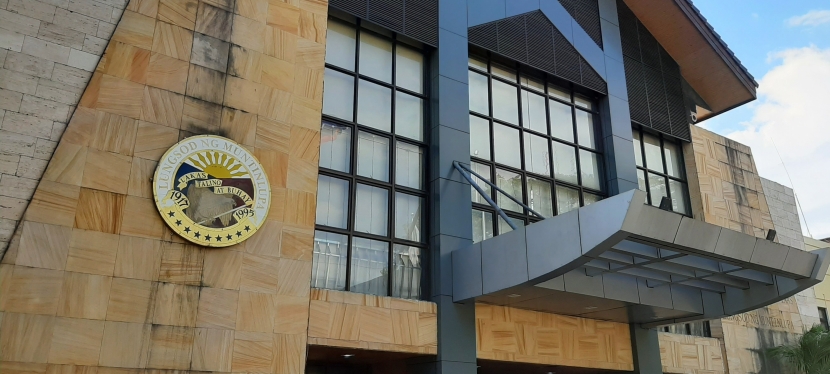
President Marcos says special powers not needed to curb inflation

In recent times, inflation has been strong in the Philippines and no less than the Bangko Sentral ng Pilipinas (BSP) confirmed this as it made its February 2023 inflation forecast. In relation to the high inflation, President Ferdinand “Bongbong” Marcos stressed that special powers are not needed to combat inflation, according to a news article by the Philippine News Agency (PNA).

To put things in perspective, posted below is an excerpt from the PNA news article. Some parts in boldface…

There is no need to ask for special powers to ease inflation, President Ferdinand R. Marcos Jr. said Wednesday, noting that several interventions are already in place to manage the prices of basic commodities.

Marcos made the remark a day after the Bangko Sentral ng Pilipinas (BSP) reported that the country’s headline inflation could surpass the 9 percent level in February because of high prices of cooking gas and key food items.

I do not think that it is necessary to ask for special powers,” he said in a chance interview on the sidelines of an event at the Rizal Park, when asked if he is considering asking Congress to grant him special powers to curb inflation.

I already have the power to declare an emergency and to control the prices of commodities. So, I don’t think there’s any need for more than that. That is efficient,” he added.

On Tuesday, the BSP said the inflation rate in February may fall within the range of 8.5 to 9.3 percent, citing the upside risks from higher prices of cooking gas and food items such as pork, fish, egg, and sugar.

Despite the BSP’s latest forecast, Marcos remained bullish that consumer prices would go down, saying his administration is exhausting all efforts to boost the supply of agricultural products.

“The other elements of inflation hindi natin masyado ma-control, kaya meron tayong ginagawang ganito para makabawi naman doon sa pagtaas ng presyo (We could not control the other elements of inflation, that’s why we are making a way to address the rise in prices of basic commodities),” he said.

Several lawmakers, including House Speaker Martin Romualdez, have expressed openness to granting Marcos special powers to curtail inflation.

In January, inflation accelerated further to 8.7 percent from 8.1 percent posted in December 2022.

Let me end this piece by asking you readers: What is your reaction to this recent development? Are you confident that the national authorities have what it takes to ease inflation without granting the President special powers? Do you see the current inflation as a temporary problem or as a longer lasting problem?

You may answer in the comments below. If you prefer to answer privately, you may do so by sending me a direct message online.

+++++

Thank you for reading. If you find this article engaging, please click the like button below, share this article to others and also please consider making a donation to support my publishing. If you are looking for a copywriter to create content for your special project or business, check out my services and my portfolio. Feel free to contact me with a private message. Also please feel free to visit my Facebook page Author Carlo Carrasco and follow me on Twitter at  @HavenorFantasy as well as on Tumblr at https://carlocarrasco.tumblr.com/ and on Instagram athttps://www.instagram.com/authorcarlocarrasco

Philippines achieves 7.6% economic growth in 2022

The Philippines’ recovery from the downturn of the COVID-19 crisis continued strongly as it has been confirmed that the national economy expanded by 7.6% for the entire year of 2022 which includes a 7.2% 4th quarter economic growth, according to a news article by the Philippine News Agency (PNA). Take note that the Philippines is expected to grow between 6.5% and 7% in 2023 according to the national authorities while there are signs that the United States economy will fall into a recession this year. Regardless, the Philippines ended 2022 competitively in terms of economic expansion among its Asian neighbors.

To put things in perspective, posted below is the excerpt from the PNA news report. Some parts in boldface…

The Philippine economy expanded by 7.2 percent in the last quarter of 2022, bringing full-year growth to 7.6 percent, driven by increased economic activity mainly from pent-up demand as it fully reopened amid elevated inflation rate.

National Economic and Development Authority (NEDA) Secretary Arsenio Balisacan said among the major emerging economies in the region that have released their fourth-quarter gross domestic product (GDP) growth, the Philippines grew the fastest, followed by Vietnam at 5.9 percent and China at 2.9 percent.   

Our improved Covid-19 (coronavirus disease 2019) risk management and the easing of mobility restrictions have created a positive economic outlook, boosting economic activity and creating more jobs despite external headwinds,” he said in a briefing on Thursday. 

Balisacan said measures being implemented by the government to further buoy the economy’s recovery are working.

Our strong economic growth performance for 2022 proves that our calibrated policies and strategies have helped put us on the path to recovery and on track to achieving our aspiration for an inclusive, prosperous, and resilient society by 2028,” he said.

Balisacan said pent-up demand drove growth in the fourth quarter as the economy was fully reopened during the period, with household consumption accounting for around three-fourths of domestic output, and investments contributing around a fifth.

The improvements in labor market conditions, increased tourism, revenge and holiday spending, and resumption of face-to-face classes supported growth in the quarter, further reflecting a solid rebound in consumer and investor confidence in the economy,” he said.

Balisacan said had it not been for the elevated inflation rate, which rose to its highest since November 2008 last December when it accelerated to 8.1 percent, “growth could have been higher by another perhaps 1 to 2 percentage points.”

“It shows how overall demand is sensitive to inflation,” he added.

In terms of the volume of economic activities, Balisacan said domestic growth has recovered for many sectors, except for others such as tourism.

“(But) in so far as per capital income… we haven’t fully recovered yet,” he said.

Balisacan said the government is firm on ensuring that quality jobs will be available to Filipinos to lessen their need to work abroad.

“Inclusive growth across the archipelago will be our vehicle for reducing poverty incidence from 18 percent of the population in 2021 to a single-digit level by 2028,” he said.

National Statistician Dennis Mapa said 2022 full year GDP growth of 7.6 percent exceeded the government’s 6.5 to 7.5 percent growth assumption for the year and the highest after the 8.8 percent in 1976.

Mapa said the fourth-quarter growth, slower than the 7.6 percent in the previous quarter, was driven by the wholesale and retail trade, repair of motor vehicles and motorcycles, financial and insurance activities and retail estate and ownership of dwellings boosted domestic growth.

He said domestic demand remained strong, with the household final consumption expenditure (HFCE) rising by 2.1 percent quarter-on-quarter, led by the restaurants and hotels, food and non-alcoholic beverages, and miscellaneous goods and services. Year-on-year expansion of HFCE stood at 7 percent.

Among the major economic industries, Mapa said agriculture, forestry, and fishing contracted by 1.7 percent because of the lower output of sugarcane, palay (rice), and poultry and egg production.

Meanwhile, Balisacan said the government is doing pro-active assessment of the current situation to address the elevated inflation rate in the country, which is expected to go back to within the government’s 2 to 4 percent target band by the second half of this year.

He said the government continues to allow the importation of several food items to boost domestic supply, adding that not doing so will hurt both the consumers and domestic growth.

Let me end this piece by asking you readers: What is your reaction to this new development? Do you believe that the economy of the Philippine economy will grow between 6.5% to 7% this year? Do you think that more foreign tourists coming into the country will be able to help the nation achieve its economic growth targets this year? Apart from what was already mentioned, what do you think the national government should do to combat inflation? Do you think that the lower income tax for middle income earners will make a positive contribution to economic growth?

You may answer in the comments below. If you prefer to answer privately, you may do so by sending me a direct message online.

+++++

Thank you for reading. If you find this article engaging, please click the like button below and also please consider sharing this article to others. If you are looking for a copywriter to create content for your special project or business, check out my services and my portfolio. If you want to support my website, please consider making a donation. Feel free to contact me with a private message. Also please feel free to visit my Facebook page Author Carlo Carrasco and follow me on Twitter at  @HavenorFantasy as well as on Tumblr at https://carlocarrasco.tumblr.com/ and on Instagram at https://www.instagram.com/authorcarlocarrasco/.

For more South Metro Manila community news and developments, come back here soon. Also say NO to fake news, NO to irresponsible journalism, NO to misinformation, NO to plagiarists, NO to reckless publishers and NO to sinister propaganda when it comes to news and developments. For South Metro Manila community developments, member engagements, commerce and other relevant updates, join the growing South Metro Manila Facebook group at https://www.facebook.com/groups/342183059992673

Philippines Finance Secretary Diokno says the national economy is resilient enough to face post-pandemic world

Recently in a high-level economic meeting in Germany, Philippines Finance Secretary Benjamin Diokno declared that the national economy is resilient enough for the post-pandemic world and that the national government has been making adjustments, according to a news article published by the Philippine News Agency (PNA).

To put things in perspective, posted below is the excerpt from the PNA news report. Some parts in boldface…

Finance Secretary Benjamin Diokno on Monday told foreign investors and business leaders that the Philippine economy is resilient enough and that the government is doing its best to address post-pandemic challenges.

Diokno made the remarks during the Philippine economic briefing attended by the economic managers in Frankfurt, Germany that was streamed through various government agency Facebook pages.

The Finance chief noted that inflation is also a concern in the Philippines just like in other countries, but measures are being undertaken by the government to address the issue, such as managing prices by ensuring adequate supplies of agricultural products, and boosting the agriculture sector’s capacity and productivity to help address the rising commodity prices, among others.

“We also are continuing the importation of necessary commodities to ease inflation,” he said.

The government has allowed the continued importation of rice, sugar, and meat, which are among the primary factor for the elevated food prices due to supply issues.

Relatively, Diokno assured investors that the government has put in place a fiscal consolidation program to address the uptick in government liabilities, due in part to the increased borrowing to finance pandemic-related programs.

He identified three factors that will support the government’s fiscal consolidation and one of this is the fact that “only a small fraction of our outstanding debt is exposed to interest rate resetting.”

This, as bulk of the government liabilities are sourced from domestic fund sources, with around 75 percent of the borrowing program allocated to the domestic market.

“We already have anticipated the tightening monetary policy conditions when we formulated the interest rate payments in the 2023 budget,” Diokno said.

He added that “government securities market is dominated by local players that are bank-centric and homogeneous in investment governance.”

Let me end this piece by asking you readers: What is your reaction to this new development? Do you believe that the economy of the Philippines is resilient enough for the post-pandemic age even as there are concerns about high inflation and economic slowdown around the world? Do you believe that the national government has what it takes to make key adjustments to unforeseen developments that could happen anytime? Are you convinced that foreign investors as well as foreign tourists will come into the Philippines in great numbers over the next eighteen months? How is your local government doing when it comes to economic developments like livelihood, jobs training and other related activities?

You may answer in the comments below. If you prefer to answer privately, you may do so by sending me a direct message online.

+++++

Thank you for reading. If you find this article engaging, please click the like button below and also please consider sharing this article to others. If you are looking for a copywriter to create content for your special project or business, check out my services and my portfolio. If you want to support my website, please consider making a donation. Feel free to contact me with a private message. Also please feel free to visit my Facebook page Author Carlo Carrasco and follow me on Twitter at  @HavenorFantasy as well as on Tumblr at https://carlocarrasco.tumblr.com/ and on Instagram at https://www.instagram.com/authorcarlocarrasco/.

For more South Metro Manila community news and developments, come back here soon. Also say NO to fake news, NO to irresponsible journalism, NO to misinformation, NO to plagiarists, NO to reckless publishers and NO to sinister propaganda when it comes to news and developments. For South Metro Manila community developments, member engagements, commerce and other relevant updates, join the growing South Metro Manila Facebook group at https://www.facebook.com/groups/342183059992673

Last tranche of salary increase for Muntinlupa City government employees announced

In the progressive City of Muntinlupa, Mayor Ruffy Biazon announced the last tranche of salary increases for City Government employees, according to a Manila Bulletin news report. The raise of the salaries is in accordance to law and it will take effect very soon.

To put things in perspective, posted below is the excerpt from the Manila Bulletin news report. Some parts in boldface…

Muntinlupa Mayor Ruffy Biazon announced on Jan. 23 that city government employees will get their salary increases by the end of the month.

This is based on Republic Act 11466 or the Salary Standardization Law of 2019.

The fourth and last tranche of the salary increases for qualified government employees took effect on Jan. 1, according to the Department of Budget and Management (DBM). The first tranche of the salary increase took effect on Jan. 1, 2020.

“Good news para po sa kawani ng pamahalaan. Pagdating po ng katapusan ng buwang ito ay pai-implement na ang fourth tranche ng Salary Standardization Law (Good newas for employees of the government. By the end of this month, the fourth tranche of the Salary Standardization Law will be implemented),” said Biazon during the flag raising ceremony at the Muntinlupa City hall on Jan. 23.

Under RA 11466, the monthly salary of a government employee under Salary Grade 1 will increase to P13,000 (under Step 1 level) in the fourth tranche compared to P11,551 in the first tranche.

The government recognizes the indispensable role of its dedicated personnel in serving our beloved country. We are firmly committed to help them amidst rising prices of goods and services. We hope this latest salary increase will cushion the impact of inflation,” said Budget Secretary Amenah Pangandaman.

According to DBM, RA 11466 covers all positions for civilian personnel, whether regular, casual, or contractual in nature, appointive or elective, full-time or part-time, now existing or created in the executive, legislative, and judicial branches; constitutional commissions and other constitutional offices; state universities and colleges (SUCs); and government-owned or controlled corporations (GOCCs) not covered by RA 10149.

The law also applies to all positions for salaried LGU personnel, whether regular, contractual or casual in nature, elective or appointive; on full-time or part-time basis, now existing or thereafter created in LGUs, and all positions for barangay personnel which are paid monthly honoraria, the DBM added.

Excluded under the law are those engaged without employer-employee relationship and funded from non-Personnel Services (PS) appropriations/budgets.

Let me end this piece by asking you readers: If you are a Muntinlupa City resident, what is your reaction to this development? As a local resident, do you think the salary hike for City Government employees is justified?

You may answer in the comments below. If you prefer to answer privately, you may do so by sending me a direct message online.

+++++

Thank you for reading. If you find this article engaging, please click the like button below, share this article to others and also please consider making a donation to support my publishing. If you are looking for a copywriter to create content for your special project or business, check out my services and my portfolio. Feel free to contact me with a private message. Also please feel free to visit my Facebook page Author Carlo Carrasco and follow me on Twitter at  @HavenorFantasy as well as on Tumblr at https://carlocarrasco.tumblr.com/ and on Instagram at https://www.instagram.com/authorcarlocarrasco

For more South Metro Manila community news and developments, come back here soon. Also say NO to fake news, NO to irresponsible journalism, NO to misinformation, NO to plagiarists, NO to reckless publishers and NO to sinister propaganda when it comes to news and developments. For South Metro Manila community developments, member engagements, commerce and other relevant updates, join the growing South Metro Manila Facebook group at https://www.facebook.com/groups/342183059992673