Disclaimer: This is my original work with details sourced from reading the comic book and doing personal research. Anyone who wants to use this article, in part or in whole, needs to secure first my permission and agree to cite me as the source and author. Let it be known that any unauthorized use of this article will constrain the author to pursue the remedies under R.A. No. 8293, the Revised Penal Code, and/or all applicable legal actions under the laws of the Philippines.
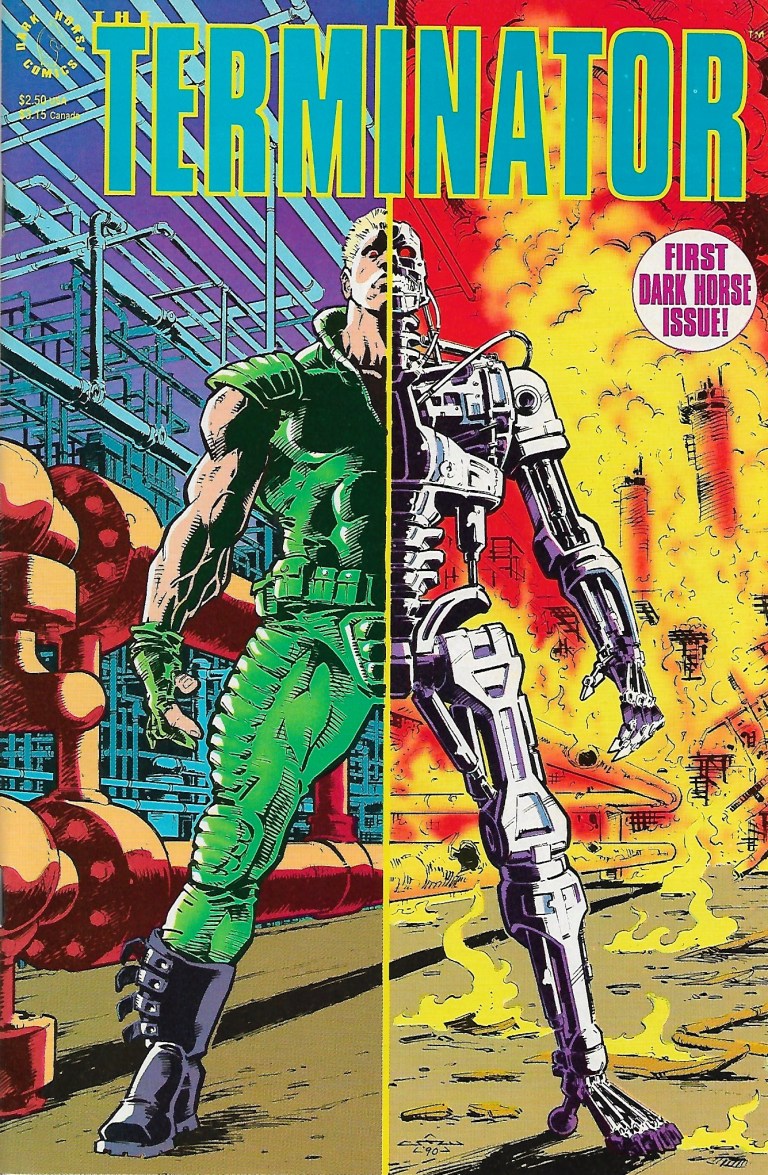
Back in the early 1990s, I was already a fan of the Terminator and RoboCop mainly due to their respective first movies released in the 1980s which became cinematic classics. While RoboCop 2 never came close to the quality of the 1987 original movie, Terminator 2: Judgment Day literally rocked the cinemas and went on to become one of the greatest film sequels ever made. Back then, there was a lot to be excited for over the two entertainment franchises. One day during my high school days (note: there was no social media and Internet access in the Philippines was not yet established), I learned from reading a comic book industry magazine that a crossover comic book mini-series matching the Terminator and RoboCop together. That news excited me a lot and before the end of 1992, I bought myself a copy of the comic book RoboCop versus The Terminator #1 (note: this one has gone out of print).
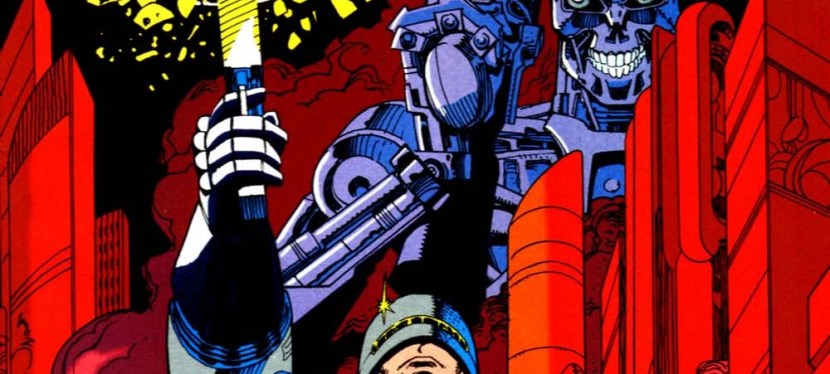
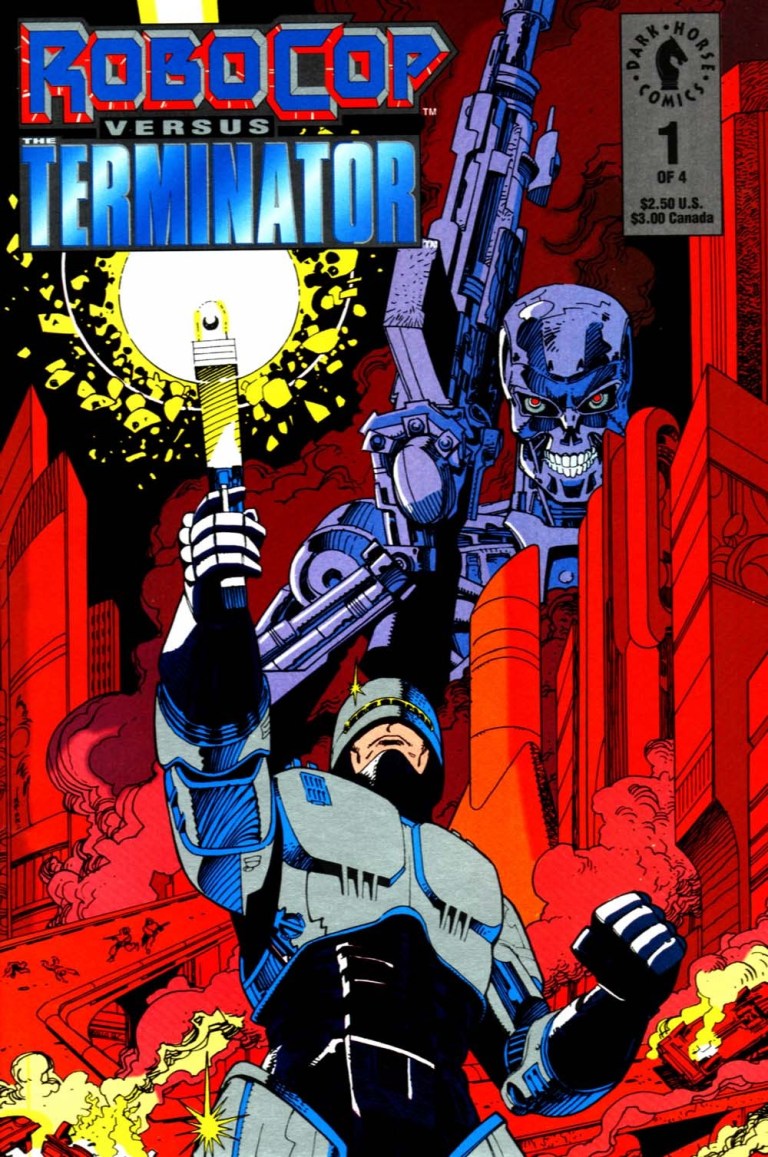
With the history explained, let’s all take a look back at RoboCop versus The Terminator #1, published in 1992 by Dark Horse Comics with a story by Frank Miller (note: the same successful comic book creator who actually worked on RoboCop movies in Hollywood) and art by Walt Simonson.
Early story
The story begins in the far future wherein human society has been ruined and the world became a constant battleground of a war between powerful machines and desperate humans. Inside a facility being invaded by the machines, a lady working for the rebels has been using computers (via brainfeed) in the battle with Skynet. As far as she knows, leader John Connor has been right in telling her that it was a human mind that merged with software and got linked with Skynet. She points to the 20th century historical figure Alex Murphy/RoboCop as the one responsible for the war.
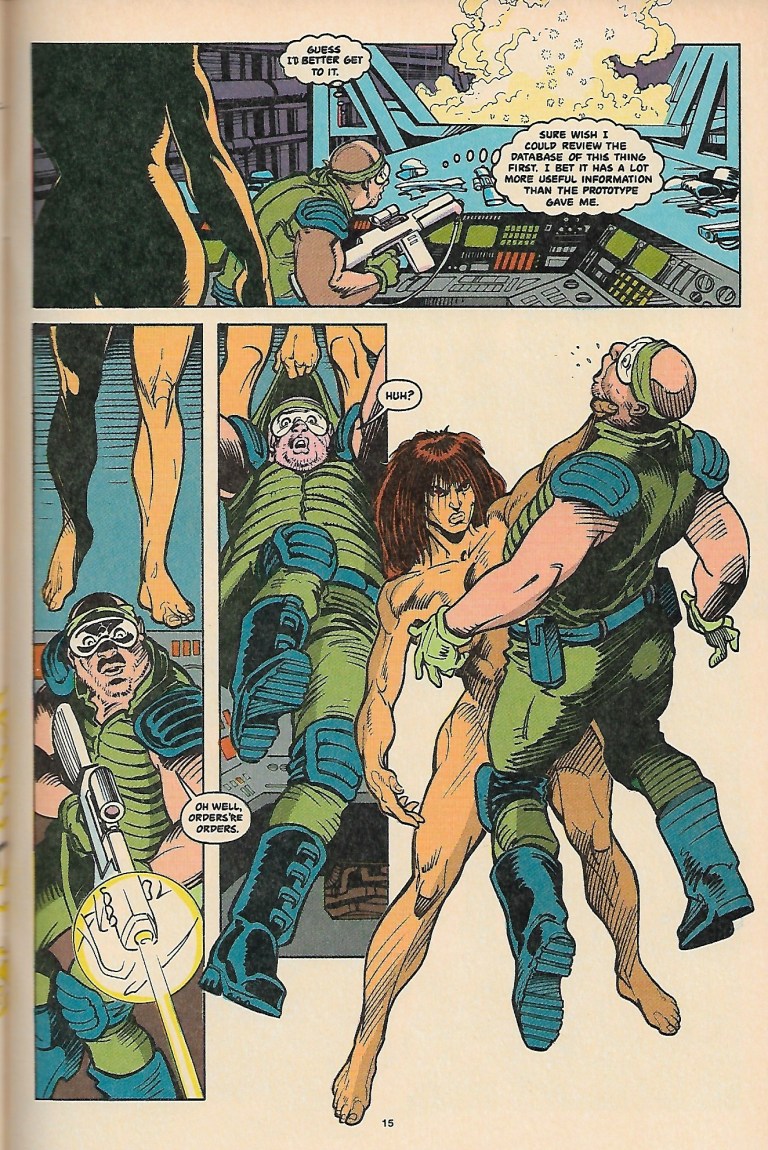
Before Skynet’s machines reach her, she strips naked and made a desperate trip back through time. She successfully makes a hard landing into the middle of a city in a time before the war. After struggling with the sudden change, she arms herself and sets off to kill Alex Murphy…
Quality
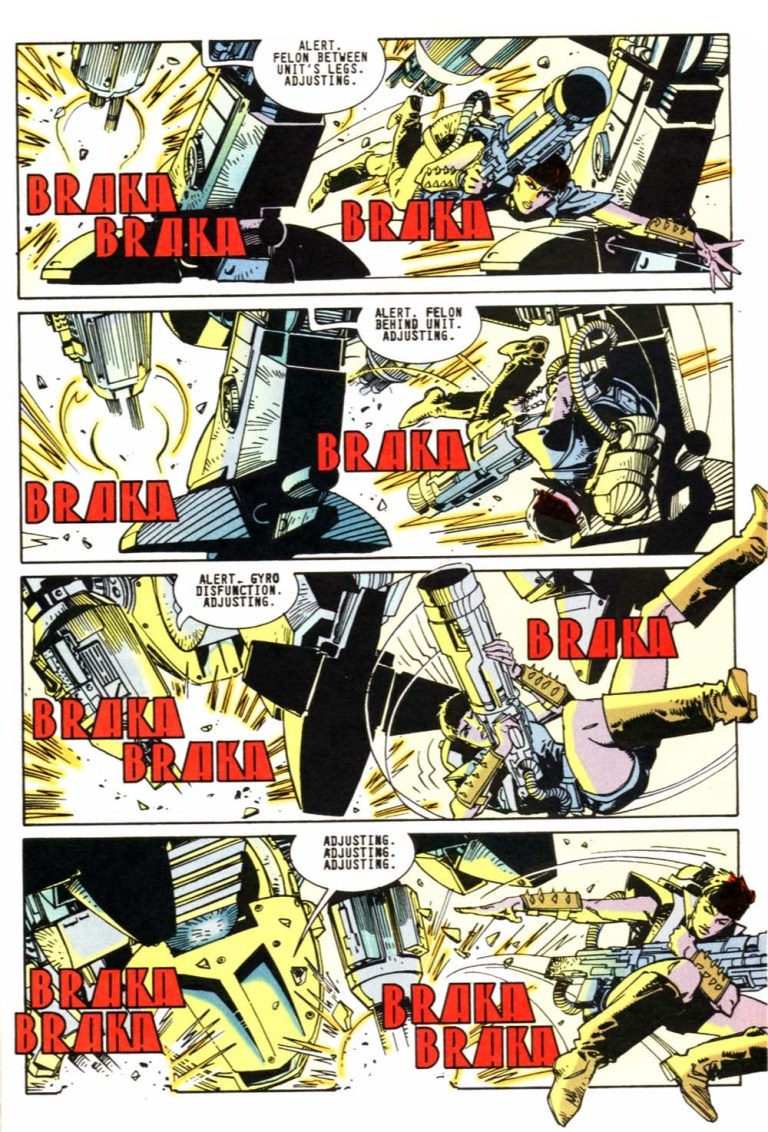
Let me start that this particular mini-series has a very intriguing concept that made it stand on its own (as opposed to simply referencing core concepts of the movies). This is about RoboCop’s technology being used to establish Skynet and this launch comic book emphasized that nicely.
When it comes to storytelling done with this particular comic book, things felt very uneven. For a comic book that strongly focused on the Terminator and RoboCop, this was mainly the story of the rebel lady from the future whose mission was to eliminate officer Alex Murphy in a bid to change the future. While she is portrayed to be highly determined and works by action, the character is never interesting and not worth investing your attention to.
For his part, RoboCop was literally placed on the backseat in this story and he makes his first appearance in the 2nd half starting with crime-busting. Considering the lack of spotlight, the sci-fi icon himself is not even interesting to follow which is disappointing.
The clear representation of evil here is Skynet and its army of Terminators. To say the least, the machines here make a worthy menace to read and somewhat made up for RoboCop and the lady rebel being uncompelling characters.
When it comes to the art, I should say that Walt Simonson’s visuals are not great to look at. There were crooks that had a cartoony aesthetic on the faces, Terminators that don’t even come close to their cinematic designs and some images looked rushed. At least Simonson’s RoboCop looks recognizable and was satisfactory with the action.
Conclusion
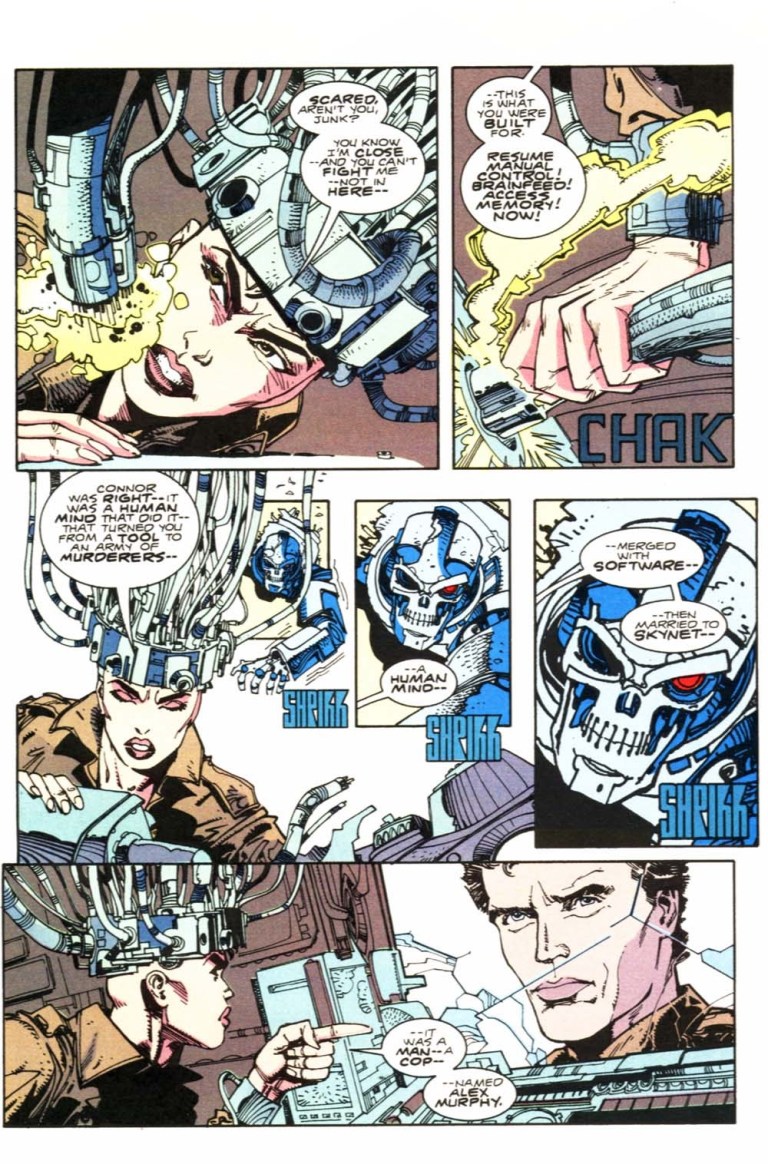
I still remember how underwhelmed I got after completing RoboCop versus The Terminator #1 the first time way back in 1992. It’s even more underwhelming by today’s standards. Of course, the comic book was essentially a build-up issue with the pay-off supposed to happen in the remaining issues. Its best selling point is the fusion of RoboCop and Terminator concepts that helped establish its own universe.
If you are seriously planning to buy an existing hard copy of RoboCop versus The Terminator #1 (1992), be aware that as of this writing, MileHighComics.com shows that the near-mint copy of the regular edition costs $17 while the near-mint copy of the platinum edition costs $170.
Overall, RoboCop versus The Terminator #1 (1992) is satisfactory. That being said, I would not recommend paying a lot of money for this comic book. Find a near-mint copy priced below $10.
Thank you for reading. If you find this article engaging, please click the like button below and also please consider sharing this article to others. If you are looking for a copywriter to create content for your special project or business, check out my services and my portfolio. Feel free to contact me as well. Also please feel free to visit my Facebook page Author Carlo Carrasco and follow me at HavenorFantasy@twitter.com