
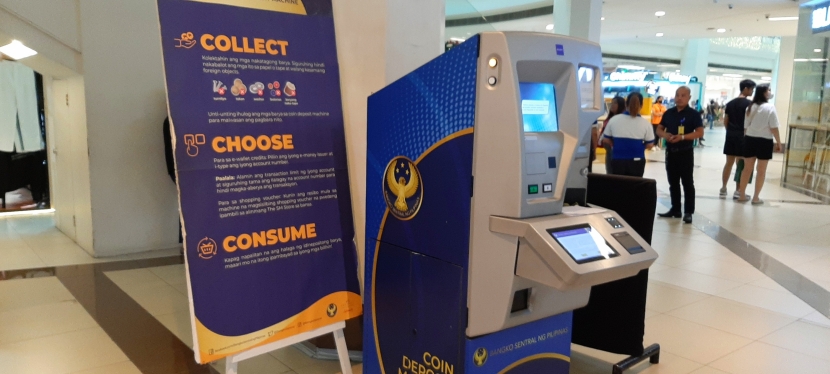
Almost P650 million million worth of coins have been deposited through the many coin deposit machines (CoDMs) of the Bangko Sentral ng Pilipinas (BSP) as of April 15, 2024, as published on their website.
Based on the latest statistics, a total of P648,904,160.19 in coins got deposited into BSP machines on 161,725 transactions from customers. In terms of physical quantity, 179,641,987 coins were deposited.
Doing the math on the latest statistics, customers averaged P4,012.39 per transaction (versus the previous month’s P3,914.27 per transaction) at the machines. As for the grand total Peso amount divided by the number of coins deposited, the average is P3.6122 per coin deposited (versus the previous month’s average of P3.55749 per coin deposited).
In my experience, depositing coins at the BSP coin deposit machine inside Festival Mall in Alabang got a bit more challenging to do. I noticed that the machine in the said mall has been breaking down or malfunctioning more compared to previous times.
Let me end this piece by asking you readers: What is your reaction to this recent development? Were you able to deposit your excess coins into a BSP coin deposit machine in your locality recently? How long did you wait in line before you got your turn to deposit coins at the BSP coin deposit machine? Whenever you successfully deposited your coins, is GCash your main choice of e-wallet?
For more South Metro Manila community news and developments, come back here soon. Also say NO to fake news, NO to irresponsible journalism, NO to misinformation, NO to plagiarists, NO to reckless publishers and NO to sinister propaganda when it comes to news and developments. For South Metro Manila community developments, member engagements, commerce and other relevant updates, join the growing South Metro Manila Facebook group at https://www.facebook.com/groups/342183059992673

To put things in perspective, posted below is an excerpt from the Nikkei Asia article. Some parts in boldface…
James Relativo thought he had landed a great deal on an electric drum set, but instead the Manila resident was cheated out of his money in a country gaining the dubious distinction as Asia’s worst for online sales scams.
Shoppers across the Philippines have been bilked out of millions of dollars so far this year, with some turning to victim chat groups on Facebook and other social media. A recent report found more than one-third of Filipinos surveyed had been scammed or encountered retail fraud online.
“Some people easily believe in false promises even if they are too good to be true,” warned Alexander Ramos, executive director of the Cybercrime Investigation and Coordinating Center (CICC).
In retrospect, Relativo might have been more skeptical about a drum set going for 8,000 pesos ($140), less than half the usual price, on e-commerce site Shopee.
But he hit ‘buy’ without hesitating, and soon things turned suspicious. The seller shifted its communications to a messaging app and demanded half the cost of the drums for “refundable taxes.”
More money demands followed until a frustrated Relativo agreed to bypass Shopee’s payment system and settle his remaining balance on GCash, a digital payments platform. He never got his drums.
“I just kept telling him I wanted my money back,” Relativo told Nikkei Asia, his voice laced with exasperation. “It wasn’t like I was dealing with a scammer — he was talking to me, sending me pictures of the drum set being packed.“
The journalist’s saga highlights a bitter experience for a growing number of people in the Philippines, which clocked the highest scam rate for online shoppers across nearly a dozen economies in the 2023 Asia Scam Report, published in November.
Commissioned by the Global Anti-Scam Alliance (GASA) and Taiwan-based tech security company Gogolook, the report surveyed 20,000 respondents about their online shopping experiences in Vietnam, China, Thailand, Hong Kong, Taiwan, Indonesia, South Korea, Japan, Malaysia, Singapore and the Philippines.
The shopping scam rate in the Philippines led the group at an eye-watering 35.9%, followed by mainland China at 27.2%. South Korea had the lowest incidence, at 4.2%.
The explosion in online shopping has created a lucrative market for scammers. And a lack of cybercrime awareness is aggravating the problem in the Philippines, where people spend an average of 10 hours a day online by some estimates.
“Although (Filipinos) are considered very connected and digitally wired, (they) do not have adequate digital literacy skills,” said Mark Manantan, director of cybersecurity and critical technologies at the Pacific Forum in Hawaii.
The survey found that Filipinos were easy prey for scammers because they “respond too quickly” to sellers’ demands.
Let me end this piece by asking you readers: What is your reaction about this recent development? Do you think Nikkei Asia’s article is detailed enough and trustworthy when it comes to gaining a strong awareness about online scams? How members of your household or your local community got scammed online over the past six months? Why do you think a lot of people in the Philippines are so determined to spend a lot of money to watch a Taylor Swift event overseas?
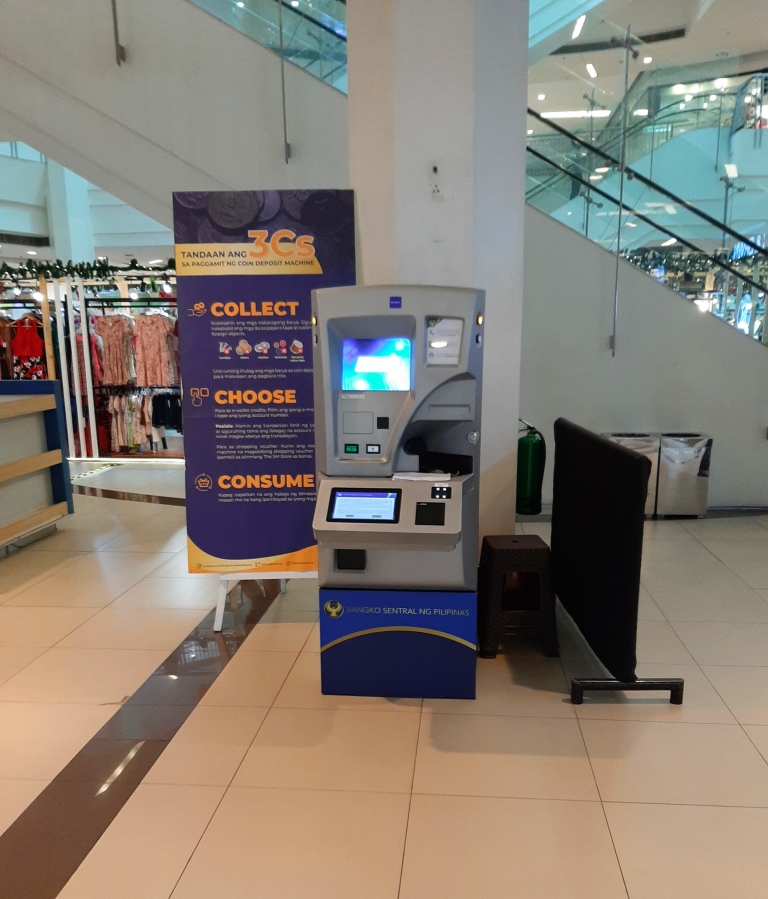
If you are constantly present here in Alabang in Muntinlupa City, and if you have an excess number of Peso coins that you want to have deposited for safekeeping or for personal use, then you should visit the coin deposit machine (CoDM) of the Bangko Sentral ng Pilipinas (BSP) located inside Festival Mall in Filinvest City.
To be more specific, the BSP CoDM inside the said shopping mall is located on ground floor very near the escalators which itself is in close proximity to the following ground floor businesses: SM Savemore grocery, Saibachi Japanese Restaurant and Café BLK & BRWN (this one is just steps away from the machine).
This is the BSP coin deposit machine inside Festival Mall in Alabang.
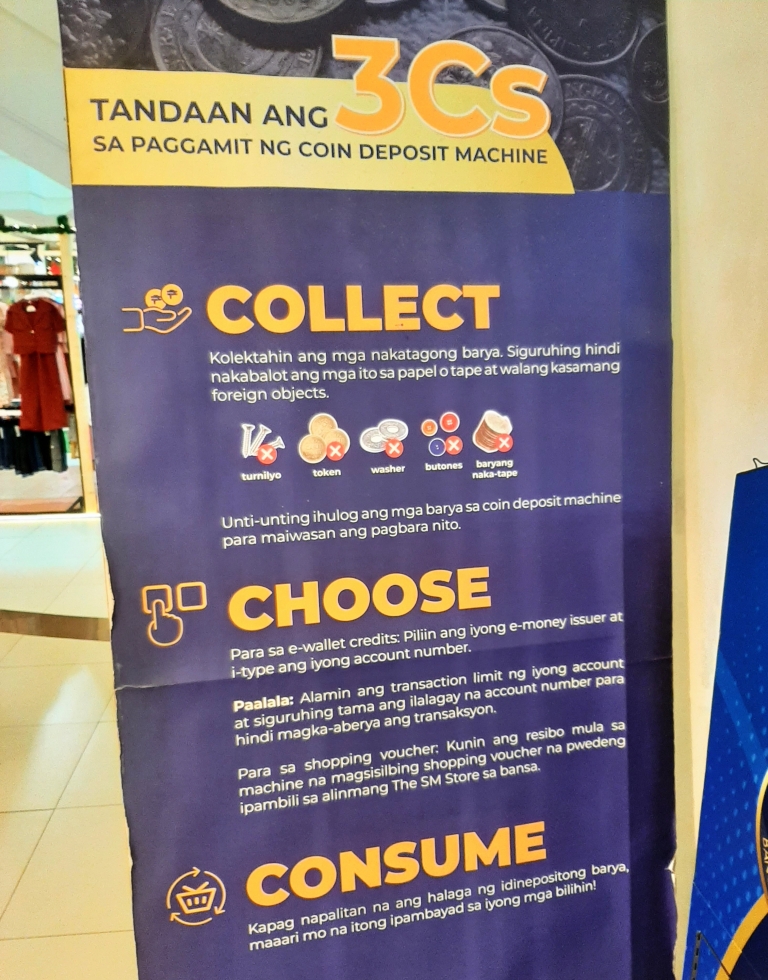
Before you join the line for depositing your coins at the BSP’s coin deposit machine, you must have a valid GCash account (to receive the value of the coins successfully deposited). If you don’t have a GCash account, you can still have the value of the deposited coins converted into SM shopping vouchers (accepted by The SM Store). There is also a Maya option available.
Still before joining the line, you must make sure that your Peso coins are not dented/damaged, and each coin is loose (meaning not taped together as a bundle). Obviously, foreign coins, tokens and demonetized Peso coins (Peso coins that are outdated) will be rejected. These tips are to ensure that the coins will be counted by the machine once deposited. To learn more, watch the video below and pay close attention to the details…
Once you join the line, you will need to be patient not simply because there could be several customers ahead of you but also because there will most likely be other customers ahead of you who brought at least one large container of coins with them for depositing which can take some minutes to be deposited into the CoDM (note: there is always a BSP assistant who will help and occasionally troubleshoot the machine whenever it malfunctions).
Do not be surprised to see other customers ahead of you who brought multiple plastic containers of coins to be deposited. Based on my personal experience depositing coins at the machine inside Festival Mall, I noticed that more families and local businesses are having their idle coins put into the CoDM. There was a time when one customer ahead of me deposited coins from four large containers and it took several minutes for the machine to count them all and this includes moments when the machine malfunctioned and the BSP assistant had to do some fixing on the spot.
Once you start your turn to deposit at the CoDM, let the BSP assistant guide you. There will be buttons on the machine for you to press before you start putting your coins into the receiving mechanism. From time to time as coins get counted, there will be a few coins that the machine will reject and will instead fall into the lower part where you can reach into and collect. You can try depositing the uncounted coins until it gets counted. As mentioned earlier, foreign coins, tokens and demonetized Peso coins will be rejected.
Once your deposit is successful, you can decide whether to have the counted value transferred into your active GCash account or into an SM shopping voucher. Receipts will be issued from the machine which you must always keep to yourself. Do not throw away the receipts.
Read the details closely.
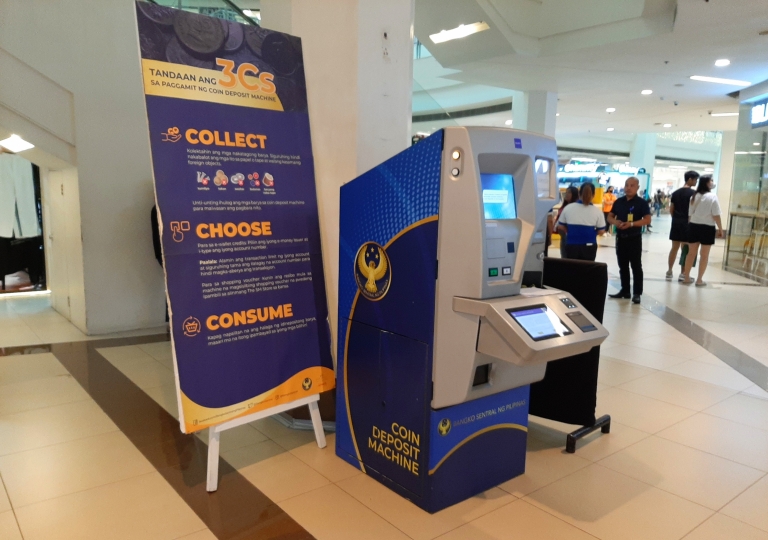
Another look at the BSO CoDM inside Festival Mall located near the escalators at the ground floor..
I hope this post will be helpful to you and your effort to deposit excess Peso coins into the BSP DoCM inside Festival Mall. In my experience, the lines range from very short (1 or 2 customers ahead of me) to long (8 customers ahead of me). There will be customers who will be depositing a small amount and there are others who brought so much coins as the BSP coin deposit project has attracted a lot of attention locally. You will need to be patient and manage your time when you join the line for the CoDM. To learn more about the coin deposit project, click https://www.bsp.gov.ph/Pages/CoinsAndNotes/CDM.aspx
Let me end this piece by asking you readers: What is your reaction to this recent development? If you are a resident of Muntinlupa City, have you deposited your idle Peso coins into the BSP CoDM inside Festival Mall? If you were able successfully deposit your coins, how long did you wait before your turn happened?
For more South Metro Manila community news and developments, come back here soon. Also say NO to fake news, NO to irresponsible journalism, NO to misinformation, NO to plagiarists, NO to reckless publishers and NO to sinister propaganda when it comes to news and developments. For South Metro Manila community developments, member engagements, commerce and other relevant updates, join the growing South Metro Manila Facebook group at https://www.facebook.com/groups/342183059992673
Recently, the Business Mirror published a news article revealing that more than P170 million worth of coins have been deposited in the many coin deposit machines (CODMs) of the Bangko Sentral ng Pilipinas (BSP) nationwide as of October 30, 2023. Based on recent findings, more people and business representatives have been lining up at their local CODM to deposit their excess coins and turn it into added value into their GCash accounts or PayMaya accounts, or use the value for shopping vouchers (accepted by The SM Store). Previously the figure was revealed at P115 million and this major project by the BSP launched this past June.
To put things in perspective, posted below is an excerpt from the Business Mirror news article. Some parts in boldface…
THE coin deposit machines (CoDMs) have collected an average of a million pesos per day since June, according to the latest data from the Bangko Sentral ng Pilipinas (BSP), which rolled out the program four months ago to ease the coin shortage and cut government losses in minting coins.
As of October 30, the CoDM collections have reached P171.09 million since June 20. This means an average of P1.29 million worth of coins every day for a period of 133 days.
As of October 20, only 10 days prior, collections already reached P146.78 million. This means, in just 10 days, some P25.31 million or an addition of P2.53 million worth of coins were collected per day.
The data obtained by BusinessMirror also showed that a total of 59.8 million coins were deposited in CoDMs as of October 30.
This means an average of 449,607 coins were deposited into the 25 CoDMs located in various malls and groceries in Metro Manila. This translates to about 17,984 coins per machine everyday.
These coins include the P20, P10, P5, P1, 25 centavo, 10 centavo, 5 centavo, and 1 centavo. These are converted into e-wallets and shopping vouchers.
Based on the data, more than half of the coins deposited in CoDMs are P1 and 25 centavo coins. A total of 22.96 million P1 coins were deposited between June 20 and October 30 while 13.79 million 25 centavo coins were received by the machines during the period.
This was followed by the P5 coin with 12.89 million pieces; P10 coin, 3.02 million pieces; 5 centavo coin, 2.73 million pieces; P20 coin, 2.49 million pieces; and P10 centavo coin, 1.88 million pieces. The lowest was the 1 centavo coin with only 47,496 pieces.
In the data as of October 20, the largest sum ever deposited in a single transaction was P105,818. This was deposited on September 30 in an SM-owned location.
The highest volume of coins deposited during the period reached 33,794 pieces which was received in a CoDM in another SM-owned property last September 3.
The data as of October 20, also showed almost all or 97.63 percent of the amount of the coins collected by CoDMs were converted into GCash credits. The total amount converted into GCash reached P142.33 million as of October 20.
In terms of coin volume, GCash also converted the most into credits with 51.13 million coins or 97.63 percent of the total. This covered a total of 50,225 transactions or 97.04 percent of all CoDM transactions.
In June, BSP rolled out the CoDMs to alleviate the coin shortage in the country and cut the government’s losses in minting coins.
Former BSP Governor Felipe M. Medalla said the Philippines currently has a problem with coins, given that its coins per capita have more than doubled in less than a decade.
There are 39 billion pieces of coins in circulation in the country. At 110 million Filipinos, this translates to around 355 coins per capita which is a 195 percent growth from the 120 coins per capita eight years ago.
Let me end this piece by asking you readers: What do you think about this recent development? Were you able to deposit your excess coins into a BSP cash deposit machine in your city? Was there a time when you had to wait long in the line at a BSP cash deposit machine because one of the customers ahead of you brought several jars full of coins with them for deposit? Do you think having one BSP CODM per shopping mall is sufficient to meet local customers’ need for coin depositing? When waiting for your turn at the BSP CODM takes too long, do you take your coins with you to the bank to deposit into your personal account?
For more South Metro Manila community news and developments, come back here soon. Also say NO to fake news, NO to irresponsible journalism, NO to misinformation, NO to plagiarists, NO to reckless publishers and NO to sinister propaganda when it comes to news and developments. For South Metro Manila community developments, member engagements, commerce and other relevant updates, join the growing South Metro Manila Facebook group at https://www.facebook.com/groups/342183059992673
The Bangko Sentral ng Pilipinas (BSP) recently installed more coin deposit machines particularly in shopping malls which will give people more opportunities to put their idle or excessive Peso coins to use, according to a BusinessWorld news report. As of the end of September 2023, almost P100 million worth of coins have been deposited since the BSP launched their coin deposit machines project.
To put things in perspective, posted below is an excerpt from the BusinessWorld news report. Some parts in boldface…
CONSUMERS have deposited P98.8 million worth of currency into the Bangko Sentral ng Pilipinas’ (BSP) coin deposit machines (CoDMs) as of end-September or just three months after their rollout in June.
This is equivalent to 37.2 million pieces of coins from over 37,000 transactions, the BSP said in a statement. The highest single transaction recorded on the machines so far was worth P100,260.
“With more CoDMs installed in various retail establishments, the BSP expects wider public use that will lead to more efficient coin recirculation in the country,” the central bank said.
The BSP has completed its goal of deploying 25 coin deposit machine units across Metro Manila and other nearby provinces. The central bank began deploying CoDM units in June in partnership with Filinvest Lifemalls Corp., Robinsons Supermarket Corp., and SM Retail, Inc.
BSP Deputy Governor Bernadette Romulo-Puyat told reporters on Wednesday that the central bank is looking to roll out more machines across the country, adding that the BSP has been asked to set up some in Cebu, Davao, Pampanga, and Baguio.
“Right now, we are just assessing [the existing machines]. We’re talking to the provider how to make the machines better because the machines are usually jammed,” she said in mixed English and Filipino.
The machines can get stuck if the coins deposited are taped or bundled or if a consumer deposits foreign objects such as nails, tokens, and screws, she said.
“The ideal is when we deploy coin deposit machines, it would be stand-alone,” Ms. Romulo-Puyat said. “Now, the machines need technical assistance all the time.”
The demand for coin deposit machines has been higher than expected, with people lining up to deposit coins, she added.
“People have warmed up to it. The mere fact that people are asking when the BSP will deploy units in their area means people are looking for it,” she added.
The BSP has installed coin deposit machines in SM Megamall in Mandaluyong City, SM City Grand Central in Caloocan, SM City Marilao in Bulacan, SM City Taytay Rizal, SM Hypermarket FTI in Taguig City, SM Southmall in Las Piñas City, SM City Sucat in Parañaque, SM City Calamba, SM City Marikina, SM City San Mateo Rizal, SM City Valenzuela, Robinsons Place Metro East in Pasig City, Robinsons Place Antipolo City, Rizal, Robinsons Place Novaliches and Robinsons Place Magnolia, Quezon City.
The value of coins deposited in CoDMs may be credited to the depositor’s e-wallet account or converted into a shopping voucher for over-the-counter transactions. Customers depositing coins can credit the equivalent amount to their GCash or Maya e-wallets.
Let me end this piece by asking you readers: What is your reaction to this recent development? If there is a BSP coin deposit machine in your city, were you able to visit and deposit your coins? When was the last time you stored your coins in containers?
For more South Metro Manila community news and developments, come back here soon. Also say NO to fake news, NO to irresponsible journalism, NO to misinformation, NO to plagiarists, NO to reckless publishers and NO to sinister propaganda when it comes to news and developments. For South Metro Manila community developments, member engagements, commerce and other relevant updates, join the growing South Metro Manila Facebook group at https://www.facebook.com/groups/342183059992673
Do you have an excessive amount of coins with you right now? In recent times, the Bangko Sentral ng Philippines (BSP) launched their project to give people opportunities to deposit their coins through coin deposit machines (CoDMs) that were installed in a few locations. According to a report by GMA Network, almost P90 million worth of coins have been deposited.
To put things in perspective, posted below is an excerpt from the GMA News report. Some parts in boldface…
Nearly P90 million worth of coins have been deposited through the Bangko Sentral ng Pilipinas’ (BSP) coin deposit machines (CoDMs).
Since its launch on June 20, over P87.4 million worth of coins were deposited through CoDMs from more than 20,000 transactions as of September 22, 2023.
The CoDMs were launched in a bid to encourage the public to make use of their idle coins.
Latest central bank data revealed that the coins deposited into the machines were mostly credited to customers’ e-wallets, while a portion was exchanged for shopping vouchers.
In June, the BSP deployed two CoDMs at the SM Mall of Asia in Pasay City, one at Festival Mall in Alabang, Muntinlupa City, and another at Robinsons Place Ermita in Manila.
Moreover, the BSP installed additional coin deposit machines at Robinsons Place Galleria in Ortigas, SM City North EDSA, SM City Fairview in Quezon City, SM City San Lazaro in Manila, SM City Bicutan in Parañaque, and SM City Bacoor in Cavite, bringing the total CoDMs count to 10.
The BSP’s CoDMs accept all denominations of the BSP Coin Series and the New Generation Currency Coin Series launched in 2018, ranging from a centavo to as high as P20.
Through the CoDMs, customers can deposit legal tender coins and have the equivalent amount credited to their GCash accounts. The BSP said it is also working to onboard Maya to provide more e-wallet options to the public.
In using the machines, the central bank urged customers that coins to be deposited must not be taped or bundled, must not come with other objects like buttons, magnets, nails, tokens, screws, or washers, and must be gently placed in the coin slot in handfuls.
Being based in Muntinlupa City, I myself managed to deposit coins into the BSP machine located inside Festival Mall in Filinvest City in Alabang. I really liked the convenience of having the amount of my deposited coins transferred electronically into my GCash account and without any technical or convenience fees charged. I can only hope that the BSP will come up with options for coin depositors to transfer the collected value directly into bank accounts without charging any fees.
Let me end this piece by asking you readers: What is your reaction to this recent development? Were you able to deposit your coins at a BSP machine near your local community? Do you think this project by the BSP will help prevent coin shortages from happening? If you have an excessive amount of coins in your household right now, would you be willing to deposit them all into a BSP machine?
For more South Metro Manila community news and developments, come back here soon. Also say NO to fake news, NO to irresponsible journalism, NO to misinformation, NO to plagiarists, NO to reckless publishers and NO to sinister propaganda when it comes to news and developments. For South Metro Manila community developments, member engagements, commerce and other relevant updates, join the growing South Metro Manila Facebook group at https://www.facebook.com/groups/342183059992673

In connection to next month’s Barangay and Sangguniang Kabataan Elections (BSKE), the Commission on Elections (COMELEC) turned to operators of digital wallets and online banking and warned them about digital vote-buying, according to a Manila Times news report.
To put things in perspective, posted below is an excerpt from the Manila Times news report. Some parts in boldface…
THE Commission on Elections (Comelec) warned electronic wallet operators they could be involved in vote-buying cases if they allow candidates in the Barangay and Sangguniang Kabataan Elections (BSKE) to use their apps to buy votes.
Comelec Chairman George Garcia said over the weekend that the agency has already informed GCash, Maya and other companies involved in mobile payment services that they may face charges for conspiracy to commit vote-buying.
Garcia said they advised the companies to monitor high-volume transactions, especially in the days prior to election day.The companies were also told to be suspicious when money is sent to 50 to 200 people in one day.
“A red flag would be if someone sent a certain amount of money to a large number of recipients,” Garcia pointed out.
He said companies involved in digital wallets and online banking have vowed to support Comelec’s efforts against vote-buying.
The poll body intends to sign a memorandum of agreement with e-wallet companies, Garcia said.
Let me end this piece by asking you readers: What is your reaction to this recent development? Do you think the COMELEC did the right thing to ensure the credibility of the BSKE? Do you think this new move by the COMELEC will prevent vote-buying from happening?
GCash, a very popular electronic wallet (e-wallet) here in the Philippines, will soon be charging a fee of P5 each time a user cashes in (loading money into his or her GCash account) via the Bank of the Philippine Islands (BPI) or Union Bank of the Philippines, according to a business news story by the Philippine Star. For the newcomers reading this, GCash users can put money into their respective accounts in other ways such as doing it over-the-counter at recognized convenience stores, the cash-in kiosks and other types of businesses that accept GCash cash-in.
To put things in perspective, posted below is an excerpt from the Philippine Star business news report. Some parts in boldface…
E-wallet giant GCash will start charging a convenience fee of P5 for every time a user cashes in from its major partners Bank of the Philippine Islands (BPI) and Union Bank of the Philippines in the fourth quarter.
In an interview with reporters, GCash president and CEO Martha Sazon said the convenience fee remains to be one of the lowest compared to the transaction charges imposed by traditional banks that run as high as P25.
“As GCash continues to scale, we still subsidize most of the charges as well as heavily invest on upgrading our infrastructure and reinforcing security services,” Sazon said.
Sazon said GCash has to slap a convenience fee for cashing in to cover its rising costs. However, Sazon said the fee only reduces the subsidies that GCash pays to keep its financial services affordable.
“This also ensures that our operations will remain seamless for all customers. Even with this fee, we will continue to subsidize part of the operating cost for our cash-ins as we remain committed to keeping our services affordable to many Filipinos,” Sazon said.
Sazon is encouraging GCash customers to compute how much they have to spend for every time they load their accounts through BPI and Union Bank.
For instance, Sazon said a user can cash in P10,000 in one go rather than top up P500 in tranches to minimize getting charged P5 every time.
Users can add cash to their GCash platform by linking it into their bank accounts. Likewise, they can cash-in via convenience stores, dedicated machines, department stores, gas stations, sari-sari stores, among others.
Last week, GCash announced that it would waive for the rest of the year the transaction charges on merchants for payments accepted through QR Ph. The e-wallet leader expects that through this, micro, small and medium enterprises will book extra earnings from cashless transactions.
GCash offers merchants access to e-wallet with a limit of up to P500,000 per month, waiving the transaction fee of 1.5 percent for P100,000 in gross sales.
GCash is one of the largest finance apps in the Philippines with a nationwide presence in more than 1,600 billers.
Let me end this piece by asking you readers: What is your reaction to this recent development? If you are a GCash user who often loads money using the respective apps or systems of BPI and Union Bank, does the above business story discourage you a lot?
In relation with their campaign against the buying and selling of votes, the Commission on Elections (COMELEC) announced that it seeks to impose a ban on money (“money ban”), according to a news article by the Philippine News Agency (PNA). This is related with the upcoming Barangay and Sangguniang Kabataan Elections (BSKE) which is scheduled to happen on late October. The election body previously announced its plan to allow warrantless arrests in response to vote buying and selling.
To put things in perspective, posted below is an excerpt from the Philippine News Agency news report. Some parts in boldface…
The Commission on Elections (Comelec) is eyeing to impose a “money ban” to combat vote buying and selling during the Barangay and Sangguniang Kabataan Elections (BSKE) on Oct. 30.
In an interview Tuesday, Comelec Chairperson George Erwin Garcia said under Section 27 of the draft of Kontra Bigay resolution, the poll body may presume vote buying or selling through one’s “possession or transport” of cash exceeding PHP500,000 five days before the election day.
“Hindi natin pipigilan ang pagwi-withdraw ng mahigit PHP500,000. Ang atin pong ipo-prohibit at ipa-punish ay yung pagpapadala ng PHP500,000 lalo na kapag pumasok yung period ng kampanya (We will not prohibit withdrawal of PHP500,000. What we will prohibit and punish are those sending PHP500,000 especially when the campaign period starts),” he said.
However, Garcia said individuals with justifiable backgrounds shall be exempted, including businessmen and disbursement officers or cashiers, among others.
“Saan ka naman nakakita may dala kang kalahating milyon isang araw bago mag election tapos ni hindi ka treasurer, ni hindi ka negosyante? Ano ka, tagapamili ng boto? So ipe-presume namin yung mga taong yan involved sa vote buying (Where can you see someone carrying half a million [pesos] before the election day and you’re not a treasurer nor a businessman? What [kind of worker] are you, a vote buyer? So, we will presume that person is involved in vote buying),” he said.
All police authorities are tasked to conduct 24-hour money ban checkpoints nationwide.
Garcia said although these measures are not under the law, setting such is also not prohibited.
Garcia said the Comelec has submitted the draft of Kontra Bigay resolution to en banc for approval of the proposed money ban and other measures, and setting of guidelines.
Besides transporting or delivering large sums of money, Comelec also aims to monitor the splitting of at least PHP20,000 cash into smaller denominations of PHP100s, PHP50s or PHP20s.
It also targets to cooperate with mobile banking and digital payment platforms to ensure they are not used for vote buying or selling.
“Ang GCash, PayMaya at iba pa pong platform ay under ng BSP (Bangko Sentral ng Pilipinas). Kausap natin ang BSP at pati na ang AMLC (Anti-Money Laundering Council) (The Gcash, PayMaya and other platforms are under BSP. We are coordinating with the BSP and AMLC),” Garcia said.
Under the Comelec draft resolution, long queues of registered voters for distribution of cash or other favors shall also be subject to the action of law enforcement.
Let me end this piece by asking you readers: What is your reaction to this recent development? Do you think the COMELEC’s planned “money ban” is unrealistic or doable? What do you think the COMELEC should do to effectively fight vote buying-selling?
To put things in perspective, posted below is the excerpt from the GMA Network news report with content translated into English. Some parts in boldface…
(A) scammer cleaned the mobile wallet containing the (donations) for the 63-year-old street sweeper who was run over in Parañaque recently, according to the victim’s son this Tuesday.
In an interview with Unang Balita, Jade (Bacus) said that the scammer got as much as P76,000 from the donation for her mother, Doreen Bacus, who is currently being treated at the hospital.
“All donations to GCAsh have been scammed,” said Jade.
He added that the scammer pretended to be a representative of a charity that wanted to help his mother.
“Because it happened so fast. The woman spoke so well. (She) said (she) would help, (she) said (she) was from a charity. Besides, (she) said (she) watched mom’s video so they want to help,” said Jade.
The family has already reported the incident to the Anti-Cybercrime Group of the Philippine National Police.
It can be recalled that Doreen was hit and rolled by a sports utility vehicle (SUV) recently while sweeping the street at the corner of Elizarde and Aguirre Avenue in Barangay BF Homes.
In the CCTV footage, the arrival of the SUV driven by Raymond Sapirain can be seen and directly collided with the victim and rolled over. The SUV did not stop and the victim was left lying on the side of the road.
According to the police, security guards of the subdivision intercepted the driver and took him to the police.
The street sweeper suffered head and ear injuries, according to (her) son.
“The one on (her) head opened because the one on (her) head was sewn there. Besides, the one in (her) ear was removed, so now is (her) schedule for (her) ear to be closed and put in an artificial ear,” said Jade.
The above report ended stating that the victim’s son already talked to the apprehended driver. For additional insight, watch this related GMA news video.
If there is anything to be learned from the newest incident that happened, better do your donation drive independently complete with total control to yourselves. Never share passwords nor direct access into your accounts with others outside of your inner circle. If you will seek charitable assistance at all, you better make sure that such charities that approach you are credible because online scammers here in the Philippines are many and they are always persistent with their wicked intentions. Scammers are also known to be actors who will pounce on the helpless, the ignorant and the desperate.
With these incidents being so disturbing and depressing, I would like to encourage you readers to take time out and pray for the healing of victims who got hurt, and also pray for the souls of the victims who got killed as well as their families who are dealing with the loss. Pray to the Lord wholeheartedly and with unwavering faith. You can start with certain scriptures from the Holy Bible posted below.
For the victims who got hurt and are struggling to recover…
When they are sick, lying upon their bed of suffering, God will restore them. He will raise them up again and restore them back to health.
Psalms 41:3 (TPT)
I’m telling you these things while I’m still living with you. The Friend, the Holy Spirit whom the Father will send at my request, will make everything plain to you. He will remind you of all the things I have told you. I’m leaving you well and whole. That’s my parting gift to you. Peace. I don’t leave you the way you’re used to being left—feeling abandoned, bereft. So don’t be upset. Don’t be distraught.
John 14:25-27 (MSG)
For the victims who died and their respective families who are in pain…
Have I not commanded you? Be strong and of good courage; do not be afraid, nor be dismayed, for the Lord your God is with you wherever you go.
Joshua 1:9 (NKJV)
He heals the brokenhearted and binds up their wounds [curing their pains and their sorrows].
For more South Metro Manila community news and developments, come back here soon. Also say NO to fake news, NO to irresponsible journalism, NO to misinformation, NO to plagiarists, NO to reckless publishers and NO to sinister propaganda when it comes to news and developments. For South Metro Manila community developments, member engagements, commerce and other relevant updates, join the growing South Metro Manila Facebook group at https://www.facebook.com/groups/342183059992673