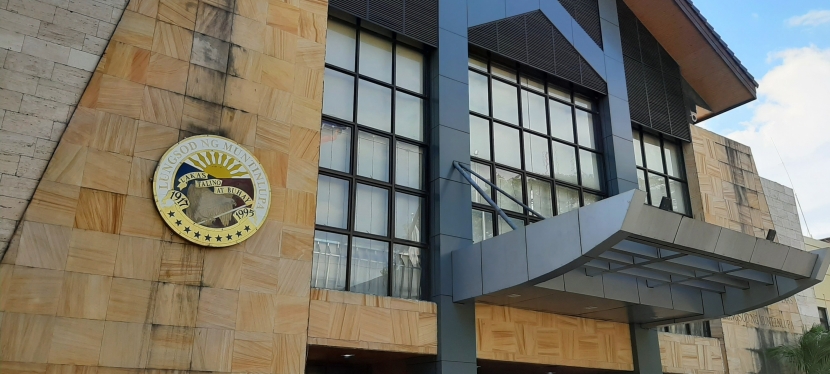
Recently the City Government of Muntinlupa was recognized and commended by the Philippine Chamber of Commerce and Industry (PCCI) and the Department of the Interior and Local Government (DILG), according to a Manila Bulletin news report.
To put things in perspective, posted below is an excerpt from the Manila Bulletin news report. Some parts in boldface…
The Muntinlupa City government earned recognition and commendations from the Philippine Chamber of Commerce and Industry (PCCI) and the Department of the Interior and Local Government (DILG).
The PCCI gave the Muntinlupa City government a special recognition at the 2023 Most Business-Friendly Local Government Unit Awards.
The city government also received eight major commendations at the 2023 Urban Governance Exemplar Awards organized by DILG.
“Indeed, we have many, many reasons to be proud of our city. But most of all, we are very grateful for the validation of our efforts to make life better for all Muntinlupeños. Mabuhay tayo!” said Mayor Ruffy Biazon.
The city government earned the special citation from the PCCI for its continuing commitment to excellence in business transactions, such as the multi-awarded Business One-Stop Shop (BOSS) system.
It can be recalled that Muntinlupa has been recognized several times by the PCCI as the Most Business-Friendly LGU in the country for its innovative and people-centric approach to business transactions.
Let me end this piece by asking you readers: What is your reaction to this recent development? If you are a resident of Muntinlupa City, are you delighted over what the City Government achieved with regards to public service, business-friendliness and efficiency?
For more South Metro Manila community news and developments, come back here soon. Also say NO to fake news, NO to irresponsible journalism, NO to misinformation, NO to plagiarists, NO to reckless publishers and NO to sinister propaganda when it comes to news and developments. For South Metro Manila community developments, member engagements, commerce and other relevant updates, join the growing South Metro Manila Facebook group at https://www.facebook.com/groups/342183059992673
To put things in perspective, posted below is an excerpt from the GMA Network news report. Some parts in boldface…
President Ferdinand “Bongbong” Marcos Jr. said Monday that the implementing rules and regulations of the Maharlika Investment Fund (MIF) have been finalized, weeks after he said its implementation was suspended.
“The Investment Rules and Regulations of Maharlika Investment Fund have been finalized,” Marcos said on Instagram.
“Upon our approval, we’ll swiftly establish the corporate structure, getting the MIF up and running,” he added.
The IRR, which would spell the beginning of MIF’s operationalization, was released in August. Marcos announced the suspension of its implementation “pending further study” on October 18.
Before leaving for Saudi Arabia last month, Marcos clarified that the MIF was not put on hold, saying the government was still working to have it operational within the year.
“We are, the organization of the Maharlika Fund proceeds apace, and what I have done though, is that we have found more improvements we can make, specifically to the organizational structure of the Maharlika Fund,” the President had said.
Marcos had said the suspension of the IRR should not be misinterpreted as a judgement of rightness or wrongness of the MIF.
he President also maintained that economic managers and “personalities who will actually be involved in the fund” had been consulted regarding the MIF.
Marcos signed into law Republic Act No. 11954 or the Maharlika Investment Fund (MIF) Act of 2023 in July, with the aim to tap state assets for investment ventures to generate additional public funds.
The law creates the Maharlika Investment Corp. (MIC), a government-owned company that will manage the MIF — a pool of funds sourced from state-run financial institutions that will be invested in high-impact projects, real estate, as well as in financial instruments.
Under the law, the initial capitalization of the MIF would be sourced from Landbank at P50 billion, DBP at P25 billion, and the national government at P50 billion.
Let me end this piece by asking you readers: What is your reaction to this recent development? Do you think that there is no stopping the implementation of the Maharlika Investment Fund in the near-future?
As far as the Bureau of Internal Revenue (BIR) is concerned, implementing taxes on social media influencers and collecting from them are still hard to do, according to a Philippine Star news report.
To put things in perspective, posted below is an excerpt from the Philippine Star news report. Some parts in boldface…
The Bureau of Internal Revenue (BIR) continues to have difficulty in making social media influencers comply with the country’s tax laws even amid a widening adoption of various social media platforms as a form of income.
BIR Assistant Commissioner Jethro Sabariaga said the country’s largest revenue collecting agency remains in dialogue with social media influencers for them to pay their tax obligations to the government.
The BIR decided to seek a dialogue with the influencers in March this year. Sabariaga admitted that it is difficult for the BIR to get revenues from the digital space.
“Yes, (it is difficult). We will not mince with words. It might take some time, but that’s what we’ve been doing,” Sabariaga said.
“We are trying to win their side in the engagement process. The more that you can ask them to do voluntary compliance, the better rather than to fight with them,” he said.
BIR defines social media influencers as people whose digital posts are being monetized, classifying them as self-employed individuals or persons engaged in trade or business as sole proprietors.
The BIR earlier said it was looking into some 250 top earning social media influencers to see if they have been paying their obligations.
Based on BIR’s circular, influencers are required to pay income tax and percentage tax or value-added tax, if applicable, as mandated by the Tax Code.
According to the BIR, influencers derive their income from YouTube, sponsored social and blog posts, display advertising and affiliate marketing, among others.
Let me end this piece by asking you readers: What is your reaction to this recent development? Do you agree with the BIR’s plan to tax social media influencers? Is your favorite vlogger or YouTuber based in the Philippines who might have made some revenue online based on his or her output?
Even though it looks like that economic growth for the Philippines this year will end up short of 7%, the economic managers of the Marcos administration expect revenue collections to exceed the target for 2023, according to a GMA Network news report.
To put things in perspective, posted below is an excerpt from the GMA Network news report. Some parts in boldface…
The economic managers of the Marcos administration are expecting the government revenue collections this year to exceed target amid measures to improve tax administration and collection efficiency.
In a statement following a special coordination committee meeting on Friday, the Development Budget Coordination Committee (DBCC) said the “emerging total revenue collection for 2023 is estimated to be P3.84 trillion to P3.90 trillion.”
The projected revenue collection for the entire year is above the P3.73-trillion target set earlier by the DBCC.
In April, the economic managers set the revenue goal at P3.73 trillion this year, P4.184 trillion in 2024, P4.692 trillion in 2025, P5.255 trillion in 2026, P5.895 trillion in 2027, and P6.621 trillion in 2028.
The DBCC, chaired by the Budget chief, is composed of the secretaries of National Economic and Development Authority (NEDA), Finance (DOF), as well as the governor of the Bangko Sentral ng Pilipinas (BSP).
The DBCC, likewise, is expecting tax revenues to clock in at P3.50 trillion to P3.55 trillion, surpassing the target by about 15%.
The above-target revenue project resulted from the higher actual collections in the first nine months of 2023, which reached P2.84 trillion, up 6.8% year-on-year and exceeding the target for the period by 3%.
This, as both tax and non-tax revenues registered positive growth at 6.4% and 10.5%, respectively, “owing to the higher collections from the Bureau of Customs (BOC) and non-tax revenues of P152.57 billion.”
The DBCC said the Bureau of Internal Revenue (BIR) and the BOC are implementing several reforms to strengthen tax administration and enhance revenue collection, which include digitalization programs intended to eliminate corruption, increase transparency, and improve the ease of paying taxes.
Tax reform measures – Moreover, the economic managers said they will work closely with Congress for the passage of the previous administration’s remaining tax reforms on passive income and financial intermediaries taxation and real property valuation and assessment, as well as new tax measures.
“These include the excise tax on single-use plastics (SUPs), rationalization of the mining fiscal regime, motor-vehicle road users’ tax, excise tax on sweetened beverages and junk foods, tax on pre-mixed alcohol, value-added tax (VAT) on digital service providers, carbon taxation, capital market development bill, and the military and uniformed personnel (MUP) pension reform bill,” the DBCC said.
Meanwhile, the national government’s disbursement accelerated significantly from 93.4% of the program as of June 2023 to 98.9% as of September.
“This was mainly driven by the robust disbursement in the third quarter, reaching P3.82 trillion as of the end of September,” the economic managers said.
Let me end this piece by asking you readers: What is your reaction to this recent development? Do you think that government collections will exceed the 2023 revenue target?
Those of you who have been engaging with online selling, you better brace yourselves as the Bureau of Internal Revenue (BIR) hopes to begin imposing a creditable withholding tax before December 2023, according to a BusinessWorld news report. Specifically, this move applies on partner-merchants of online platforms.
To put things in perspective, posted below is an excerpt from the BusinessWorld news article. Some parts in boldface…
THE BUREAU of Internal Revenue (BIR) is hoping to start imposing a creditable withholding tax on partner-merchants of online platforms before the start of December, an official said.
“The process could be shorter, and we might just come up with it before the start of December. It will not be unreasonable to expect it before the start of December,” BIR Assistant Commissioner Jethro M. Sabariaga told reporters on the sidelines of the SGV Tax Symposium last week.
“The longer you withhold this release, you’re hobbling a significant portion of today’s economic transactions,” he added.
The BIR last week released the final draft of the amendments to Revenue Regulation No. 2-98 which currently does not cover income payments by online platform providers.
Under the final draft, the BIR would impose a withholding tax of 1% on one half of the gross remittances by domestic e-marketplace operators to the online merchants for the goods or services sold through their facility.
However, the withholding tax will not apply if annual total gross remittances to an online merchant for the past taxable year has not exceeded P250,000, or if the cumulative gross remittances to an online merchant in a taxable year has not yet exceeded P250,000.
Also exempted are online merchants who are part of a cooperative duly registered with the BIR with a valid Certificate of Tax Exemption.
Mr. Sabariaga said the BIR took note of the suggestions and objections to the draft rules raised by affected sectors. The BIR’s deadline for comments from stakeholders on the final draft ended on Oct. 27.
“This will all be taken into consideration and then be studied and then the final draft will be released and exposed,” he said.
Since then, Mr. Sabariaga said the agency consulted with various industries to come up with the latest version of the draft.
“It’s the first exposition of the draft, you have to consider the various industries, the applicability of the withholding (tax) on the various industries, the rates, the economic provisions of it,” he added
The BIR has been seeking ways to tax the digital economy, particularly as e-commerce surged during the pandemic.
In 2022, the digital economy contributed P2.08 trillion, equivalent to 9.4% of gross domestic product. Of this, e-commerce had the highest growth at 26.5%, with its share to the economy reaching 20% or P416.12 billion.
Let me end this piece by asking you readers: What is your reaction to this recent development? If you have been regularly selling online, do you think you will be covered by the planned withholding tax by the BIR? Do you have all financial and legal records prepared?
There is no doubt that water is essential for families, businesses and all other sectors of local society. That being said, Filinvest’s corporate entities has partnered with Hitachi, Ltd., to construct a state-of-the-art water recycling facility and upgraded sewage treatment plant (STP) in the Alabang business district in Muntinlupa City with a completion target set for March 2026, according to an official press release published through Hitachi online.
To put things in perspective, posted below is an excerpt from the Hitachi press release. Some parts in boldface…
Seated from L-R, FDCWUI President & CEO Johnny Roxas, FDC Vice Chair Josephine Gotianun Yap, FAI President & COO Catherine Ilagan, Hitachi Ltd. GM of Envi. Sol. Div. Okito Kakudo, and Hitachi Asia Ltd. COO Tang Chay Wee. Standing from L-R, PMI’s Chief Investment Officer Jan Michael Lim and President Alfredo Comendador Jr., ASCOF’s Design Manager Allan Villanueva and Project Manager Ricky De Castro, FLOW’s BD and Marketing AVP Sundy Bergado and CTO Tatsuya Sasuga, Hitachi Asia Ltd. Philippine Branch GM Hiroshi Katagiri and FLOW’s Engineering and Projects AVP Alfred Ables. (source – Hitachi.Asia)
Filinvest City, together with its partners FDC Water Utilities Inc. and Hitachi Ltd, will soon begin the construction of a state-of-the-art water recycling facility and upgraded sewage treatment plant (STP) that promises to innovate urban water management in the Alabang business district. This reflects the Filinvest Group’s commitment to sustainability through the implementation of efficient and technology-driven water operations across all of its developments.
“We aim to make Filinvest City the first sustainable and smart central business district in the Philippines. By implementing advanced technologies and solutions to treat wastewater, we are moving towards a future where local ecosystems are protected and our ecological footprint is reduced,” said Filinvest Development Corporation (FDC) Vice Chairperson Josephine Gotianun Yap during the construction commencement ceremony held recently.
FDC Water Utilities, Inc. (FDCWUI), a subsidiary of FDC Utilities, Inc., will lead in developing the project that is set to begin in December this year and is expected to be completed by March 2026.
“This project will revolutionize how Filinvest approaches wastewater treatment and water production. Its seamless integration of sewage treatment and production of high-quality recycled water technologies sets a new standard for environmentally responsible development. Only two other projects in the country implement similar processes, but none on this scale,” said Juan Eugenio L. Roxas, President and CEO of FDWUI.
Hitachi Ltd is the project’s technical partner, one of Japan’s largest and most influential corporations spanning sectors such as IT, telecom, power, infrastructure, and industry. Together with Filinvest, Hitachi aims to focus on social and sustainable innovations through data and technology.
“Our advanced water treatment technology, combined with digital solutions, is designed not only to improve water quality but also to enable remote plant monitoring and streamline operations. We are honored to work with Filinvest as we address the pressing issue of water shortages in the Philippines and promote water sustainability together,” said Okito Kakudo, General Manager of Hitachi Ltd.’s Environmental Solution Division, Water and Environment Business Unit.
The upgraded STP will be capable of processing up to 15 million liters of wastewater daily. It will utilize Membrane Bioreactor (MBR) technology for biological nutrient removal, which complies with the stricter regulations on nitrogen and phosphorus removal in the country that cannot be effectively removed by the conventional activated sludge method.
Meanwhile, the new water reuse facility is designed to efficiently produce high-quality recycled water for household use. Capable of producing a capacity of at least 10.5 million liters per day, the facility utilizes a combination of Brackish Water Reverse Osmosis (BWRO) and Advanced Oxidation for its water production.
The initiative will reduce the environmental footprint of Filinvest City and effectively mitigate pollution in waterways. Moreover, the water produced by the reuse facility will be available to local businesses and residents, conserving valuable freshwater sources and ensuring a more reliable supply of clean water.
Let me end this piece by asking you readers: What is your reaction to this recent development? If you are a resident of Muntinlupa City, how do you think this upcoming water recycling facility of Filinvest and Hitachi will help you? Do you think there is a need for more private sector players to be more involved in the water supply and water recycling within Muntinlupa City? Do you own a home or a business property in Filinvest City in Alabang?
For more South Metro Manila community news and developments, come back here soon. Also say NO to fake news, NO to irresponsible journalism, NO to misinformation, NO to plagiarists, NO to reckless publishers and NO to sinister propaganda when it comes to news and developments. For South Metro Manila community developments, member engagements, commerce and other relevant updates, join the growing South Metro Manila Facebook group at https://www.facebook.com/groups/342183059992673
The Bangko Sentral ng Pilipinas (BSP) recently installed more coin deposit machines particularly in shopping malls which will give people more opportunities to put their idle or excessive Peso coins to use, according to a BusinessWorld news report. As of the end of September 2023, almost P100 million worth of coins have been deposited since the BSP launched their coin deposit machines project.
To put things in perspective, posted below is an excerpt from the BusinessWorld news report. Some parts in boldface…
CONSUMERS have deposited P98.8 million worth of currency into the Bangko Sentral ng Pilipinas’ (BSP) coin deposit machines (CoDMs) as of end-September or just three months after their rollout in June.
This is equivalent to 37.2 million pieces of coins from over 37,000 transactions, the BSP said in a statement. The highest single transaction recorded on the machines so far was worth P100,260.
“With more CoDMs installed in various retail establishments, the BSP expects wider public use that will lead to more efficient coin recirculation in the country,” the central bank said.
The BSP has completed its goal of deploying 25 coin deposit machine units across Metro Manila and other nearby provinces. The central bank began deploying CoDM units in June in partnership with Filinvest Lifemalls Corp., Robinsons Supermarket Corp., and SM Retail, Inc.
BSP Deputy Governor Bernadette Romulo-Puyat told reporters on Wednesday that the central bank is looking to roll out more machines across the country, adding that the BSP has been asked to set up some in Cebu, Davao, Pampanga, and Baguio.
“Right now, we are just assessing [the existing machines]. We’re talking to the provider how to make the machines better because the machines are usually jammed,” she said in mixed English and Filipino.
The machines can get stuck if the coins deposited are taped or bundled or if a consumer deposits foreign objects such as nails, tokens, and screws, she said.
“The ideal is when we deploy coin deposit machines, it would be stand-alone,” Ms. Romulo-Puyat said. “Now, the machines need technical assistance all the time.”
The demand for coin deposit machines has been higher than expected, with people lining up to deposit coins, she added.
“People have warmed up to it. The mere fact that people are asking when the BSP will deploy units in their area means people are looking for it,” she added.
The BSP has installed coin deposit machines in SM Megamall in Mandaluyong City, SM City Grand Central in Caloocan, SM City Marilao in Bulacan, SM City Taytay Rizal, SM Hypermarket FTI in Taguig City, SM Southmall in Las Piñas City, SM City Sucat in Parañaque, SM City Calamba, SM City Marikina, SM City San Mateo Rizal, SM City Valenzuela, Robinsons Place Metro East in Pasig City, Robinsons Place Antipolo City, Rizal, Robinsons Place Novaliches and Robinsons Place Magnolia, Quezon City.
The value of coins deposited in CoDMs may be credited to the depositor’s e-wallet account or converted into a shopping voucher for over-the-counter transactions. Customers depositing coins can credit the equivalent amount to their GCash or Maya e-wallets.
Let me end this piece by asking you readers: What is your reaction to this recent development? If there is a BSP coin deposit machine in your city, were you able to visit and deposit your coins? When was the last time you stored your coins in containers?
For more South Metro Manila community news and developments, come back here soon. Also say NO to fake news, NO to irresponsible journalism, NO to misinformation, NO to plagiarists, NO to reckless publishers and NO to sinister propaganda when it comes to news and developments. For South Metro Manila community developments, member engagements, commerce and other relevant updates, join the growing South Metro Manila Facebook group at https://www.facebook.com/groups/342183059992673
For decades now, I have been living in Alabang and I witnessed how much Muntinlupa City modernized along the way. Bordering Barangay Ayala Alabang is Filinvest City (formerly called Filinvest Corporate City) which itself is home to several business or facilities such as the Filinvest Tent, Commercenter, Acacia Hotel Manila, Crimson Hotel, Westgate and, of course, the wildly popular place to be in – Festival Mall.
For the newcomers reading this, Festival Mall opened in May 1998 with its initial name Festival Supermall. Way back then, out of pure curiosity, I entered the mall for the first-time ever during its soft opening on May 1, 1998 (Labor Day here in the Philippines) as I was already looking for a new place and new discoveries at a time when I got tired of Alabang Town Center (ATC).
Being very new back then, Festival Mall’s presence of retailers or tenants was not yet dynamic as there were still businesses inside that could not open in time for the mall’s opening. I do remember walking down seeing lots of vacant retail spots covered with signs such as “opening soon”, “coming soon” and the like. Back in those days, the Philippine economy and society itself were dampened by the 1997 Asian Financial Crisis.
As the months passed by, more businesses opened and Festival Mall’s early attractions include the X-Site Amusement Center (which already had the indoor roller coaster) and, of course, the brand new cinemas which had several screens operating at a very spacious area on the top floor. I still remember seeing lots of people lining up for tickets and seats to watch Armageddon which ended up as the highest grossing movie of the world in 1998.
Indeed, for more than a decade, Festival Mall’s original cinemas became a favorite destination of mine to watch movies in Alabang and I definitely was not alone. I also remember the times when the said cinemas attracted a whole lot of moviegoers when the annual Metro Manila Film Festival’s (MMFF) opening day (every December 25) happened resulting in long lines. Watch the YouTube videos below…
As you can see in the above videos, Festival Mall’s original cinemas was a hot spot for moviegoers. It should be noted that the mall is strategically located in close proximity to the Alabang Viaduct and the South Luzon Expressway (SLEX) which ensures visibility to motorists and accessibility to commuters on a daily basis. The old cinemas were also a hot spot for a variety of small businesses selling different kinds of food and drinks to moviegoers and others who just passed by.
Festival Mall at 25
This past May, Festival Mall turned 25 and its anniversary was highlighted with special events as well and publicity through the media. There were these Festival Mall 25th anniversary feature articles that got published in different newspapers almost simultaneously. In the commemorative article that got published in the Manila Bulletin, President and CEO of Filinvest Development Corporation Josephine Gotianun Yap was quoted which goes as follows in the excerpt below. Some parts in boldface…
“We would not be where we are today without the unwavering support of our customers, merchants, suppliers, and employees who have journeyed with us through the years. It is humbling to think that when we first opened the mall, we only had 30 stores and no anchor supermarket. But thousands of visitors came on our first day, attracted by our amusement centers, cinemas, and food court. And now the mall has 800 tenants and eight leading anchor stores. We value our collaboration with major retailers, which has enabled us to bring together SaveMore, Ace Hardware, Robinson’s Department Store, Handyman, Shopwise, H&M, Decathlon, and Landmark all under one roof. As we build on its strong foundations for the future, we see Festival Mall continuing to serve as a place where time stops for making memories with family and friends,”
As seen above, the Filinvest Development Corporation executive clearly referred to the original cinemas which was one of the early attractions of Festival Mall way back in 1998. As mentioned earlier, Festival Mall today has more modern cinemas located at the expanded area on the same floor but several meters away from the original cinemas. So how does Festival Mall’s original cinemas look like nowadays? Watch the video below…
Yes, indeed the mall’s original cinemas have turned depressing. There are much less customers who pass by the area and many of the businesses that operated within have closed down! As I personally found out, Festival Mall is still using a few screens at the old cinemas for moviegoers while leaving the many others closed and left in the dark. If you think about it carefully, what does the mall management have in mind with regards to all of those cinema seats, sound systems, projectors, screens and other pieces of equipment inside each and every closed screen of the original cinemas?
A closed screen at one end of the original cinemas of Festival Mall. Just imagine what is left of all the hardware (examples: projectors and speakers) and seats inside.
This was a premium place to watch movies at. It had more comfortable seats and better equipment that made the cinematic experience more immersive. It was here where I saw 2001’s Final Fantasy: The Spirits Within.
This is where I used to buy movie tickets for many years. For some time now, the selling of movie tickets here has stopped. To buy tickets, you have to go to the modern cinemas of the mall several meters away by foot at the same floor.
Apart from seeing more of the screens of the original cinemas closed down, the number of small-time businesses that sold different kinds of food and drinks are also gone which is depressing. Those businesses offered moviegoers different choices of what to eat or drink apart from the usual popcorn and drinks sold by the cinema’s concessionaires. I do remember a certain business joint that sold really good coffee (both hot and cold) that is also affordable.
There used to be different kinds of small business joints that sold a variety of food and drinks located on the floor spots at the original cinemas area. Those businesses have since closed down and left.
I remember the times I bought popcorn and drinks at this place before watching a movie. Now there are no food, no drinks and no people selling to customers anymore.
With the way things are right now, walking through the original cinemas area of Festival Mall is lonely and depressing to do. The area is almost lifeless and it easily is the saddest place inside the mall which itself has become a major attraction for shoppers and families. I can only wonder if Festival Mall’s management has any plan to revive the original cinemas area. Will they someday renovate at least a few of the screens and install brand new seats and other equipment to accommodate more moviegoers? Do they plan to attract new businesses to occupy the vacant commercial spaces and floor spaces near the old cinemas?
It would be nice to know if Festival Mall’s management or Filinvest itself has any plan to revive commerce at the original cinemas area which is now the saddest and loneliest part of the mall.
To be very clear with you all reading this, I never worked for a shopping mall nor have I ever worked in the movie theater business. I am a long-time resident of Alabang who often visits Festival Mall for purchasing needed items, dining and availing of services. Watching movies at Festival Mall used to be a big reason for me to spend time at the mall. I know for a fact that operating movie theaters is difficult and attracting people to watch movies on the big screen is tougher because of streaming. It does not help that the COVID-19 pandemic convinced people that watching new movies at home via streaming is the new standard which also made them think that movie theaters are unnecessary.
As a movie enthusiast, I can say out loud that watching a movie inside the cinema is still the best and most definitive way to enjoy watching. The movie theater experience can never be matched by streaming nor could the biggest HDTV at home could ever come close to the size and visual impact of a cinema screen. That being said, I can only hope that Festival Mall could someday revive the movie experience and commerce at their original cinemas area. They already have the modern cinemas at the expanded area but those are only 4 screens.
If you are living here in South Metro Manila and you have been to Festival Mall several times before, what do you think the mall management should do about their old cinemas? Is Festival Mall your favorite place to watch movies in? Do you think that hosting multiple film festivals – both foreign and domestic – each year would justify renovating the old cinemas of the mall?
Recently in the progressive city of Muntinlupa, Mayor Ruffy Biazon personally visited a market in Barangay Poblacion and examined the prices of goods, according to a Manila Bulletin news report.
To put things in perspective, posted below is an excerpt from the Manila Bulletin news report. Some parts in boldface…
Muntinlupa Mayor Ruffy Biazon visited a market on Oct. 9 to check the prices of basic commodities.
Biazon went to a market in Barangay Poblacion to know the prevailing prices of rice, meat, vegetables and other commodities.
He said a common feedback of stall owners inside the market is the competition from sellers outside the market, which has a negative impact on their income.
“Ang common feedback ng mga nagtitinda ay ang kompetensya mula sa mga nagtitinda sa labas—yung mga nasa bangketa at nasa iba pang private properties. Hindi na kasi sila napapasok ng mga mamimili; may advantage kasi yung mga nasa labas (The common feedback from sellers is the competition from sellers outside–those who are located on the sidewalk and private properties. Consumers no longer go inside (the market); those who sell outside have the advantage),” said Biazon during his Facebook live video of his market visit.
The mayor also noted that there are vacant stalls in the market, which could be due to sellers losing out to competitors outside the establishment.Biazon said he will look into the matter of illegal vendors around the market.
“Nagkakaroon kasi ng negative impact sa market mismo. Titingnan natin ang mga umiiral na batas natin kung may magagamit tayo para tugisin ang mga illegal vendor at wala sa tamang pwesto (It has a negative impact to the market directly. We will study the existing laws if we have something to use to go after illegal vendors and those who are not in the proper places),” said Biazon.
Let me end this piece by asking you readers: What is your reaction to this recent development? If you are a resident of Muntinlupa City, were you able to visit any local market lately? If you did, were the prices of good higher than they were six months ago? Do you wish that more your city government officials would personally visit other local markets? Do you believe that local market vendors are being harmed by vendors outside of the markets?
For more South Metro Manila community news and developments, come back here soon. Also say NO to fake news, NO to irresponsible journalism, NO to misinformation, NO to plagiarists, NO to reckless publishers and NO to sinister propaganda when it comes to news and developments. For South Metro Manila community developments, member engagements, commerce and other relevant updates, join the growing South Metro Manila Facebook group at https://www.facebook.com/groups/342183059992673
Recently in the progressive city of Muntinlupa, it was announced that Business and Permit Licensing Office (BPLO) of the City Government were present at Festival Mall in Filinvest City for the convenience of business owners for permit processing and will remain there until October 13, 2023, according to a Manila Bulletin news report.
To put things in perspective, posted below is an excerpt from the Manila Bulletin news report. Some parts in boldface…
The Muntinlupa City government’s business renewal has returned to the Festival Mall in Alabang for the convenience of business owners.
Muntinlupa’s Business Permits and Licensing Office Single-Window Transaction (BPLO-SWiT) program is available in the mall from Oct. 9 to 13 for easier and faster transactions.
“We encourage businesses to take the opportunity to pay their obligations early and avoid penalties for late payments. With the BPLO-SWiT, we are making tax payments more accessible than ever, so we call on everyone to avoid the rush and possible penalties,” said Mayor Ruffy Biazon.
Applicants can transact from 10 a.m. to 4:30 p.m. at the BPLO-SWiT booth, situated near the Festival Mall concierge.
The whole process, starting from the submission of documents, encoding of information, payment of fees, to printing of official receipt, Community Tax Certificate, Business License and Mayor’s Permit Certificate, and Barangay Clearance for Business, takes as little as 20 minutes, provided all documentary requirements are complete.
In addition to the BPLO-SWiT, business owners may also continue to renew their license and Mayor’s Permit at the BPLO in Muntinlupa City Hall and online via the Business E-payment System (BESt).
Let me end this piece by asking you readers: What is your reaction to this recent development? If you are a resident of Muntinlupa City and you own a business, were you able to avail of the BPLO’s services at Festival Mall? Do you think that the Muntinlupa BPLO should have a longer presence at Festival Mall for your business permit processing needs?
For more South Metro Manila community news and developments, come back here soon. Also say NO to fake news, NO to irresponsible journalism, NO to misinformation, NO to plagiarists, NO to reckless publishers and NO to sinister propaganda when it comes to news and developments. For South Metro Manila community developments, member engagements, commerce and other relevant updates, join the growing South Metro Manila Facebook group at https://www.facebook.com/groups/342183059992673