

COVID-19 Crisis: Almost 2,000 healthcare workers in Las Piñas vaccinated

According to a news report published by the Manila Bulletin recently, the City Government of Las Piñas announced that almost two thousand medical and health frontliners got vaccinated since their local vaccination program launched on March 9, 2021.

Below is an excerpt for the more specific details as reported by Manila Bulletin…

The Las Piñas City government reported that 1,982 medical and health frontliners from different hospitals, public and private, in the city had already vaccinated against the coronavirus disease (COVID-19).

The city government started its vaccination rollout on March 9 with the theme “Ligtas na Las Pinero, Lahat Bakunado” at the University of Perpetual Help System Dalta, one of the city’s identified vaccination sites.

Medical and healthcare workers of the University of Perpetual Help Medical Center were inoculated with China-made Sinovac vaccines at the start of the vaccination rollout.

Mayor Imelda Aguilar said that frontline employees of the UPMC on March 15 were inoculated with AstraZeneca vaccines.

The mayor also confirmed that with regards to the Sinovac vaccines, the City Government received over 1,200 doses of it from the National Government and were immediately used to inoculate frontliners. As reported before, the City Government’s goal is to vaccinate all city residents who in turn can get themselves registered.

Before the vaccination officially started, a simulation was held at the vaccination site at Las Piñas Elementary School Central, P. Diego Cera, Barangay Elias Aldana. On March 9, at the vaccination site at the University of Perpetual Help System Dalta (UPHSD) Gymnasium, in Barangay Pamplona Tres, Vice Mayor April Aguilar-Nery and other local officials attended and observed the launch of the vaccination rollout.

Image from the March 9, 2021 vaccine rollout.

How can local residents get registered for the vaccine?

In accordance to what was established, each family will be given profiling forms to be filled up. The steps for manual registration are as follows:

1. Make sure that all the requested details in the form are answered.

2. Submit the understood forms to your barangay / Homeowner’s Association (HOA).

3. Include one (1) 2 x2 size ID photo and photocopy of any government issued ID with address.

As for online registration, the steps are as follows:

1. Scan the QR Code or go to bit.ly/LasPiñasVaccination in your web browser.

2. Log in using your GOOGLE ACCOUNT

3. Answer the questions and make sure your details are correct.

4. Attach a scanned copy / photo of your valid ID or proof of residence.

For updates about the city, visit https://www.facebook.com/cityoflaspinasofficial

For South Metro Manila discussions, visit and join the community in Facebook at https://www.facebook.com/groups/342183059992673

+++++

The above information was sourced from the City Government of Las Piñas and Manila Bulletin.

For more South Metro Manila community news and developments, come back here soon. Also say NO to fake news, NO to irresponsible journalism, NO to misinformation, NO to plagiarists, NO to reckless publishers and NO to sinister propaganda when it comes to news and developments. For South Metro Manila community developments, member engagements, commerce and other relevant updates, join the growing South Metro Manila Facebook group at https://www.facebook.com/groups/342183059992673
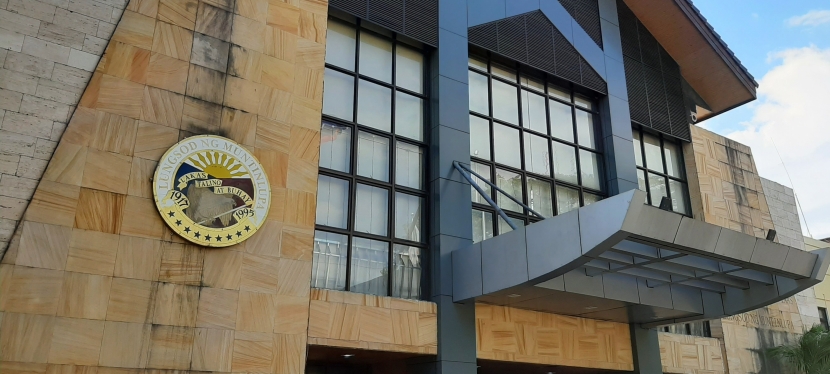
COVID-19 Crisis: Contact tracing efforts in Muntinlupa City through StaySafe.PH app tightened in response to rising COVID-19 cases

With tighter contact tracing efforts and integration of local COVID-19 data in the StaySafe.PH system, confirmed cases and their close contacts in Muntinlupa cannot falsify their health condition and will be barred entry from local establishments.

The City Epidemiology and Surveillance Unit of Muntinlupa and Management Information System Office have started tagging COVID-19 cases in the StaySafe.PH app allowing establishments to identify confirmed, probable, and suspect cases based from real-time data from the City Health Office.

Since March 9, 2021, the profiles of all individuals under the surveillance of Muntinlupa CHO were identified in the contact tracing system and were adjusted accordingly. Individuals with purple screen corresponds to “Government Declared as CONFIRMED,” orange screen as “Government Declared as PROBABLE,” and red screen as “Government Declared as SUSPECTED.”

Establishments are advised to prohibit entry, isolate immediately, and report to the City Health Office or Barangay Health Emergency Response Team those individuals with non-eligible screens upon scanning of the StaySafe.Ph QR Code. Upon recovery, the profile of individuals with confirmed or probable status will revert to “good condition” with a green screen and will be allowed entry to establishments anew.

The color-based indicators from StaySafe.ph app. (source – Muntinlupa PIO)

Recently, the City Government of Muntinlupa, in partnership with the Department of Health, launched the Staysafe.PH app as the official digital contact tracing system in the city and has implemented a “No QR Code, No Entry Policy” in all commercial establishments, workplaces, churches, and government offices in the city.

Mayor Jaime Fresnedi urged all residents and owners of establishments in the city to use the StaySafe.PH app amid rising COVID-19 cases. He said the adoption of StaySafe.PH in Muntinlupa is in compliance with the national government’s recommendation for a uniformed contact tracing system to prevent further COVID-19 transmission, especially with the detection of the contagious variants in the country.

All residents and visitors who will enter, work, or do business in all indoor or enclosed public and private establishments in Muntinlupa shall be required to download and register at the StaySafe.PH application and secure a unique QR Code which they can store on their phone or print for physical copy. QR Codes for non-smartphone user registrants shall be generated by their respective barangays and shall be distributed to where the registrant resides.

Members of the Muntinlupa City StaySafe.Ph Task Force has conducted regular inspections to ensure compliance of local public and private establishments. As of March 11, 2021, the local Task Force has issued 235 notice of violations to non-compliant establishments.

Violators will be charged with P2,000 penalty and suspension of franchise or business permit until violation has been rectified for first offense, P3,000 for second offense, and suspension or revocation of franchise or business permit including P5,000 for the third offense. In case the offender is a government official or employee, the maximum penalty shall be imposed including the filing of administrative, civil, or criminal action.

+++++

The above information was provided by the City Government of Muntinlupa for the purpose of public information and transparency. Some parts were edited for this website.

For more South Metro Manila community news and developments, come back here soon. Also say NO to fake news, NO to irresponsible journalism, NO to misinformation, NO to plagiarists, NO to reckless publishers and NO to sinister propaganda when it comes to news and developments. For South Metro Manila community developments, member engagements, commerce and other relevant updates, join the growing South Metro Manila Facebook group at https://www.facebook.com/groups/342183059992673

COVID-19 Crisis: Vaccination efforts in Las Piñas City ongoing, locals encouraged to get registered

Finally, the local campaign against COVID-19 is on the roll in the City of Las Piñas! The other day (March 9, 2021), the Las Piñas City Government formally started its COVID-19 vaccination program with the theme “Safe Las Piñero, All Vaccinated” for the three hundred medical front-liners of the University of Perpetual Help Medical Center at the vaccination site in University of Perpetual Help System Dalta (UPHSD) Gymnasium, in Barangay Pamplona Tres.

Varied local officials led by Vice Mayor April Aguilar-Nery (in blue shirt) at the vaccination site. (source – City of Las Piñas Facebook page)

The program was spearheaded by Vice-Mayor April Aguilar-Nery and Dr. Ma. Paz Corrales, Assistant Regional Director of the Department of Health-National Capital Region (DOH-NCR). Also present at the activity were City Administrator Reynaldo Balagulan, members of the City Council, doctors of the City Health Office (CHO) Dr. Ferdinand Eusebio, Dr. Julie Gonzales, Dr. ELeenor Gumpal, Dr. Julio Javier, and department heads.

The Sinovac vaccine was first injected into medical front-liners Dr. Jose Edzel Tamayo (Medical Affairs Executive Officer of UPHMC); Elvie Carandang (Finance and Accounting Manager) and Neil Jaymalin (Chief of Staff), all of whom served as the city’s “COVID-19 influencers” to encourage Las Piñas residents to immediately register and get vaccinated for their protection against the China virus.

Vice Mayor Aguilar-Nery personally observes the vaccination. (source – City of Las Piñas Facebook page)
People waiting their turns at the vaccination site on March 9, 2021. (source – City of Las Piñas Facebook page)

Under the leadership of Mayor Imelda “Mel” T. Aguilar, the City Government aims to vaccinate all city residents after securing 500,000 doses of vaccine after allocating P250-million for the purchase of additional vaccine against COVID-19 for residents.

As far as the City Government is concerned, the security of the health, safety and welfare of the constituents remain priorities. Previously the City Government and its strategic partners conducted a simulation on how the vaccination will take place.

Everyone is reminded to continue to be careful, be disciplined and adhere to the health and safety rules.

+++++

The above information was sourced from the City Government of Las Piñas.

For more South Metro Manila community news and developments, come back here soon. Also say NO to fake news, NO to irresponsible journalism, NO to misinformation, NO to plagiarists, NO to reckless publishers and NO to sinister propaganda when it comes to news and developments. For South Metro Manila community developments, member engagements, commerce and other relevant updates, join the growing South Metro Manila Facebook group at https://www.facebook.com/groups/342183059992673
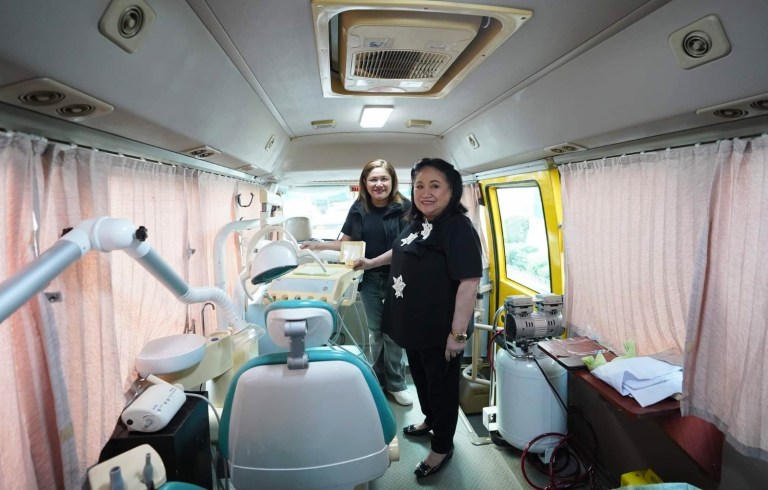
COVID-19 Crisis: Vaccination site at Barangay Manuyo Dos inspected ahead of planned Las Piñas City vaccination drive

Yesterday Las Piñas City Vice Mayor April Aguilar-Nery together with officials of the City Engineering Office conducted an ocular inspection at one of the official vaccination sites located at the Gatchalian covered court in Barangay Manuyo Dos. . Rose Bantog, head of City Engineering Office, at one of the city’s vaccination sites, at Gatchalian Covered Court in Barangay Manuyo Dos today, March 3, 2021.

Las Piñas City Vice Mayor April Aguilar-Nery and other officials during the inspection at the vaccination site in Barangay Manuyo Dos yesterday. (source – City of Las Piñas Facebook page)
The vaccination site at the Gatchalian covered court in Barangay Manuyo Dos. (source – City of Las Piñas Facebook page)

Rose Bantog, who leads the City Engineering office, was with the Vice Mayor. At the site were sections for registration, counseling, screening and vaccination, complete with chairs that were placed strategically for social distancing. The inspection was done to ensure that the established standards based on the vaccination plan of the City Government are properly followed before starting the upcoming vaccination drive for the people of Las Piñas.

The City Government of Las Piñas insists it is prioritizing the health, safety and welfare of its constituents, especially during this time of pandemic. The public has been reminded to continue to be careful, to maintain discipline and keep on following the local health and safety protocols.

Previously the City Government and its strategic partners conducted a simulation on how the vaccination will happen. Registration for the COVID-19 vaccine is being conducted.

For updates about the city, visit https://www.facebook.com/cityoflaspinasofficial

For the history of the city, visit https://www.laspinascity.gov.ph/about-us/6/about-las-pinas

For South Metro Manila discussions, visit https://www.facebook.com/groups/342183059992673

+++++

This article used details sourced from the social media post of the City Government of Las Piñas.

For more South Metro Manila community news and developments, come back here soon. Also say NO to fake news, NO to irresponsible journalism, NO to misinformation, NO to plagiarists, NO to reckless publishers and NO to sinister propaganda when it comes to news and developments. For South Metro Manila community developments, member engagements, commerce and other relevant updates, join the growing South Metro Manila Facebook group at https://www.facebook.com/groups/342183059992673

Step-by-step MGCQ for the Philippines?

By now, it has been made clear that the Philippines won’t shift to modified general community quarantine (MGCQ) because President Rodrigo Duterte wants vaccination for COVID-19 to happen first. To put it short, health and personal safety are being prioritized although this means more waiting on the part of many people who are still unemployed and struggling without the needed income.

Yesterday, a new report published by Philippine News Agency (PNA) states that Duterte is taking a “step-by-step” approaching to the planned shift to MGCQ for the nation according to Cabinet Secretary Karlo Nograles.

Here is an excerpt from the report…

“For him (Duterte), it’s a step-by-step approach. Itong step muna before we go to the next step (We have to take this step first before we go to the next step), Nograles said in an online press briefing.

Nograles said it was “difficult” for Duterte to turn down the proposed shift to MGCQ.

However, Duterte wants to make sure that people’s health and safety would not be compromised, Nograles said.

“Again, the President and the government recognize the urgency of reopening the economy so we can resume the pre-pandemic upward trajectory and sustained growth of the economy. This, however, should be done side-by-side with measures that will ensure that we do not compromise efforts to contain Covid-19,” he said.

As seen above, the national leadership is aware of the need for economic recovery so that people suffering can be assisted by means economic opportunities. They are balancing economics with health as they are trying to find solutions and decide when to execute solutions. Shifting the whole nation to MGCQ can be done but with caution so that the risk of new infections won’t be too great.

Here is another excerpt…

The government was supposed to start its free vaccination program this month. However, there was a delay in the delivery of Covid-19 vaccines due to indemnification requirements.

Nograles said the IATF-EID would stick to the “month-to-month” assessment even if the government starts its mass immunization drive.

“If we go by the procedure, every end of the month, that is when we discuss ano ‘yung magiging recommendations namin kay Pangulo (what our recommendations to the President would be) for that succeeding month. So siguro (perhaps), in terms of timeline, perhaps that might be the same procedure that we follow,” he said.

The delayed arrival of the COVID-19 vaccines is indeed painful. Of course, people need to realize that while they can be helpful, the vaccines may not be the greatest solution to take during this pandemic. Even if a person gets vaccinated, caution must still be practiced when moving around in public.

More on the issue of shifting the entire nation to MGCQ status, I hope that the Metro Manila mayors as well as their advisers and experts would start researching how local governments and community leaders in other cities and provinces are doing under the declared MGCQ statuses in their respective areas. With Duterte’s refusal to move the nation into MGCQ, Metro Manila leaders have time to do such research.

Going back to Duterte and his cabinet, a new executive order (EO) is being prepared to institutionalize the 2021-2022 National Employment Recovery Strategy (NERS) with the goal of bringing back jobs in the labor market. Here’s an excerpt from the Philippine News Agency report…

In a virtual presser, Cabinet Secretary Karlo Nograles said the NERS was discussed and approved during the 52nd Cabinet meeting presided over by President Rodrigo Duterte at the Malacañan Palace on Monday night.

“Another initiative that was discussed yesterday (Monday) was the 2021-2022 National Employment Recovery Strategy or NERS…An executive order (EO) is now being readied to institutionalize the NERS task force in order to oversee all of these efforts,” he said.

Nograles said the NERS is meant to help create a policy environment that encourages the generation of more employment and entrepreneurship opportunities.

It is also expected to improve the employability and productivity of workers as it provides support to existing and emerging businesses.

“The strategic framework of the NERS is based on the following pillars — stimulating the economy and employment; supporting enterprises, jobs, and income; protecting workers in the workplace, and trusting social dialogue to encourage innovative solutions,” he said.

Watch out for more national developments here.

+++++

For more South Metro Manila community news and developments, come back here soon. Also say NO to fake news, NO to irresponsible journalism, NO to misinformation, NO to plagiarists, NO to reckless publishers and NO to sinister propaganda when it comes to news and developments. For South Metro Manila community developments, member engagements, commerce and other relevant updates, join the growing South Metro Manila Facebook group at https://www.facebook.com/groups/342183059992673

COVID-19 Crisis: Vaccine Registration in Las Piñas City Ongoing

In a recent notice to its constituents, the City Government of Las Piñas announced that it is collecting data for those who will be granted a free COVID-19 vaccine covering all barangays in the city.

Specifically, each family will be given profiling forms to be filled out. The steps to be followed for manual registration are as follows (UPDATED January 2022):

1. Make sure that all the requested details in the form are answered.

2. Submit the understood forms to your barangay / Homeowner’s Association (HOA).

3. Include one (1) 2 x2 size ID photo and photocopy of any government issued ID with address.

4. Wait for a text message from Ezconsult. Your PATIENT ID NUMBER and other relevant information will be revealed.

5. Bring a government-issued ID with you on the day of your vaccination.

Registration can also be done online with the following steps:

1. Scan the QR Code or go to bit.ly/LasPiñasVaccination in your web browser.

2. Answer the questions and make sure your details are correct.

3. Your information will be verified. Wait for a text message.

4. Wait for a text message from Ezconsult. Your PATIENT ID NUMBER and other relevant information will be revealed.

5. Bring a government-issued ID with you on the day of your vaccination.

Offered recently is what the City Government referred to as on-site assisted registration. The City Government described on-site assisted registration as follows (translated from Tagalog): There are designated officers-of-the-day at every vaccination site in the city where they are ready to assist residents who wish to register. Residents who register on-site will also be given a profiling form where they will need to disclose their details.

The latest update from the city shows the three ways to get registered for free COVID-19 vaccines.

A fourth method of registration was introduced by the City Government. For this, let’s refer to it as the eZConsult method. Below are the visual references. Read the details carefully.

And now we can focus on COVID-19 vaccine registration for minors (aged 12 to 17). If you are a parent and your family resides in the city, you can do the registration by clicking http://laspinascityonline.laspinascity.gov.ph/eCVRS/

Previously the City Government and its strategic partners conducted a simulation on how the vaccination will happen. The said simulation was attended by Mayor Imelda “Mel” Aguilar and Vice Mayor April Aguilar-Nery.

For updates about the city, visit https://www.facebook.com/cityoflaspinasofficial

For South Metro Manila discussions, visit https://www.facebook.com/groups/342183059992673

For your references, posted below are important information. Please read and pay close attention to the details. These are official references from the local health office.

+++++

For more South Metro Manila community news and developments, come back here soon. Also say NO to fake news, NO to irresponsible journalism, NO to misinformation, NO to plagiarists, NO to reckless publishers and NO to sinister propaganda when it comes to news and developments. For South Metro Manila community developments, member engagements, commerce and other relevant updates, join the growing South Metro Manila Facebook group at https://www.facebook.com/groups/342183059992673

A chance for recovery for more Philippine cinemas (and their employees)

Wow. That was quite a ride of information updates that happened the last few days. Last Friday, the Inter-Agency Task Force for the Management of Emerging Infectious Diseases (IATF-EID) announced that it has allowed a variety of businesses around the Philippines to resume operations so that they can recover from this ongoing COVID-19 pandemic.

Such businesses specified were driving schools, video arcades, theme parks, natural sites, historical landmarks, parks and, most notably of all, cinemas (or movie theaters).

However, the Metro Manila mayors reacted and expressed their opposition against the national government’s decision on allowing cinemas to reopen. Through the media, Metropolitan Manila Development Authority (MMDA) chairman Benhur Abalos stated that a “majority of Metro Manila mayors agreed not to open as far as cinema is concerned.”

Below is an excerpt from the Manila Times article on Abalos…

He noted that movie theaters are enclosed and air-conditioned spaces where people stay for more than 30 minutes, conditions that increase the risk of coronavirus transmission.

To put things in perspective, Metro Manila is composed of many major Philippine cities such as Makati, Quezon City, Manila and Muntinlupa to name a few. Until now, Metro Manila remains under GCQ (General Community Quarantine) status while certain other cities or provinces have been enduring the MGCQ (Modified General Community Quarantine) status. As of this writing, the only cinemas operating here in the Philippines are those located in MGCQ areas.

Here in Metro Manila, movie theaters have been closed since March 2020. Take note of that.

As a result of the Metro Manila mayors’ opposition, it has been announced that the reopening of cinemas has been moved to March 1, 2021, but that is not guaranteed. According to the news release published yesterday at Philippine News Agency, the reopening of cinemas in GCQ areas has been moved to the first of March to allow consultations with local officials, and this is the result of talks with MMDA’s Abalos, MMDA General Manager Jojo Garcia and Trade Secretary Lopez.

Malacañang stated in the release: The IATF respects the position of mayors, especially those in Metro Manila. That’s why the resolution stated that the reopening of cinemas will be effective after drafting guidelines with local governments particularly when it comes to seating capacity in cinemas.

As you can see, there is still some work needed to be done before Metro Manila movie theaters (or any theaters in GCQ areas in general) can be allowed to reopen. This is why, in my view, the March 1 target for reopening could be missed.

More on the cinemas, I wonder if the Metro Manila mayors and their advisers did enough research about the economics. I understand they want to avoid the risk of people getting infected with COVID-19 within their respective cities, but there is still the need for economic recovery even if cinemas are to operate at less than 100% capacity and efficiency

From an economic point of view, thanks to information released by Trade Secretary Ramon Lopez, the so-called traditional cinema industry of the nation employed 300,000 workers and had generated revenues of P13 billion BEFORE the pandemic started last year. Because of the pandemic, 2020 theater revenues shrunk down to only P1.3 billion.

Whatever happened to them as a result of the pandemic, 300,000 cinema employees is a figure that should not be ignored nor dismissed so quickly by the mayors and their advisers. Economic recovery is a must.

In an ABS-CBN news report, the cinema operators and movie producers have decided to adopt a so-called wait-and-see approach on the reopening of cinemas in GCQ areas.

Here’s an excerpt from the report:

Although they welcome the easing of quarantine restrictions, local producers and theater operators believe that ultimately, the reopening of cinemas will still be dependent on the clearance of local government units.

Roselle Monteverde and Vincent del Rosario, who helm Regal and Viva Entertainment, respectively, told ABS-CBN News that they have the capability to provide cinemas with movie material, some of which have long been canned. Nonetheless, along with other members of the local producers association, the movie magnates are still awaiting the IATF guidelines and, more important, the guidance of mayors.

And here’s another excerpt, this time about two major cinema chain operators.

Megaworld Cinemas and SM Cinemas, which both control a vast chain of theater chains, told ABS-CBN News that they will wait for the final guidelines of the IATF and local government units.

Bomboy Lim of Robinson Cinemas also told ABS-CBN News that the bottomline is securing the approval of local government units. “Priority din namin ang ligtas na panonood ng tao. Kailangan nating sundin ang lahat ng guidelines including the IATF. Right now, they are still making it.”

Robinson Cinemas, which has an estimated 200 theaters nationwide in its malls nationwide, have not reopened since March 2020.

Over at the City of Manila, the local authorities there announced it will offer free swab tests to movie theater workers within their jurisdiction. Mayor Isko Moreno said that the swab tests are required before the city government allows malls to open their movie houses. Cinema workers specified are janitors, security guards, tellers, ushers, porters, ticket sellers and snack bar attendants to name some. Managers of malls in the city were asked by the mayor to present to the city government their respective preparations for the reopening of their cinemas with public safety in mind.

As I personally observed in shopping malls with cinemas here in South Metro Manila, each of them has established rules and set up special equipment to monitor the health statuses of people entering their respective places. I can imagine local cinemas inside these malls having similar equipment, disinfectant machines, and temperature scanners. It would be helpful if the malls or cinema operators can afford to set up sanitation tunnels (like those in Israel) for moviegoers to pass thru when entering and exiting the movie theater. Watch the video below…

Even though things look unclear, the fact remains is that operators of movie theaters and their employees now have a chance to resume their business and do their part in the recovery economically and socially. How the IATF and the Metro Manila mayors will decide the fate of the cinemas remains to be seen.

If there are any major updates, you will be notified right here at www.CarloCarrasco.com

+++++

For more South Metro Manila community news and developments, come back here soon. Also say NO to fake news, NO to irresponsible journalism, NO to misinformation, NO to plagiarists, NO to reckless publishers and NO to sinister propaganda when it comes to news and developments. For South Metro Manila community developments, member engagements, commerce and other relevant updates, join the growing South Metro Manila Facebook group at https://www.facebook.com/groups/342183059992673

COVID-19 Crisis: COVID-19 vaccination program simulated in Las Piñas City

Recently the City Government of Las Piñas headed by Mayor Imelda “Mel” Aguilar and Vice Mayor April Aguilar-Nerry and in cooperation with the Department of Health (DOH) conducted a simulation or dry run of their vaccination program for COVID-19 at the vaccination site located at Las Piñas Elementary School Central, P. Diego Cera, Barangay Elias Aldana.

Present during the simulation were DOH Assistant Regional Director Ma. Paz Corrales and physicians of the City Health Office Dr. Ferdinand Eusebio, Dr. Julie Gonzales and Dr. Ellaine Gumpal.

Las Piñas City Mayor Imelda Aguilar (front row, middle), Vice Mayor April Aguilar-Nery (front row, left) and other officials at the vaccination site on February 8, 2021. (source – Las Piñas City Facebook page)

The simulation is part of the City Government’s preparation and cooperation with the government’s mass vaccination program for the expected arrival of vaccines in the country this February.

During the simulation, the City Government and the CHO prepared an orderly, comprehensive and concrete vaccination plan to ensure the safety of vaccinators and prevent the possible spread of diseases in the city.

The Mayor and Vice Mayor observe during the simulation. (source – Las Piñas City Facebook page)

In ensuring order, a screening site has been set up in each barangay to initially list the potential recipients of the vaccine.  There are five registration sites in District 1 and District 2 for validation and profiling of the initial list.  Based on the final masterlist, QR codes will be issued to those who qualified. Each of the 20 barangays has one vaccination site where Las Piñas City residents will be vaccinated at. This past January, the City Government conducted a community level census for the COVID-19 vaccine.

The order of each area (waiting area, registration area, counseling area, medical screening, vaccination area, encoding area and post vaccination and monitoring area) will be followed at a designated vaccination site with the rules and procedures that must be followed by the locals for their safety before and after they are vaccinated.

Already personnel of City Hall underwent simulations of vaccinations in the area to demonstrate the Local Government’s preparation in tandem with the local Health Office.

When it comes to cold storage for vaccines, a storage facility has been prepared and there are ten additional freezers set for standby to temporarily store vaccines to keep them safe for the program.

The City Government aims to vaccinate three thousand residents per day. Previously, the City Government allocated P200 million for the purchase of additional COVID-19 vaccines. About 500,000 doses of COVID-19 vaccines were secured after Mayor Aguilar signed the tripartite contract with British drug maker AstraZeneca in collaboration with the government.

+++++

The above information was provided by the Las Piñas City Government for the purpose of public information and transparency. Some parts were edited for this website.

For more South Metro Manila community news and developments, come back here soon. Also say NO to fake news, NO to irresponsible journalism, NO to misinformation, NO to plagiarists, NO to reckless publishers and NO to sinister propaganda when it comes to news and developments. For South Metro Manila community developments, member engagements, commerce and other relevant updates, join the growing South Metro Manila Facebook group at https://www.facebook.com/groups/342183059992673

DOH lauds Muntinlupa City’s COVID-19 vaccination program, best practices during CODE Team visit

Muntinlupa City’s COVID-19 vaccination plan and other best practices on public health earned praise from officials of the Department of Health (DOH) during the assessment visit of the National Task Force (NTF) Against COVID-19 and Coordinated Operations to Defeat Epidemic (CODE) Team in the city.

DOH Usec. Myrna Cabotaje lauded the city’s “end-to-end planning” for the roll-out of COVID-19 vaccines from the procurement process up to the ancillary equipment disposal last February 5.

Cabotaje also recognized the strong public-private partnership for the local vaccination plan and underscored the importance of cooperation among stakeholders as the primary advice of NTF against COVID-19 chief implementer Secretary Carlito Galvez Jr.

The Health undersecretary also praised the deployment plan of the city’s vaccination teams and said that Muntinlupa’s target to inoculate medical frontliners can be carried out for as short as one day.

Muntinlupa City Mayor Jaime Fresnedi (left) presents Muntinlupa COVID-19 Vaccination Plan to DILG Usec. Jonathan Malaya (center) during the assessment visit of the National Task Force (NTF) Against COVID-19 and Coordinated Operations to Defeat Epidemic (CODE) Team in the city. (source – Muntinlupa PIO)

The Muntinlupa City Health Office has identified 6,758 medical frontliners from barangay health centers, emergency responders, public and private hospitals/clinics. Under the local COVID-19 vaccination plan, there will be 82 vaccination teams to be deployed in 35 vaccination posts and 8,200 target individuals to be vaccinated per day.

DILG Undersecretary Jonathan Malaya also praised the city’s coordination with the religious sector in ensuring the promotion of COVID-19 vaccination during mass celebrations. He hoped that the best practice in Muntinlupa will be replicated by other local government units in the country. Malaya added that DILG will integrate the campaign on COVID-19 vaccines to explain the importance of the vaccine to the public as part of the agenda for this year Barangay Assemblies.

Muntinlupa Committee on Health and Sanitation Coun. Allan Camilon thanked the CODE Team for its recognition of the city’s COVID-19 response efforts. Camilon highlighted the City Council’s proactive approach in curbing COVID-19 through passing of ordinances and resolutions. Muntinlupa is the first LGU to pass an ordinance for the mandatory wearing of face masks.

Further, the City Government intensifies its information campaign on COVID-19 vaccine demand generation in anticipation of the roll-out this month.

As of February 5, the city’s COVID-19 vaccine survey showed that out of the 4,074 respondents from Muntinlupa’s nine barangays, 63% or 2,567 individuals said they are willing to get vaccinated, an increase from 54% in the last survey dated January 18. While, a total of 788 respondents or 19.34 % said “no,” and 719 or 17.65% did not answer and were classified as “unaccounted.”

Muntinlupa Public Information Office and the City Health Office continuously conduct Virtual Town Hall Meetings, regular coordination with Barangay Information Officers for information dissemination and risk communication, and weekly virtual presser similar to DOH virtual briefing events, among others.  Muntinlupa City has 57 active cases, 5,412 confirmed cases with 5,184 recoveries, 171 reported deaths, 64 suspect cases, and 405 probable cases as of February 8.

+++++

The above information was provided by the City Government of Muntinlupa for the purpose of public information and transparency. Some parts were edited for this website.

For more South Metro Manila community news and developments, come back here soon. Also say NO to fake news, NO to irresponsible journalism, NO to misinformation, NO to plagiarists, NO to reckless publishers and NO to sinister propaganda when it comes to news and developments. For South Metro Manila community developments, member engagements, commerce and other relevant updates, join the growing South Metro Manila Facebook group at https://www.facebook.com/groups/342183059992673

A Look Back at Shin Godzilla (2016)

Disclaimer: This is my original work with details sourced from watching the movie and doing personal research. Anyone who wants to use this article, in part or in whole, needs to secure first my permission and agree to cite me as the source and author. Let it be known that any unauthorized use of this article will constrain the author to pursue the remedies under R.A. No. 8293, the Revised Penal Code, and/or all applicable legal actions under the laws of the Philippines.

There is no doubt that Japan’s fictional monster Godzilla (originally called as Gojira) made tremendous impact not only with the Japanese but also with other entertainment lovers around the world. Way back in 1954, the monster was portrayed as a destructive, walking symbol of nuclear weapons in the movie Gojira directed by the late Ishirô Honda.

As the years passed by, several more Godzilla movies were released by Toho Pictures. In 1998, an American-made movie about Godzilla was finally made in a disappointing form directed by Roland Emmerich. In 2014, Warner Bros. and Legendary Pictures made a more respectful film of the monster under the direction of Gareth Edwards. In 2019, the follow-up Godzilla: King of the Monsters was released and I enjoyed it a lot more than its 2014 predecessor.

Before the 2019 movie was released, Toho in Japan released Shin Godzilla (alternate titles: Shin Gojora and Godzilla: Resurgence) which was the result of the 2014 movie’s success as well as the fact that there were no restrictions in the contract with Legendary Pictures for the Japanese studio to make their own domestic versions.

Due to its lack very limited presence in cinemas here in the Philippines in 2016, I was unable to watch it on the big screen. Fortunately, it was released locally on original DVD some time after and I got to watch it in the comfort of home.

With those details laid down, here is a look back at Shin Godzilla co-directed by Hideaki Anno and Shinji Higuchi (both best known for Neon Genesis Evangelion).

This is classic Godzilla.

Early story

The story begins at Tokyo Bay where the coast guard personnel found an abandoned yacht and searched inside. Suddenly a huge cloud of steam erupted from the ocean followed by blood-like water flooding the Tokyo Bay Aqua-Line. The tragedies compelled local authorities to take action starting with a committee meeting.

As emergency personnel save the victims in the damaged Tokyo Bay Aqua-Line, the tragedies reach the office of the Prime Minister who engages with many other government officials in an official meeting. They try to figure out what caused the incidents and, as such, theories and efforts to explain what happened were spoken until Deputy Chief Cabinet Secretary Rando Yaguchi (Hiroki Hasegawa) theorized that a living creature caused it (because he saw a viral video) which only resulted disbelief and dismissal.

Suddenly a massive tail rises from the ocean which got captured in video and photographs by the news media which confirms Yaguchi’s hunch. As the Prime Minister and the team of officials spend more time discussing and searching for real experts (because the three scientists they just met did not produce any breakthroughs), a huge creature makes its way into one of Tokyo’s districts through a waterway causing massive damage and displacing many people as well as all boats that got in its way.  

In a press conference, the Prime Minister gave his assurance to the public that they need not worry about the creature coming to shore. Just after giving his assurance speech, an assistant approaches the Prime Minister with really bad news that the creature has been crawling inland and causing even more damage…

Quality

Japan’s iconic monster is not only terrifying here but also very deadly.

When it comes to presentation in comparison to all other Godzilla movies released, Shin Godzilla is very unique as it strongly brings to the viewers a very in-depth examination of the bureaucracy of the Japanese government complete with the many laws, requirements, rules and other elements of governance that made it so hard for the local authorities to respond to Godzilla’s invasion of the metropolis. There are key details that were raised such as the constitutionality of using local military force against the monster (which is not a foreign invader), which department should be in-charge of research about the same monster, etc.

Along the way, there is an overload of information – in terms of text, images and dialogue – that makes viewing quite a challenge. This makes watching Shin Godzilla a learning experience that viewers who are interested in governance and science will likely enjoy although it will alienate other moviegoers, especially those who only want to watch the spectacle of massive on-screen destruction that giant monster movies are known for. Going through all the exposition and explanations, and understanding most of it, however, will make the viewing experience worth it as these countless details do make sense in relation to Godzilla’s destructive impact on the people.

And then there is the huge cast of characters that needs to be followed. This is another big challenge for viewers because if one misses out on the key purpose a character has, then following the government’s efforts on dealing with Godzilla will make less sense. Not only will you have to follow the characters’ names, you will also have to remember their respective work titles. Apart from the government officials, there is also the huge batch of nerds and varied experts gathered by the government to do intense research. Again, those people need to be followed and remembered so you can understand what they do and how they contribute to their government’s efforts. When it comes to performances, they are collectively dramatic and you will be convinced of the pressure, the danger and uncertainty they face with Godzilla threatening Tokyo.

Better get used to seeing so many characters throughout the movie.
Hiroki Hasegawa as Rando Yaguchi.

As for the main spectacle of the movie, Godzilla, I can say that the monster here is very terrifying to watch. This is not your typical Godzilla as the Anno-Higuchi directorial duo really went all out with their creativity to remake Japan’s iconic monster into something new and deadly while still linking him creatively to the legacy of the classic Godzilla. There is even an element of evolution in this version of Godzilla and to see the Japanese military fire their expensive weapons at him really made a lot of spectacle to enjoy. I should also state that several scenes of disaster caused by the monster in this film were inspired by the tragedies of the Tōhoku earthquake and tsunami, and the Fukushima Daiichi nuclear disaster of 2011. Lastly, Godzilla here is really a super villain that is not only gigantic but also is made to be highly believable that it can destroy the nation, kill innocent civilians, demoralize the authorities and even bring Japan’s entire economy way down (note: one of the government officials explained the economic consequence of failing to defeat the monster).

When it comes to visual effects, this one is the best-looking Godzilla made by the Japanese yet! While the traditional approach of having an actor wear a rubber suit has been disregarded in favor of using modern, digital means (with motion capture), what the production team did here is very impressive as they focused strongly on having computer-generated graphics that are photo-realistic. While it is true that there were some moments of fake-looking CGI, the heavy photo-realism on the graphics of Godzilla (combined with strategic camera angles that really captured the scope and size of the monster) easily outweighed the weak spots. The lighting effects used for the laser blasts were very impressive, even competitive with what Hollywood has been doing. As for the scenes of destruction, a mix of CGI and practical effects (specifically miniatures) was used. In fact, certain scenes showing Godzilla interacting with the environment was done with pushing a prop through miniatures which resulted a high level of detail with organic and solid stuff.

The spectacle would not have been that effective, however, without the solid musical work done by Shiro Sagisu. Not only did the music add a lot to the intense sequences of Godzilla, it also brought out the sense of dread and horror out of the monster especially in the night-time scene when he was towering over a large section of Tokyo that lost power. Sagisu was also involved in Neon Genesis Evangelion.

Conclusion

The emphasis on photo-realism on the computer-generated effects is something special.

I can say it out loud that Shin Godzilla (2016) is truly a spectacle to watch complete with tons of heavy drama, tons of information and the widest cast of characters to date. It is a new version of the Japanese icon that really impresses and when it comes to movie intelligence, it easily outshines many other Godzilla flicks. While it has a lot of spectacle to keep moviegoers entertained, its heaviness with the information and large cast of characters could turn off viewers who are not used to thinking and paying attention to lots of details while watching a giant monster movie. Personally, I welcomed the information overload and made efforts on paying close attention to the details and the characters. It really takes patience and focus to truly make the most out of the story and the overall presentation.

Ultimately, I enjoyed this movie for what it is and what its message was about with regards as to how governments should respond to immense disasters, what is Japan’s place in the world of the 21st century and, most notably, what Godzilla means to Japan and the international community. This is a very solid modernization of Godzilla and the Anno-Higuchi deserve admiration.

If you are seriously planning to buy an existing hard copy of Shin Godzilla (2016), visit Amazon for the Blu-ray disc release and see if it has the right price and special features to satisfy you.  

Overall, Shin Godzilla (2016) is recommended!

+++++

Thank you for reading. If you find this article engaging, please click the like button below and also please consider sharing this article to others. If you are looking for a copywriter to create content for your special project or business, check out my services and my portfolio. Feel free to contact me as well. Also please feel free to visit my Facebook page Author Carlo Carrasco and follow me at HavenorFantasy@twitter.com