


Counterfeiting of money is a hot issue right now in the Philippines as the Bangko Sentral ng Pilipinas (BSP) called for targeted anti-counterfeiting campaigns in specific places of trade and commerce, according to a business news report by the Manila Bulletin.
To put things in perspective, posted below is an excerpt from the Manila Bulletin report. Some parts in boldface…
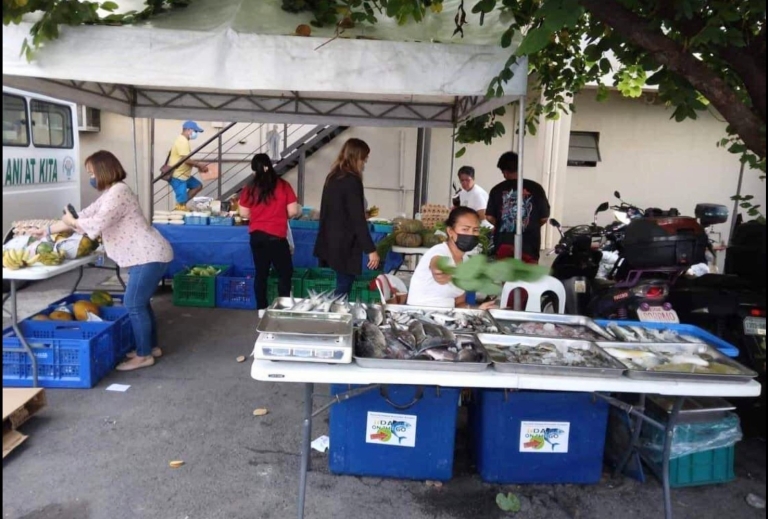
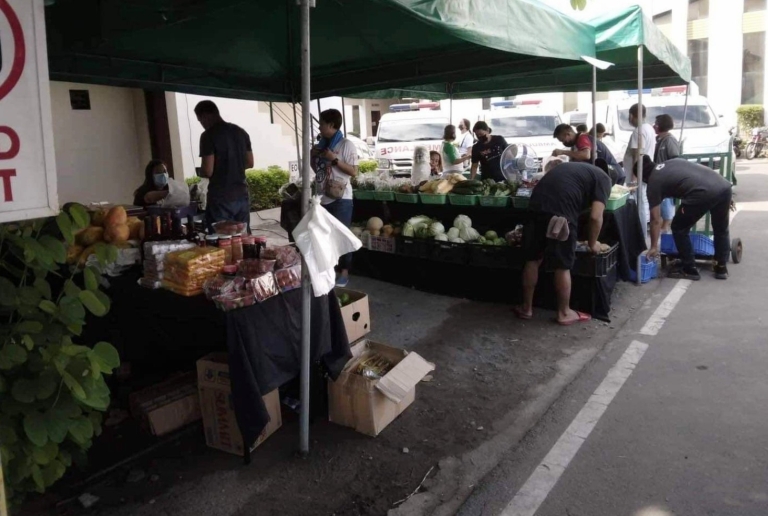
The Bangko Sentral ng Pilipinas (BSP) is calling for targeted anti-counterfeiting campaigns in shopping malls, supermarkets, and wet markets after these locations emerged as the main sources of fake banknotes and coins recovered last year.
Data from the 2024 BSP annual report published in June showed that counterfeits were “frequently recovered in areas with high foot traffic, such as shopping malls (27.2 percent), supermarkets (25.9 percent), and wet markets (20.9 percent).”
“This highlights the need for targeted anti-counterfeiting campaigns in these areas,” the report said.
According to the central bank report, the ₱1,000 paper banknote was the most counterfeited bill, accounting for 59.9 percent or the majority of documented counterfeits last year. The ₱500 paper banknote was the second-most counterfeited bill at 19.3 percent.
Notably, there were a very low number of cases of counterfeit ₱1,000 polymer banknotes. Recording only three “low-quality” counterfeits in 2024, the BSP noted that the three-year-old ₱1,000 polymer banknote has shown “resilience” against counterfeiting.
“These counterfeit polymer banknotes were printed on paper, with the transparent portions cut out and substituted with substandard plastic, making them easily detectable by the public,” the BSP said.
Fake coins also dropped significantly by 87.8 percent last year, noting that there were fewer than one fake coin for every one million real coins in circulation. Most counterfeit coins were leftovers from previous years, mostly five-peso coins from the BSP coin series.
The BSP attributed this substantial decline in counterfeited banknotes and coins to the “enhanced security features of the New Generation Currency (NGC), including the micro-printed details and laser-engraved designs.”
These added features made it more challenging for fraudsters to copy and reproduce the currencies, the BSP said.
Most counterfeiting involved inkjet printing, accounting for 79.7 percent of the recorded cases. Laser printing was next at 12.6 percent, while tampered security threads accounted for 7.6 percent.
When it comes to location, most fake currencies were found in Metro Manila, at 52.2 percent, followed by the provinces of Cavite, Laguna, Batangas, Rizal, and Quezon (collectively known as CALABARZON), at 12.2 percent.
Let me end this post by asking you readers: What is your reaction to this recent development? Do you think counterfeiting in the Philippines will get worse over the next twelve months? Do you think the local supermarket, wet market or shopping mall are hot spots of fake banknotes and coins? Who do you think is responsible for the rise of counterfeit money? Do you think the BSP’s research about counterfeiting is accurate?
You may answer in the comments below. If you prefer to answer privately, you may do so by sending me a direct message online.
+++++
Thank you for reading. If you find this article engaging, please click the like button below, share this article to others and also please consider making a donation to support my publishing. If you are looking for a copywriter to create content for your special project or business, check out my services and my portfolio. Feel free to contact me with a private message. Also please feel free to visit my Facebook page Author Carlo Carrasco and follow me on Twitter at @HavenorFantasy as well as on Tumblr at https://carlocarrasco.tumblr.com/ and on Instagram athttps://www.instagram.com/authorcarlocarrasco


 Author Carlo Carrasco