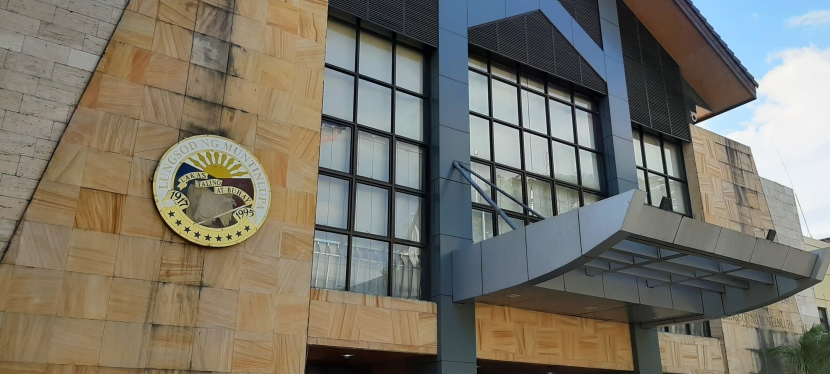
In connection to next month’s Barangay and Sangguniang Kabataan Elections (BSKE), the Commission on Elections (COMELEC) turned to operators of digital wallets and online banking and warned them about digital vote-buying, according to a Manila Times news report.
To put things in perspective, posted below is an excerpt from the Manila Times news report. Some parts in boldface…
THE Commission on Elections (Comelec) warned electronic wallet operators they could be involved in vote-buying cases if they allow candidates in the Barangay and Sangguniang Kabataan Elections (BSKE) to use their apps to buy votes.
Comelec Chairman George Garcia said over the weekend that the agency has already informed GCash, Maya and other companies involved in mobile payment services that they may face charges for conspiracy to commit vote-buying.
Garcia said they advised the companies to monitor high-volume transactions, especially in the days prior to election day.The companies were also told to be suspicious when money is sent to 50 to 200 people in one day.
“A red flag would be if someone sent a certain amount of money to a large number of recipients,” Garcia pointed out.
He said companies involved in digital wallets and online banking have vowed to support Comelec’s efforts against vote-buying.
The poll body intends to sign a memorandum of agreement with e-wallet companies, Garcia said.
Let me end this piece by asking you readers: What is your reaction to this recent development? Do you think the COMELEC did the right thing to ensure the credibility of the BSKE? Do you think this new move by the COMELEC will prevent vote-buying from happening?
GCash, a very popular electronic wallet (e-wallet) here in the Philippines, will soon be charging a fee of P5 each time a user cashes in (loading money into his or her GCash account) via the Bank of the Philippine Islands (BPI) or Union Bank of the Philippines, according to a business news story by the Philippine Star. For the newcomers reading this, GCash users can put money into their respective accounts in other ways such as doing it over-the-counter at recognized convenience stores, the cash-in kiosks and other types of businesses that accept GCash cash-in.
To put things in perspective, posted below is an excerpt from the Philippine Star business news report. Some parts in boldface…
E-wallet giant GCash will start charging a convenience fee of P5 for every time a user cashes in from its major partners Bank of the Philippine Islands (BPI) and Union Bank of the Philippines in the fourth quarter.
In an interview with reporters, GCash president and CEO Martha Sazon said the convenience fee remains to be one of the lowest compared to the transaction charges imposed by traditional banks that run as high as P25.
“As GCash continues to scale, we still subsidize most of the charges as well as heavily invest on upgrading our infrastructure and reinforcing security services,” Sazon said.
Sazon said GCash has to slap a convenience fee for cashing in to cover its rising costs. However, Sazon said the fee only reduces the subsidies that GCash pays to keep its financial services affordable.
“This also ensures that our operations will remain seamless for all customers. Even with this fee, we will continue to subsidize part of the operating cost for our cash-ins as we remain committed to keeping our services affordable to many Filipinos,” Sazon said.
Sazon is encouraging GCash customers to compute how much they have to spend for every time they load their accounts through BPI and Union Bank.
For instance, Sazon said a user can cash in P10,000 in one go rather than top up P500 in tranches to minimize getting charged P5 every time.
Users can add cash to their GCash platform by linking it into their bank accounts. Likewise, they can cash-in via convenience stores, dedicated machines, department stores, gas stations, sari-sari stores, among others.
Last week, GCash announced that it would waive for the rest of the year the transaction charges on merchants for payments accepted through QR Ph. The e-wallet leader expects that through this, micro, small and medium enterprises will book extra earnings from cashless transactions.
GCash offers merchants access to e-wallet with a limit of up to P500,000 per month, waiving the transaction fee of 1.5 percent for P100,000 in gross sales.
GCash is one of the largest finance apps in the Philippines with a nationwide presence in more than 1,600 billers.
Let me end this piece by asking you readers: What is your reaction to this recent development? If you are a GCash user who often loads money using the respective apps or systems of BPI and Union Bank, does the above business story discourage you a lot?
In the years to come and if no major disasters would happen, something new will be rising in the south of Metro Manila. I am talking about the ambitious Villar City project which has been making waves through the media, social media and in nearby communities in recent times. Recently the Manila Bulletin published an article about the planned casino project within Villar City but if you pay close attention to the details, there is a lot more about the said city which should give you an idea about the scope and vision behind it.
To put things in perspective, posted below is an excerpt from the Manila Bulletin article. Some parts in boldface…
Philippines’ richest Manuel B. Villar Jr. announced plans to put up a satellite casino in his newly-launched Villar City in addition to the one he is developing in the 80-hectare Global South integrated resort project.
Being his legacy project, Villar is carefully designing Villar City to be Metro Manila’s “new center of gravity” to ensure that it will be as iconic as it is massive.
The planned 3,500-hectare Villar City spans 15 cities: Taguig, Las Pinas, Paranaque, Muntinlupa, Bacoor, Dasmarinas, Imus, San Pedro, General Mariano Alvarez, Silang, General Trias, Tanza, Trece Martires, Carmona, and Tagaytay.
Villar City will be about 10 times as big as Bonifacio Global City, indicating its sheer magnitude not only in terms of the number of homes, offices and complexes that will be built within this vast community, but also with respect to its potential contribution to job generation and economic development.
Among the highlights of the city’s development will be his second casino project which will be a satellite of the $1 billion integrated casino and resort complex in Global South that is being developed with a Korean partner.
He noted that they have finalized discussions for the partnership with the Korean firm for the Global South project and the cost may likely exceed $1 billion because the land alone is already worth that much.
The first casino will also have a hotel component while Villar said he is converting the upper two floors of the mall there in a casino for high-rollers and VIPs. At 80-hectares, it will be bigger than any of the casinos at the PAGCOR Entertainment City in Parañaque.
Meanwhile, Villar said the satellite casino in Villar City will be bigger but he is not yet sure if it will be developed with the same Korean firm noting that, “It will depend on how well our partnership (in Global South) progresses.”
Aside from the casino, another highlight of Villar City will be a theme park which Villar plans to integrate with the mall that will be built there.
He said they will develop their own concept for the theme park and will not be getting a license or franchise from a foreign theme park operator.
“Part of the them park will be inside the mall so that there will be plenty of things to do in case it rains or when it is too hot outside. So part of the theme park will be indoors and both the theme park and mall will complement each other,” Villar said.
Villar also said he plans to donate a piece of land in Villar City to the University of the Philippines, his alma mater, to build a college focused on technology noting that, located at the city’s entrance is La Salle Dasmariñas.
Let me end this piece by asking you readers: What is your reaction to this development? Do you think Villar City will create a lot of new jobs related to construction and service in connection with its very ambitious scope? Do you think that south of Metro Manila will be receptive to new casinos and theme parks in the future?
For more South Metro Manila community news and developments, come back here soon. Also say NO to fake news, NO to irresponsible journalism, NO to misinformation, NO to plagiarists, NO to reckless publishers and NO to sinister propaganda when it comes to news and developments. For South Metro Manila community developments, member engagements, commerce and other relevant updates, join the growing South Metro Manila Facebook group at https://www.facebook.com/groups/342183059992673
In relation with their campaign against the buying and selling of votes, the Commission on Elections (COMELEC) announced that it seeks to impose a ban on money (“money ban”), according to a news article by the Philippine News Agency (PNA). This is related with the upcoming Barangay and Sangguniang Kabataan Elections (BSKE) which is scheduled to happen on late October. The election body previously announced its plan to allow warrantless arrests in response to vote buying and selling.
To put things in perspective, posted below is an excerpt from the Philippine News Agency news report. Some parts in boldface…
The Commission on Elections (Comelec) is eyeing to impose a “money ban” to combat vote buying and selling during the Barangay and Sangguniang Kabataan Elections (BSKE) on Oct. 30.
In an interview Tuesday, Comelec Chairperson George Erwin Garcia said under Section 27 of the draft of Kontra Bigay resolution, the poll body may presume vote buying or selling through one’s “possession or transport” of cash exceeding PHP500,000 five days before the election day.
“Hindi natin pipigilan ang pagwi-withdraw ng mahigit PHP500,000. Ang atin pong ipo-prohibit at ipa-punish ay yung pagpapadala ng PHP500,000 lalo na kapag pumasok yung period ng kampanya (We will not prohibit withdrawal of PHP500,000. What we will prohibit and punish are those sending PHP500,000 especially when the campaign period starts),” he said.
However, Garcia said individuals with justifiable backgrounds shall be exempted, including businessmen and disbursement officers or cashiers, among others.
“Saan ka naman nakakita may dala kang kalahating milyon isang araw bago mag election tapos ni hindi ka treasurer, ni hindi ka negosyante? Ano ka, tagapamili ng boto? So ipe-presume namin yung mga taong yan involved sa vote buying (Where can you see someone carrying half a million [pesos] before the election day and you’re not a treasurer nor a businessman? What [kind of worker] are you, a vote buyer? So, we will presume that person is involved in vote buying),” he said.
All police authorities are tasked to conduct 24-hour money ban checkpoints nationwide.
Garcia said although these measures are not under the law, setting such is also not prohibited.
Garcia said the Comelec has submitted the draft of Kontra Bigay resolution to en banc for approval of the proposed money ban and other measures, and setting of guidelines.
Besides transporting or delivering large sums of money, Comelec also aims to monitor the splitting of at least PHP20,000 cash into smaller denominations of PHP100s, PHP50s or PHP20s.
It also targets to cooperate with mobile banking and digital payment platforms to ensure they are not used for vote buying or selling.
“Ang GCash, PayMaya at iba pa pong platform ay under ng BSP (Bangko Sentral ng Pilipinas). Kausap natin ang BSP at pati na ang AMLC (Anti-Money Laundering Council) (The Gcash, PayMaya and other platforms are under BSP. We are coordinating with the BSP and AMLC),” Garcia said.
Under the Comelec draft resolution, long queues of registered voters for distribution of cash or other favors shall also be subject to the action of law enforcement.
Let me end this piece by asking you readers: What is your reaction to this recent development? Do you think the COMELEC’s planned “money ban” is unrealistic or doable? What do you think the COMELEC should do to effectively fight vote buying-selling?
To put things in perspective, posted below is an excerpt from the GMA news report. Some parts in boldface…
The Philippine economy continued its downtrend as it grew at a slower pace in the second quarter of 2023 — its slowest pace in nine quarters since the country entered the positive territory in the middle of 2021 following a pandemic-induced recession— amid high inflation that tempered consumption during the period, the Philippine Statistics Authority (PSA) reported on Thursday.
The economy, as measured by gross domestic product (GDP) or the total value of goods and services produced in a specific period, grew by 4.3% during the April to June 2023 period, PSA chief and National Statistician Claire Dennis Mapa said at a press conference.
This is slower than the 6.4% growth rate seen in the first quarter of the year and far slower than the 7.5% GDP growth seen in the same quarter last year. Quarter-on-quarter, it posted a decline of -0.9% during the period.
This also marks the fifth straight quarter of deceleration for the country’s GDP, and its slowest footing in nine quarters since it exited the pandemic-induced recession in the second quarter of 2021.
The economy was pulled out of recession in the April to June period of 2021 with a GDP growth rate of 12%.
The second quarter print brought the year-to-date economic growth rate at 5.3%, according to Mapa.
To achieve the government’s 6% to 7% target, National Economic and Development Authority (NEDA) Secretary Arsenio Balisacan said the economy “needs to grow by 6.6% in the second half.”
“Notwithstanding the challenges, we believe this is still attainable,” Balisacan said, reading the joint statement of the economic team.
The country’s chief economist earlier floated that the second quarter GDP growth is expected to “further moderate.”
High inflation, interest rates – The slower growth came amid a still high inflation environment and the consequential costly interest rates to temper rising prices.
As of the first half of the year, inflation or the rate of increase in the prices of goods and services clocked in at 7.2%, still far above the government’s comfortable ceiling of 2% to 4%.
To tame inflation, the Bangko Sentral ng Pilipinas (BSP) raised monetary policy rates by a cumulative 425 basis points since May last year.
“For the second quarter, the moderate economic expansion was driven by increases in tourism-related spending and commercial investments, but was tempered by high commodity prices, the lagged effects of interest rate hikes, the contraction in government spending, and slower global economic growth,” Balisacan said.
Notably, Household Final Consumption Expenditure (HFCE) contracted by 0.1% quarter-on-quarter.Likewise, Agriculture, Forestry, and Fishing posted a quarter-on-quarter decline of -0.97% in the second quarter.Industry and Services sectors also saw contractions of 0.7% and 1.02%, respectively, during the period
Let me end this piece by asking you readers: What is your reaction to this recent development? What do you think must be achieved to boost economic growth for the rest of 2023? Do you think the Philippine economy will achieve growth of at least 6% by the end of this year?
Recently in Las Piñas City, a maid got arrested by the local police for allegedly stealing her superior’s cash and jewelry in the home, according to a Philippine Daily Inquirer (PDI) news report.
To put things in perspective, posted below is the excerpt from the Inquirer news report. Some parts in boldface…
A house help was arrested in Las Piñas City after her boss discovered that she had stolen millions worth of cash, pieces of jewelry, and a watch, the police said on Thursday.
According to the Southern Police District (SPD), Las Piñas City Police Station personnel identified and apprehended suspect Rosanna Salvadora at her employer’s residence along Versailles Alabang Daang Hari, Almanza Dos last August 1.
Based on SPD’s report, the employer found that her safe went missing on the same day after coming home from work. The victim immediately turned to Salvadora and asked about the vault, who then pointed to the kitchen.
When the complainant found her safe, it was already forcefully opened and empty. Police said missing items include P1.5 million worth of cash, P1 million worth of watch, and P2.1 million worth of jewelry.
The employer immediately sought the assistance of the police, who immediately arrested the suspect.
Let me end this piece by asking you readers: If you are a resident of Las Piñas City, what is your reaction to this development? Do you think the suspect acted all alone over the theft of her superior’s cash and valuables?
For more South Metro Manila community news and developments, come back here soon. Also say NO to fake news, NO to irresponsible journalism, NO to misinformation, NO to plagiarists, NO to reckless publishers and NO to sinister propaganda when it comes to news and developments. For South Metro Manila community developments, member engagements, commerce and other relevant updates, join the growing South Metro Manila Facebook group at https://www.facebook.com/groups/342183059992673
Just days after signing into law the Maharlika Investment Fund (MIF), President Ferdinand “Bongbong” Marcos, Jr., stressed during his 2nd State of the Nation Address (SONA) that the new law will finance the high-priority infrastructure projects of the Philippines, according to a Philippine News Agency (PNA) news article.
To put things in perspective, posted below is an excerpt from the PNA news article. Some parts in boldface…
President Ferdinand R. Marcos Jr. on Monday said the newly established Maharlika Investment Fund (MIF) would be used to fund high-priority projects.
“For strategic financing, some of the nation’s high-priority projects can now look to the newly established Maharlika Investment Fund, without the added debt burden,” Marcos said in his second State of the Nation Address (SONA).
The MIF is the Philippines’ first-ever sovereign wealth fund designed to catalyze economic development by mobilizing government financial assets.
“In pooling a small fraction of the considerable but underutilized government funds, the Maharlika Fund shall be used to make high-impact and profitable investments, such as the ‘Build Better More’ program,” Marcos said.
He said the gains from the Fund shall be reinvested into the country’s economic well-being.
To ensure sound financial management, Marcos assured that a group of internationally recognized economic managers shall oversee the operations of the Fund, guided by principles of transparency and accountability.
“This guarantees that investment decisions will be based on financial considerations alone, absent any political influence,” Marcos said.
“The funds for the social security and public health insurance of our people shall remain intact and separate.”
The Department of Finance (DOF) earlier said the Fund can look into big-ticket infrastructure such as in green and blue projects, countryside development, and other employment-generating projects.
For the newcomers reading this, if you want to understand what a sovereign wealth fund is and how it would work with the Philippines in mind, watch the video below…
Let me end this piece by asking you readers: What is your reaction to this recent development? Were you able to watch President Marcos’ 2nd SONA?
A new economic age for the Philippines has started as President Ferdinand “Bongbong” Marcos, Jr., signed into law the Maharlika Investment Fund (MIF) bill which formally establishes the nation’s sovereign wealth fund, according to a Philippine News Agency (PNA) report.
To put things in perspective, posted below is an excerpt from the PNA news article. Some parts in boldface…
President Ferdinand R. Marcos Jr. on Tuesday signed into law a bill establishing the Maharlika Investment Fund (MIF), the Philippines’ first-ever sovereign wealth fund.
Marcos signed Republic Act (RA) 11954 in a ceremony at the Kalayaan Hall of Malacañan Palace in Manila.
In a keynote speech, Marcos said the MIF is designed to drive economic development in the country.
“The MIF is a bold step towards our country’s meaningful economic transformation. Just as we are recovering from the adverse effects of the pandemic, we are now ready to enter a new age of sustainable progress, robust stability and broad-based empowerment,” Marcos said.
“We now have an available fund that will provide us the seed money for investments and to attract other foreign investments and for us to be able to participate in those operations, in those investments without additional borrowings,” he added.
Following the signing of RA 11954, Marcos said his administration would “go out to the world and do the changes that are necessary for the Philippines to become an investment-friendly nation.”
“The fund will fail if we do not make money on the fund. It’s that simple… That is why we put up a Maharlika Fund so as to be able to give us the capacity and the ability to join in those investments, be part of that,” he said.
He reiterated that he would make sure that the MIF would be “well-run” by professionals.
He added that the country has the “best” economic managers both in government and the private sector to ensure the proper management of the MIF.
“Let us make sure that the decisions that are being made for the fund are not political decisions, that they are financial decisions because that is what the fund is,” Marcos said.
The MIF is established to optimize national funds by generating returns to support the Marcos administration’s economic goals laid out in the Medium-Term Fiscal Framework, the 8-point Socioeconomic Agenda, and the Philippine Development Plan 2023-2028.
In a separate statement, Budget Secretary Amenah Pangandaman said the Department of Budget and Management (DBM) will continue to provide support and technical assistance in the formulation of the implementing rules and regulations of RA 11954.
“The creation of this development fund is very good news because this means we now have an opportunity to expand our fiscal space for the government’s priority programs,” Pangandaman said. “Of course, we fully support this as it will help expand our fiscal space. So we at the DBM remain committed to helping ensure that this development fund will be a success and implemented with utmost integrity.”
Under RA 11954 , the MIF will be used to invest in a wide range of assets, including foreign currencies, fixed-income instruments, domestic and foreign corporate bonds, joint ventures, mergers and acquisitions, real estate and high-impact infrastructure projects that contribute to the attainment of sustainable development.
The establishment of the MIF will provide the government with a long-term source of income, as well as ease the burden on the national budget by providing additional funding for other priority projects of the government.
Unlike other government-owned or -controlled corporations (GOCCs), the MIF will be able to maximize government assets through its investments in projects that generate bigger returns.
The proposed measure seeks the establishment of the Maharlika Investment Corp. (MIC), which will act as the “sole vehicle for the purpose of mobilizing and utilizing the MIF for investments in transactions in order to generate optimal returns on investments (ROIs).”
The MIC is expected to have at least PHP75 billion in paid-up capital this year, with PHP50 billion sourced from the Land Bank of the Philippines and PHP25 billion from the Development Bank of the Philippines.
The law prohibits government agencies and GOCCs that provide for social security and public health insurance to contribute to and invest in the Fund.
These include the Social Security System, Government Service Insurance System, Philippine Health Insurance Corporation, Home Development Mutual Fund, Overseas Workers Welfare Administration, and Philippine Veterans Affairs Office pension fund.
For the newcomers reading this, if you want to understand what a sovereign wealth fund is and how it would work with the Philippines in mind, watch the video below…
Let me end this piece by asking you readers: What is your reaction to this recent development? What do you think about the Maharlika Investment Fund that is now officially a law? Do you expect financial or economic breakthroughs to happen for the Philippines soon?
Recently in the progressive City of Muntinlupa, two women got arrested by police officers at the lobby of a certain hotel in Filinvest City in Alabang for allegedly swindling a local businesswoman, according to a Manila Bulletin news report. As of this writing, the money has yet to be recovered while the third suspect remains at large.
To put things in perspective, posted below is the excerpt from the Manila Bulletin news report. Some parts in boldface…
Two women were arrested by the police for allegedly swindling a businesswoman of P2.52 million in house rental fees in Muntinlupa.
The suspects, Christine Rose Almoete, 35, and Maria Teresa Loria, 40, were arrested by the Muntinlupa police on July 6 at a hotel lobby in Filinvest City, Barangay Alabang. Another suspect, Ricky Morales, remains at large and is being pursued by authorities.
The two were arrested based on a complaint by businesswoman Diane Grace Sy-Alvarado, 40 years, of Ayala Alabang Village.
According to the police, Sy-Alvarado had been in contact with Loria, who acted as her broker to the house she is presently renting on Batulao Street in Ayala Alabang Village.
Sy-Alvarado decided to transfer to another house also in the same village and asked for Loria’s help. Loria introduced Almoete to the complainant who offered a property allegedly owned by a certain Manuel Palaganas.
They agreed on a monthly rent of ₱180,000. To secure the contract, the complainant was instructed to provide a one-year security deposit amounting to P1,360,000 and a one-year advance payment of P1,160,000.
Sy-Alvarado gave cash amounting to P1.36 million and a bank check worth P1.16 million to the suspects’ colleague, Morales, for a total of P2.52 million.
But when she visited the property on Sarangani Street in Ayala Alabang Village, it turned out that the house was not available for rent.
She asked for help from the village security, which swiftly conducted a follow-up operation leading to the arrest of the suspects.
The transaction between the complainant and the suspects was witnessed by the complainant’s personal assistant, Rannie Pagdanganan.
The arresting officers, Emerson Acusar and Ernesto Obusan, from Bulldog Security Agency, carried out the operation with personnel from the Muntinlupa Police Sub-Station 5 (Ayala Alabang).
The P1.36 million cash and the bank check amounting to P1.16 million were not recovered.
Let me end this piece by asking you readers: If you are a Muntinlupa City resident, what is your reaction to this development? Are you concerned that there could still be a lot of swindlers out there? Has anyone in your local community been swindled over the past twelve months within the city?
For more South Metro Manila community news and developments, come back here soon. Also say NO to fake news, NO to irresponsible journalism, NO to misinformation, NO to plagiarists, NO to reckless publishers and NO to sinister propaganda when it comes to news and developments. For South Metro Manila community developments, member engagements, commerce and other relevant updates, join the growing South Metro Manila Facebook group at https://www.facebook.com/groups/342183059992673
Recently in the progressive City of Muntinlupa, the City Government officially raised the cash incentives for its local athletes who are able to win medals in varied local and international competitions, according to a Manila Bulletin news report.
To put things in perspective, posted below is the excerpt from the Manila Bulletin news report. Some parts in boldface…
The Muntinlupa City government increased the cash incentives to athletes winning in international and local competitions including the Olympics, and Asian and SEA Games.
Mayor Ruffy Biazon signed Ordinance 2023-091, passed by the Muntinlupa City Council, giving incentives and rewards to athletes bagging gold, silver and bronze medals in international, national, regional and local competitions.
The ordinance covers athletes and coaches representing Muntinlupa who win in contests sanctioned by the Philippine Sports Commission (PSC), Philippine Olympic Committee (POC), International Olympic Committee (IOC), National Association (NSA) and the city government.
It also applies to athletes and coaches who are residents of Muntinlupa and are part of the sports development program of the city, and winning athletes who represent the country who have lived in Muntinlupa for at least a year.
“Our city is definitely proud of Muntinlupeños excelling in sports. It is but fitting that we reward their hard work and support their continuous pursuit of excellence,” said Biazon.
The new local law amended Ordinance 18-299 approved in 2018, which gave cash incentives to winning athletes and their coaches.
Under the new ordinance, Olympians winning gold, silver and bronze medals will get P750,000, P500,000 and P250,000, respectively.
Let me end this piece by asking you readers: If you are a Muntinlupa City resident, what is your reaction to this development? Do you think that the higher cash incentives would inspire more locals to engage in sports events and win?
For more South Metro Manila community news and developments, come back here soon. Also say NO to fake news, NO to irresponsible journalism, NO to misinformation, NO to plagiarists, NO to reckless publishers and NO to sinister propaganda when it comes to news and developments. For South Metro Manila community developments, member engagements, commerce and other relevant updates, join the growing South Metro Manila Facebook group at https://www.facebook.com/groups/342183059992673