I Love Israel: Thank you Israel for sharing your COVID-19 expertise to help the Philippines improve its ways

We Filipinos should be thankful to the State of Israel as their health experts shared their expertise to the national and local authorities about handling COVID-19 since they arrived here in the Philippines. They also visited and inspected vaccination hubs.

To put things in perspective, posted below is an excerpt from the most recent Philippine News Agency (PNA) article. Some parts in boldface…

Visiting Israeli health experts shared best practices in managing their country’s cold chain and logistics systems during a meeting held here with Covid-19 task force officials, members of the medical community and private sector representatives on Tuesday.

Considering the archipelagic composition of the Philippines, the health experts advised their Filipino counterparts to create centralized vaccine storage hubs that will cater to both urbanized and far-flung areas in the country.

“The Philippines needs more hubs since it is an archipelago. You should go for creating centralized hubs for Pfizer vaccines based on the ability to reach a certain population, and possibly with a customized approach in more remote areas,” said Adam Segal, logistics and operations manager of Salomon Levid & Elstein Ltd.

Centralized hubs for vaccine storage will work with metropolitan areas, with a dedicated approach in remote areas,” Segal added.

He said the Israeli Ministry of Health has also developed a smaller packaging for their vaccines. He explained that the vaccines are more secure and less prone to shaking with the smaller packaging they use.

Health Undersecretary Myrna Cabotaje requested the Israeli team to provide samples of their vials so that it will be easier for the Philippines to reproduce them.

Efficient data management

The effective management of Covid-19 data was also among the main topics covered during the learning session held between Covid-19 task force members and Israeli health experts.

Officials from the Department of Information and Communications Technology (DICT) led the discussions on the current strategy of the Philippines in managing its vaccine deployment data.

The three-member Israeli delegation explained how they developed and managed their vaccination data system.

According to Dafna Segol, the Israeli government uses a data-based approach when making decisions related to its vaccination program.

One key feature of the Israeli vaccine information system is its use of a “traffic light” model. Through this approach, Israeli authorities are able to identify cities or areas that warrant immediate action.

“It allows us to focus on cities that need more attention,” Segol added.

Data warehouse

DICT’s Christian Edmond Chua said the agency established a data warehouse to capture information related to the vaccine supply chain and then process them to make crucial day-to-day decisions.

Chua noted that the local government units’ lack of resources remains the biggest challenge for data management in the vaccination program.

To address this situation, he said the DICT has designated LGUs as the “data owner” of their vaccination records.

This means the LGUs are accountable for submitting accurate information based on their vaccination records.

“In terms of the development of the technologies and tools to help in the submission (of vaccine data), we are adopting a low tech and low internet process,” Chua said.

The National Task Force Against Covid-19 has also developed an application that will ensure transparency and accountability in submitting data to the National Vaccination Operations Center.

“We monitor not only the performance of the LGUs but it is also helpful in providing feedback for the public policy health experts in calibrating our vaccination program,” Chua said.

The Covid-19 task force officials thanked the delegation for sharing their insights on how the Philippine government can further enhance its data management system.

“We look forward to applying the same lessons we have learned into our own practices in the Philippines,” DICT Director Amelia Dean said.

Lessons learned

Meanwhile, Health Undersecretary Ma. Carolina Vidal-Taiño noted that the meeting with the Israeli health experts would help the government further improve the implementation of its vaccine rollout.

“As we prepare for the arrival of the 40-million vaccines from Pfizer, the sharing of best practices and strategies from our Israeli partners will be a learning opportunity that we can adopt in our practice,” Vidal-Taiño said.

“We will consider the four success factors of Israel on vaccine distribution. First, the availability of trained human resources and the availability of infrastructure. Second, the small batch packaging, which we are very interested in. Third, the high usage rate and minimal waste. And lastly, the adequate preparation for the storage capacity and the outstanding cold chain distribution,” she said.

“We have to strictly follow the safe handling of the vaccines,” said NTF Against Covid-19 chief implementer and vaccine czar Sec. Carlito Galvez during the discussions.

As you can see in the details above, the Philippines is very fortunate to learn from Israel’s health experts. As the Philippines has a population of over 100 million and an archipelago with lots of cities, towns and small communities scattered throughout, dealing with COVID-19 and getting people tested or vaccinated will always be a tremendous challenge. Israel’s success in handling COVID-19 and normalizing the lives of many people make a good starting point that leaders here in the Philippines – from the national government down to the provincial governments, the local governments, the barangays and to the homeowner’s associations – can learn from and be able to make adjustments. There are certain factors about the COVID-19 problem that the Philippines does not share with Israel, but new ways can made to improve the local COVID-19 programs now that the Israeli health experts shared their views and strategies to their local counterparts.

Watch this informative video about Israel’s handling of the COVID-19 crisis.

Even though major breakthroughs in the Philippines’ effort on solving the pandemic-related problems and getting everyone vaccinated have yet to be realized, we Filipinos should be grateful to the State of Israel and give back by supporting them in more ways than one. We should also strengthen Israel-Philippine relations! Remember that Israel helped us and they committed with advising and improving the local COVID-19 efforts and processes. Iran did NOT help the Philippines. The Palestine Liberation Organization (PLO) did NOT help the Philippines. Black Lives Matter cares NOTHING about the Philippines. The Democratic Socialists and SJWs overseas DO NOT really care about people here in the Philippines. Israel cared for us Filipinos.

Before ending this article, posted below is a holy scripture…

Pray and seek for Jerusalem’s peace,

for all who love her will prosper!

Psalm 122:6 (TPT)

If you truly believe in Lord Jesus, the Holy Spirit and God the Heavenly Father wholeheartedly and you continue to be faithful (not religious), you should be aware that Christians are meant to stand united with Israel, love the Jewish people and pray for the peace of Jerusalem. You can do your part supporting Israel by donating to Christians United for Israel (CUFI). Do not forget to read the Holy Bible, then pray in tongues to the Lord in the privacy of your room with the door shut.

Always be the fearless and aggressive church of Lord Jesus! Always stand in support of Israel!

+++++

Thank you for reading. If you find this article engaging, please click the like button below and also please consider sharing this article to others. If you are looking for a copywriter to create content for your special project or business, check out my services and my portfolio. Feel free to contact me as well. Also please feel free to visit my Facebook page Author Carlo Carrasco and follow me at HavenorFantasy@twitter.com

For more South Metro Manila community news and developments, come back here soon. Also say NO to fake news, NO to irresponsible journalism, NO to misinformation, NO to plagiarists, NO to reckless publishers and NO to sinister propaganda when it comes to news and developments. For South Metro Manila community developments, member engagements, commerce and other relevant updates, join the growing South Metro Manila Facebook group at https://www.facebook.com/groups/342183059992673

COVID-19 Crisis: 40 million doses of Pfizer vaccine coming to the Philippines

As the nationwide count of COVID-19 vaccine jabs surpassed 8,000,000, a staggering supply of 40,000,000 vaccine doses from Pfizer will come into the country within this year. This is the result of a signed agreement between Pfizer and National Task Force against Covid-19 chief implementer Secretary Carlito Galvez, Jr. according to an article published by the Philippine News Agency (PNA) yesterday.

To put things into perspective, posted below is an excerpt from PNA’s article. Some parts in boldface…

The Philippine government has made the biggest vaccine procurement for 2021 with the signing of a supply agreement for 40 million doses of Pfizer-BioNTech vaccines.

This was announced by the National Task Force against Covid-19 chief implementer Secretary Carlito Galvez Jr. on Sunday.

“We are very happy to report that the government and the management of Pfizer have finally concluded our negotiations. (Health) Secretary (Francisco) Duque and I signed yesterday (Saturday) the supply agreement for the biggest and most decisive deal we had for 2021,” Galvez said.

“I would like to thank my colleagues from the Philippine vaccine negotiating team from the Department of Finance and our multilateral partner for tirelessly working to secure these much-needed shots that will benefit 20 million Filipinos,” he added

The vaccine czar said the deliveries of 40 million doses of Pfizer-BioNTech vaccines will begin “after eight weeks starting August”, to be delivered in bulk.

“The vaccine demand has begun to ease up for many big and rich countries, as most of them have already acquired more than enough vaccines for their population and have vaccinated many of their citizens. This has allowed the manufacturer to commit to us that deliveries, though still to be made in tranches, will be in bulk,” he pointed out.

The procurement of the 40 million vaccine doses will be financed through a multilateral arrangement with the Asian Development Bank (ADB).

Galvez explained that loan funds from multilateral partners such as the ADB follows a direct disbursement scheme wherein payments are paid directly by the fund manager to the vaccine manufacturer.

“Through this scheme, the Filipino people can be assured that our transactions on vaccine procurement will be transparent, as the funds will not pass through the hands of any government official or agency,” he emphasized.

With the latest supply agreement, the Philippines has now secured the delivery of 113 million doses from five manufacturers namely, Sinovac with 26 million doses, Sputnik V with 10 million doses, 20 million doses from Moderna, 17 million doses from AstraZeneca, and 40 million doses from Pfizer.

The COVAX Facility has also committed to deliver a total of 44 million doses this year, bringing to 157 million doses the total number of doses secured by the Philippines.

Mathematically and theoretically, 40 million Pfizer doses can be used to vaccinate 20 million first-timers and provide for each and every one of them the 2nd dose. How exactly will those future vaccines from Pfizer will be distributed to the local citizens has yet to be determined as of this writing.

It should be noted that recently, the City Government of Muntinlupa announced a reduction of capacity for vaccinating patients per site due to tight supply of vaccines. Over in the City of Las Piñas, an incentive program designed to encourage locals to get vaccinated was launched and in recent times the number of citizens vaccinated grew tremendously. Ultimately the supply of COVID-19 vaccines for the Philippines remains a sensitive issue.

This is not the first time Pfizer vaccines became available here in the Philippines. Take a look back at the Pfizer launch in Parañaque City.

Let me end this piece by asking you readers: Does the newly signed agreement of securing 40 million vaccines from Pfizer encourage you to get registered and join the line to get vaccinated? Are you very choosy when it comes to the different brands of vaccines? Why?

You may answer in the comments below. If you prefer to answer privately, you may do so by sending me a direct message online.

+++++

Thank you for reading. If you find this article engaging, please click the like button below and also please consider sharing this article to others. If you are looking for a copywriter to create content for your special project or business, check out my services and my portfolio. Feel free to contact me as well. Also please feel free to visit my Facebook page Author Carlo Carrasco and follow me at HavenorFantasy@twitter.com

For more South Metro Manila community news and developments, come back here soon. Also say NO to fake news, NO to irresponsible journalism, NO to misinformation, NO to plagiarists, NO to reckless publishers and NO to sinister propaganda when it comes to news and developments. For South Metro Manila community developments, member engagements, commerce and other relevant updates, join the growing South Metro Manila Facebook group at https://www.facebook.com/groups/342183059992673

COVID-19 Crisis: Vaccination of senior citizens in Las Piñas City has begun

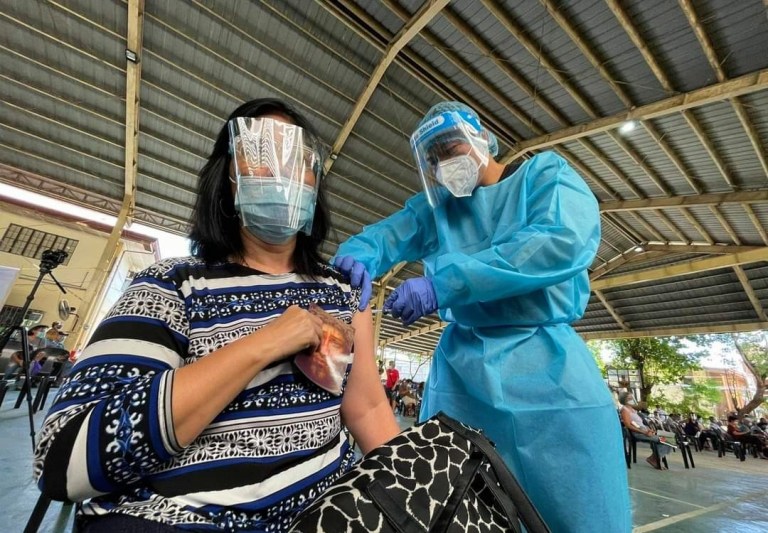
The City Government of Las Piñas announced that the vaccination of senior citizens for COVID-19 (China Virus) in their city has officially started on April 1, 2021 using vaccines sourced from AztraZeneca. They stated that they targeted 300 senior citizens to get injected at the vaccination sites at Verdant Covered Court, Bambusteum Cover Court and Almanza Dos Covered Court.

A senior citizen got injected for the China virus on April 1, 2021. (source – City Government of Las Piñas)
Senior citizens sit in line to wait for their turns to get verified before getting vaccinated. (source – City Government of Las Piñas)
Another senior citizen gets vaccinated for COVID-19. (source – City Government of Las Piñas)

The local authorities also stated that over the next few days, the vaccination of more senior citizens will continue. Local seniors are advised to wait for a text message to arrive which will show them their specific schedule for getting vaccinated.

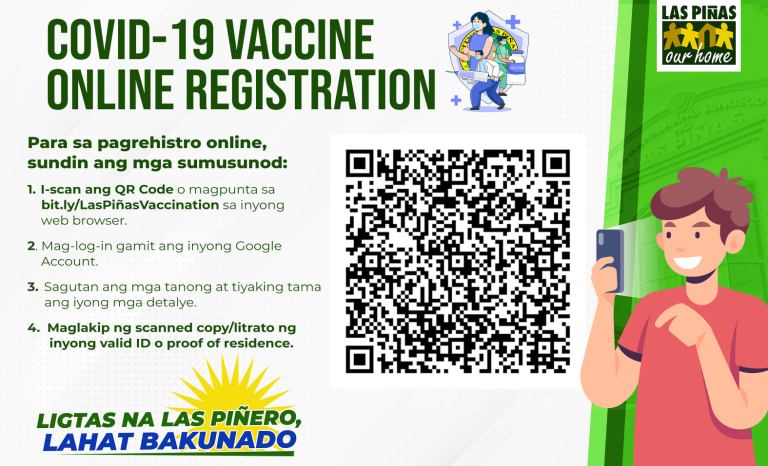
Meanwhile, local citizens who wish to avail of COVID-19 vaccines are encouraged to get themselves registered with the City Government by means of digital method (QR code scanning, Google account to be used) or the manual method. For reference about Las Piñas vaccine registration, posted below are official images of instruction.

If you are a recipient of a COVID-19 vaccine in Las Piñas City and you wish to share to us your observations or complaints, please feel free to comment below. Thank you!

+++++

The above information was provided by the Las Piñas City Government for the purpose of public information and transparency. Some parts were edited for this website.

Thank you for reading. If you find this article engaging, please click the like button below and also please consider sharing this article to others. If you are looking for a copywriter to create content for your special project or business, check out my services and my portfolio. Feel free to contact me as well. Also please feel free to visit my Facebook page Author Carlo Carrasco and follow me at HavenorFantasy@twitter.com

For more South Metro Manila community news and developments, come back here soon. Also say NO to fake news, NO to irresponsible journalism, NO to misinformation, NO to plagiarists, NO to reckless publishers and NO to sinister propaganda when it comes to news and developments. For South Metro Manila community developments, member engagements, commerce and other relevant updates, join the growing South Metro Manila Facebook group at https://www.facebook.com/groups/342183059992673

Majority of Metro Manila Mayors support shift to MGCQ status by March 1, 2021

President Rodrigo Duterte will have a big decision to make that will affect millions of residents and businesses in Metro Manila as a majority of the mayors voted to shift the metropolis from general community quarantine (GCQ) to modified general community quarantine (MGCQ) status by March 1, 2021, as based on a news release on Philippine News Agency (PNA) that got published just last night.

Here’s an excerpt from the PNA report:

The Metro Manila Council (MMC), composed of Metro Manila mayors and national government officials, has voted to support the proposed shift to the less restrictive modified general community quarantine (MGCQ) in Metro Manila.

“Ang karamihan po ng alkalde ng kalakhang maynila ay bumoto na MGCQ na po ang magiging posisyon nila pagdating sa Metro Manila (Most of the mayors in Metro Manila voted for having MGCQ as their position in Metro Manila),” Metropolitan Manila Development Authority (MMDA) chairman Benjamin “Benhur” Abalos Jr. said in a press conference on Thursday.

This, he said, will be sent to the Inter-Agency Task Force for the Management of Emerging Infectious Diseases (IATF-EID) and to President Rodrigo R. Duterte who will make the final decision on whether to implement eased quarantine restrictions by March 1.

He declined to provide the actual number of votes the proposal received but said that all Metro Manila mayors will support the decision.

Indeed, Abalos did not reveal the number of Yes and No votes but the Manila Bulletin reported that the score among Metro Manila mayors was 9-8 in favor of MGCQ.

To put things in perspective, Metro Manila still has yet to adjust to MGCQ status. Metro Manila is the hot spot of multiple cities where a lot of residents as well as business entities of varied sizes are located at. Right now, the nation needs a major boost to its economy even as there is still the need to be vigilant to avoid new COVID-19 infections. Lots of people in the metropolis remain unemployed and badly need income, and having Metro Manila shift to MGCQ status will help revive other businesses and pave the way for more people to get back to work.

It would be nice to see the Metro Manila Council research more and observe closely how other cities and provinces are doing while maintaining MGCQ statuses for months already.

On a grander scale, the Department of Trade and Industry (DTI) supports the recommendation to have the entire nation placed under MGCQ status by March. The said recommendation was made by Acting Socioeconomic Planning Secretary Karl Kendrick Chua in recent times. Below is an excerpt from the PNA report:

“It is about time we move to MGCQ after a year of lockdown,” Lopez told reporters in a Viber message Tuesday. “Lockdown was supposed to buy us time to prepare our health system and improve contact tracing and ‘Trace-Test-Treat’.”

Since June 2020, the National Capital Region (NCR) has not graduated from GCQ status, a stricter community quarantine measure than MGCQ.

It even went back to much stricter modified enhanced community quarantine (MECQ) from Aug. 4 to 18 last year as health care facilities in Metro Manila were overwhelmed due to the increasing number of Covid-19 cases during that period.

“As the Philippines recovers, Metro Manila has a very weak recovery, worse in employment and hunger recovery, and that means more urban poor. The damages to malnutrition and other health and social issues will be irreversible,” Lopez said.

NCR accounted for around 40 percent of the Philippine gross domestic product (GDP).

But Lopez added the reopening of more economic activities should depend on the Covid-19 statistics.

As pointed out by Trade secretary Lopez, Metro Manila is lagging behind in terms of recovery from the pandemic. Apart from joblessness and lack of income, poverty in the National Capital Region is an important problem to solve. The more people fall under poverty, the more local government units (LGUs) need to exert and spend their limited resources to support them.

Right now, the Metro Manila Council’s approval of shifting to MGCQ status will soon be dealt with by the Inter-Agency Task Force for the Management of Emerging Infectious Diseases (IATF-EID) and President Duterte.

In ending this, here are some videos about combatting the China virus.

+++++

For more South Metro Manila community news and developments, come back here soon. Also say NO to fake news, NO to irresponsible journalism, NO to misinformation, NO to plagiarists, NO to reckless publishers and NO to sinister propaganda when it comes to news and developments. For South Metro Manila community developments, member engagements, commerce and other relevant updates, join the growing South Metro Manila Facebook group at https://www.facebook.com/groups/342183059992673

Muntinlupa City Health Office records Zero PUI cases for COVID-19

Muntinlupa City Health Office records Zero PUI cases for COVID-19

Yesterday, the City Government of Muntinlupa announced that there were no PUIs (Persons Under Investigation) for the Novel Coronavirus (COVID-19) within their jurisdiction.

Muntinlupa City Health Officer Dra. Teresa Tuliao said on February 17 that the five PUIs referred in local hospitals tested negative for COVID-19 (video focused on the virus embedded below for your learning) and were already discharged.

“We now have zero cases of PUIs in Muntinlupa City after laboratory samples of all admitted PUIs yielded negative results for COVID-19. The local government of Muntinlupa is strongly coordinating with the Department of Health and Research Institute for Tropical Medicine regarding this health event,” Tuliao added.

Mayor Jaime Fresnedi recently ordered the creation of Muntinlupa 2019-nCoV Task Force through Executive Order 2 s. 2020 as a pro-active measure against the spread of the disease in the city. The local task force spearheads the implementation of DOH protocols and guidelines and extends full cooperation with the department and other national government agencies.

Fresnedi assured the public that the City Government is undertaking actions for the prevention, containment, and control of COVID-19 in Muntinlupa. Further, the mayor advised the public to practice proper hygiene, observe proper cough etiquette, and adopt healthy lifestyles to increase body resistance against infections.

The City Government of Muntinlupa called for an emergency stakeholders meeting to discuss the latest updates on the Novel Coronavirus Acute Respiratory Disease to barangay emergency response units, barangay officials and health workers, mall owners, hoteliers, and other commercial establishment owners last February 4.

The Muntinlupa City Health Office noted that health facilities in the city are equipped to respond in emergency situations involving patients with respiratory infections. Local hospitals and medical centers were advised to observe high standard of infection prevention and control in dealing with patients suspected to have contracted with the virus.

The Ospital ng Muntinlupa has installed priority lanes for patients experiencing flu-like symptoms and is equipped to respond in emergency situations involving patients with respiratory infections.

The Muntinlupa City Health Office distributed 2,000 pieces of 100ml alcohol bottles to city residents and boosted its information drive in combatting the spread of 2019-nCov ARD through the City Government’s Public Information office. The City Government is inspecting emerging Chinese restaurants and coordinates with Chinese establishments as a precautionary measure.

Muntinlupa City residents are highly encouraged to immediately visit local health centers or Ospital ng Muntinlupa if they are experiencing symptoms of the virus. For more information, the public may coordinate with Ospital ng Muntinlupa at 8771-0457 or with DOH at 771-1001/711-1002.

+++++

This was an official press release issued by the City Government of Muntinlupa.